If you’ve been searching for a T shirt printer, you’re probably feeling a mix of excitement and stress. One minute you’re dreaming about selling merch, and the next you’re drowning in options like a dtf printer, a sublimation printer, or a t-shirt printing machine for a small business that claims it “does everything.”
Then you see the t shirt printer price ranges and start wondering if you’re about to waste money. This post breaks it down in plain English so you can pick the right setup for your goals.
You’ll learn what to buy, what to skip, and how to choose the best t-shirt printer based on your fabric, order volume, and budget, without getting lost in confusing specs. I went through this exact confusion myself when I was setting up a small merch run for a local event.
I spent two weeks reading specs and watching YouTube videos before I realized I was overcomplicating it. The decision came down to three simple questions about my fabric, my volume, and my budget.
Everything else was noise. By the end, you’ll know exactly which direction to go and why.
How to Choose the Right T-shirt Printer Without Regret
Buying a t shirt printer sounds simple until you notice there isn’t just one “best” option. Your stylish choice depends on what you’re printing, the number of orders you anticipate, and how quickly you need to deliver.
In this guide, you’ll learn how different machines work, what they really cost, and how to pick a setup that won’t frustrate you a month later.
We’ll keep it practical, not salesy, and focused on what helps you print and sell.
How a T Shirt Printer Fits Into a Real Printing Workflow
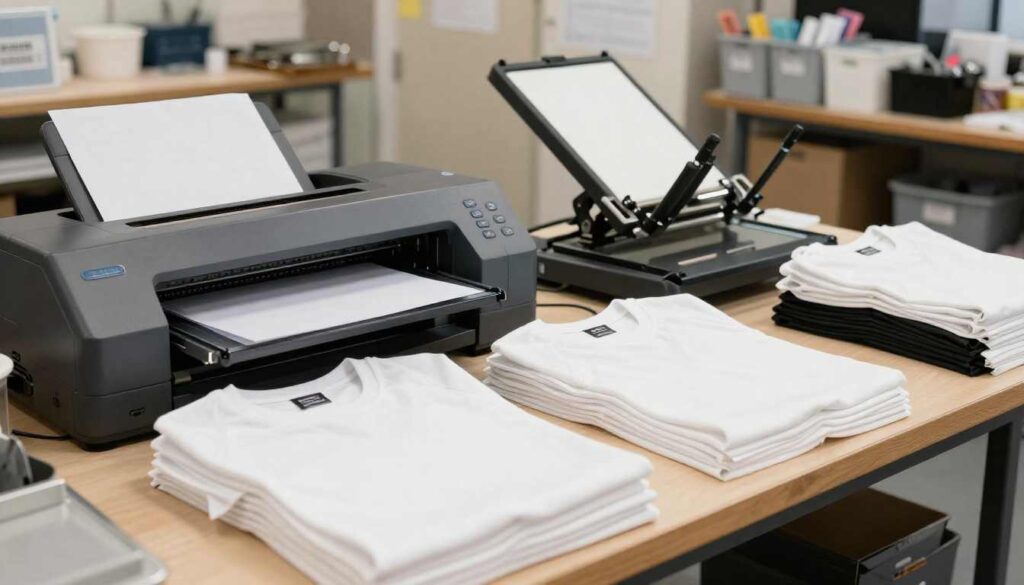
A t-shirt printer machine is only one piece of your setup. Even the best t-shirt printer won’t save you if you don’t plan for curing, finishing, and order handling with a heat press machine for t shirts. Think of it like a kitchen: the oven matters, but so do prep space and timing.
Most beginners also underestimate “workflow friction.” For example, if you’re doing custom t shirt printing you’ll spend time on artwork, file prep, and customer approvals.
Using RIP software correctly and keeping blank t-shirts for printing stocked can matter more than chasing the newest model. If you want to ship consistently, map your steps: design → print → cure/press → quality check → pack.
That’s how a business t-shirt printer setup actually makes money, not by the printer alone. The first time I printed a batch I was so focused on the machine that I forgot to account for drying time.
I ended up with a pile of shirts I could not press because I had nowhere to lay them flat. Workflow planning sounds boring until you are standing in your workspace at midnight surrounded by wet transfers.
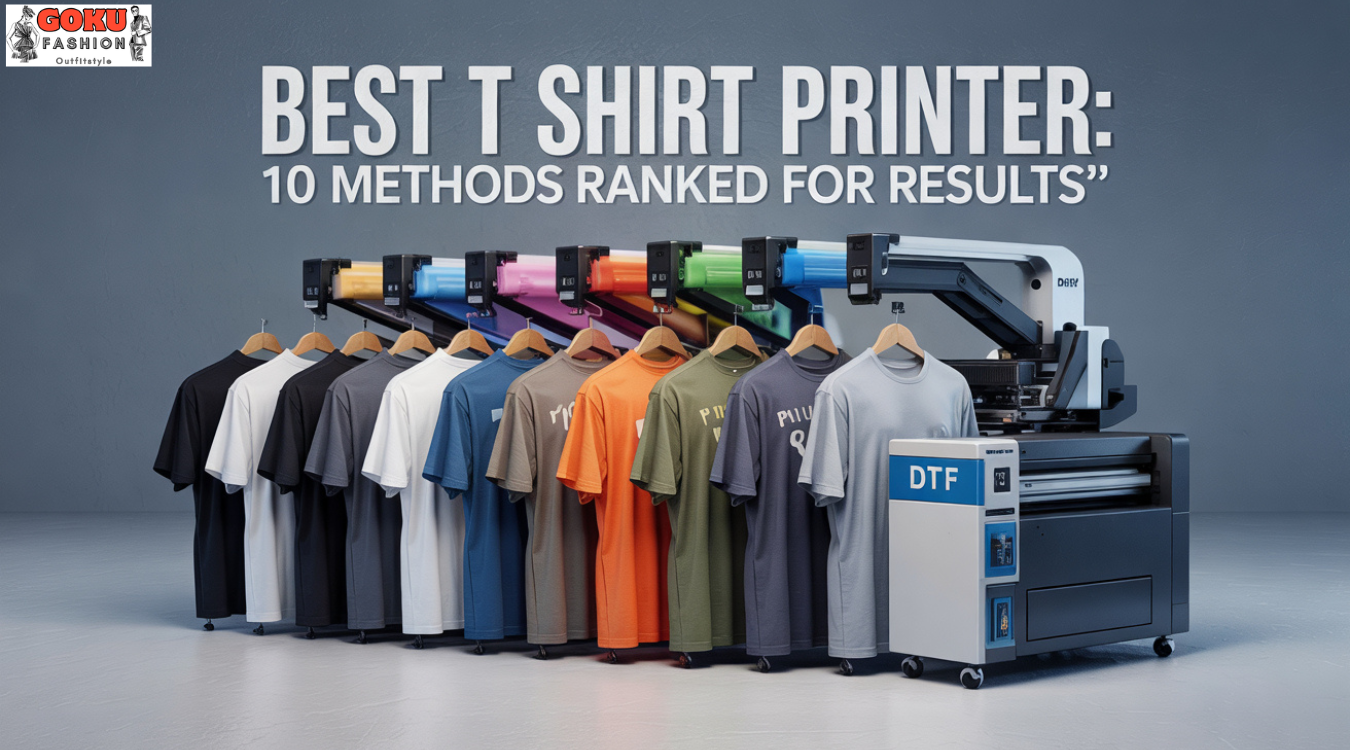
10 T-Shirt Printing Methods Compared: DTF, DTG, Sublimation, Vinyl, and Screen
Most people comparing a t shirt printing machine are really comparing print methods. Each method has a sweet spot for cost, quality, and speed, and choosing wrong is the fastest way to waste money on supplies like DTF film or ruin shirts with bad heat press temperature for t shirts.
Here’s a clear comparison you can save:
| Method | Best for | Works on dark shirts? | Feel | Typical gear |
| DTF | Mixed fabrics, logos, short runs | Yes | Slight film feel | dtf printer, dtf powder, heat press machine |
| DTG | Soft feel on cotton, detailed art | Yes (with pretreat/white ink) | Softest | dtg t shirt printer, pretreatment machine |
| Sublimation | Polyester, sportswear, bright colors | Not directly (needs light poly) | No ink feel | sublimation printer, sublimation paper |
| HTV/Vinyl | Names/numbers, simple designs | Yes | Vinyl layer | vinyl cutter, heat press |
| Screen printing | Bulk runs, lowest cost per print | Yes | Great | screens, inks, press |
If you’re starting small, dtf printer for t shirts setups are popular because they handle cotton, poly, and blends.
If you want that premium soft-hand print on 100% cotton, a DTG printer for t-shirts can shine, but maintenance and pretreatment are real work.
6. Heat Transfer Paper: budget option for home use, works on light fabrics with a regular inkjet printer
7. Plastisol Transfers: pre-made transfers pressed with heat, good for small batch orders
8. Dye Migration Printing: a specialty method for performance fabrics
9. Direct Embroidery: not ink-based but counts as a decoration method, durable and premium
10. Discharge Printing — removes dye from dark shirts, leaves a super-soft finish, used in high-end streetwear
How to Choose a t T-shirt Printer Based on Fabric, Color, and Order Volume
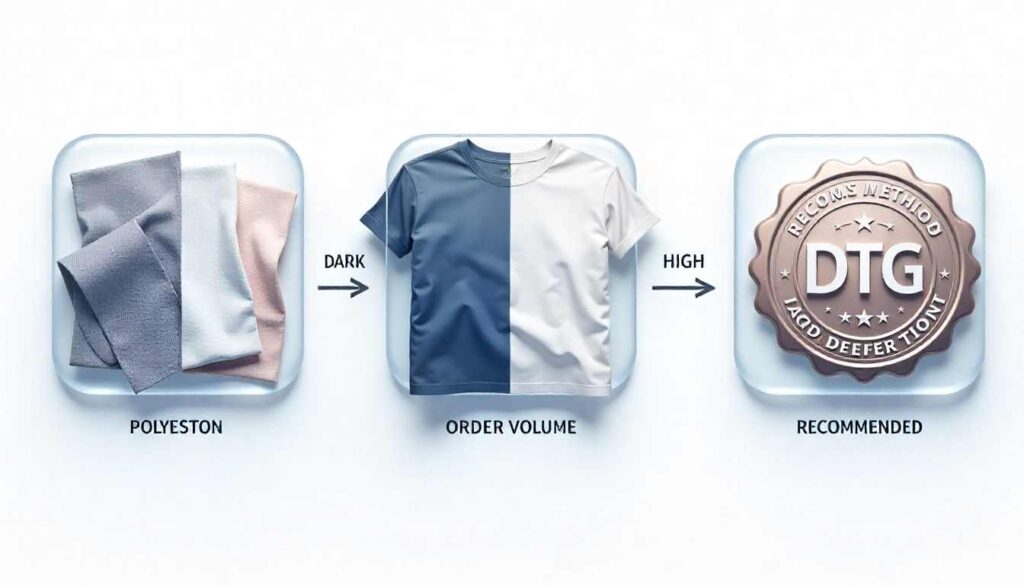
Start with fabric. If you mainly print polyester jerseys, a sublimation printer for t-shirts can give you bright results and fast production.
If you sell streetwear on cotton, a DTG t-shirt printer can deliver that “printed into the shirt” look people love.
Next, think about dark garments. Printing on black shirts usually means a white ink printer for t shirts capability, either through dtf printer transfers or DTG with proper pretreat. If your product line includes lots of dark hoodies and tees, don’t pick a setup that’s only happy on light fabric.
Finally, match the machine to the volume. If you’re doing 5–20 orders a day, you want a reliable t-shirt printer for a small business, plus a workflow that avoids bottlenecks at curing.
If you expect bulk team orders, screen printing or higher-output DTF can beat “slow and pretty.”
What “Print Quality” Really Means: White Ink, Color, and Wash Durability
Print quality isn’t just “looks good today.” For a custom t shirt printer workflow, quality means strong color, clean edges, and prints that don’t crack after a few washes.
You’ll want consistent curing, correct pressure, and stable settings on your heat press machine.
White ink is a big deal. Once your shirts are printed, keeping graphics intact during washing matters too — see our guide on how to wash graphic t-shirts to share with your customers.
With DTF or DTG, white acts like a base coat, so colors don’t look dull on dark fabric. If you’ve ever seen a print that looks faded on black, it’s often a weak white underbase or wrong curing.
Issues like a DTF printer not printing white can ruin your whole day if you don’t maintain the machine properly. Color accuracy matters too, especially for logos.
Using ICC profile setup and a good RIP software workflow helps match brand colors across different shirt batches. If your customers reorder, they’ll notice if red suddenly becomes orange.
The True Cost Breakdown: Setup Cost, Ink, Consumables, and Cost Per Shirt

Most people search t-shirt printer price and stop there, but your real cost comes from consumables and mistakes.
A cheap machine can become expensive fast if it wastes ink, clogs often, or needs constant replacement parts.
Your ongoing costs often include DTF film, DTF powder, ink, cleaning supplies, and blanks. DTG adds pretreat costs and more frequent maintenance.
Sublimation requires paper and works best on polyester, so your blank costs may change depending on your product choices.
If you’re building a real plan, estimate the cost per print and track waste. That’s the difference between “I’m busy” and “I’m profitable” in a t-shirt printing business. I learned this the hard way.
My first month looked great on paper until I added up wasted film, ink purges, and three shirts I ruined figuring out the right temperature. Tracking every cost from day one changes how you price and how fast you actually grow.
Understanding fabric costs matters too — read about how much does it cost to make a t-shirt for a full cost breakdown. It also helps you price confidently for bulk t shirt printing without guessing.
Starter Setups That Actually Work (Home vs Small Business vs Production)
For home use, keep it simple. Many beginners start with a small at-home t-shirt printer approach using DTF transfers or HTV, because you can control the finishing with a dependable press.
A compact t-shirt printing machine starter kit that includes a press can prevent a lot of “why is it peeling?” headaches.
For a small business, you’ll want more consistency and speed. For display and presentation ideas, once your shirts are printed, check out how to display t-shirts for sale. A t-shirt printer and press combo workflow is common: print transfers while the press heats, then press in batches.
Pair that with a basic shelving system for t shirt printing supplies, and you’ll feel instantly more organized.
For higher production, choose a gear that scales: larger platen, faster curing, and better support. At that stage, warranty, training, and parts availability matter as much as print quality.
A “deal” on a t-shirt printer machine for sale isn’t a deal if you can’t get parts quickly.
Heat Press, Curing, and Finishing: Getting Professional Results Consistently

Your heat press is the silent hero. Even if your printing t shirt printer output looks perfect, wrong time, temp, or pressure can cause peeling, shine marks, or scorch.
Dialing in heat press settings for t shirts turns “homemade” into “store-quality.”
DTF requires correct press time and proper curing of powder during transfer production. if the adhesive isn’t cured correctly, it may wash off early or feel rough.
Sublimation needs firm pressure and correct paper handling to prevent ghosting and blurry edges.
Finishing matters too. Let shirts cool when required, peel the carrier correctly, and test wash durability. If you’re selling, include simple care instructions.
That reduces complaints and protects your brand in custom t-shirt printing.
Recommended Blanks and Design Files: What Prints Clean and Sells Well
Blanks can make your prints look better without changing any settings. For DTG, ring-spun cotton often prints cleaner and feels softer.
If you are unsure which cotton weight works best for your prints, our guide on heavyweight t-shirt vs classic breaks down GSM and fabric feel in detail.
For DTF, you can use a wider range: cotton, poly, and blends, which is why a DTF t-shirt printer workflow is so flexible.
Your file quality matters just as much as the shirt. Use high-resolution artwork, clean transparency, and the right format, like PNG files, for t shirt printing.
Logos should be vectorized where possible to avoid jagged edges, especially for chest prints.
If you plan to sell online, build a repeatable design process. Use consistent sizes, keep templates, and test one sample before you print 50.
That’s how a t shirt printing business plan stays profitable instead of turning into rework chaos.
Maintenance and Troubleshooting: Clogs, Banding, White Ink Issues, and Fixes
Maintenance is not optional. Plan short daily routines instead of emergency repairs, If you want your t shirt printer to stay dependable. Many problems start with dried ink, dust, or poor humidity control.
Common issues include clogged nozzles, banding, and inconsistent white. For DTF and DTG, the white ink is heavier and settles briskly, so agitation and rotation matter.
Still, your cleaning schedule or terrain may be the real cause, not the machine, If you’re dealing with dtf ink clogging or repeated nozzle failure.
Quick prevention checklist:
- Run a nozzle check and clean only when needed to avoid over-cleaning.
- Keep stable humidity and reduce dust near the printer.
- Follow a t shirt printer daily maintenance checklist and log issues.
- Store film and paper properly to avoid moisture problems.
If your output suddenly changes, don’t panic. Check basics first: settings, temperature, pressure, and whether the artwork got resized. Most “mystery” failures are workflow slips.
I once spent four hours convinced my printer head was dying. It turned out the humidity in my room had dropped and the ink was drying faster than normal.
A small humidifier fixed it in twenty minutes. Boring fix, but I learned to check the environment before blaming the machine.
Buying Checklist: Specs, Support, Warranty, and Where to Shop Safely

When you’re ready to buy, don’t shop only by ads like t shirt printer Amazon or the lowest t-shirt printer cost you can find. You’re buying into a system: parts, inks, profiles, and support. A reliable seller can save you weeks of frustration.
Use this checklist before you pay:
- What fabrics will you print: cotton, poly, or mixed?
- Do you need dark-shirt capability and strong white ink?
- What’s your target daily volume and turnaround time?
- Does it include training, profiles, and clear documentation?
- Are replacement parts available locally, and is warranty support real?
If you’re searching t-shirt printer near me, also compare local service options and shipping time for consumables.
Fast access to film, ink, and parts can matter more than saving a little upfront on a t shirt printer machine price.
One more tip: calculate ROI based on your real order flow, not wishful thinking. If you’re doing 10 shirts a week, a huge production rig may slow you down financially. Match the machine to the business you actually have, then scale.
Conclusion
Choosing the right t shirt printer comes down to your fabric, your order volume, and how you want the final print to feel.
After testing multiple setups over the past two years, my honest recommendation for most beginners is to start with DTF plus a reliable heat press.
It is not the cheapest entry point but it gives you the most flexibility across fabrics and order types without committing to a single method.
Still, a dtf printer for t shirts can be a strong fit with the right dtf film and dtf powder workflow, If you need versatility on cotton and composites.
If you want the softest finish on cotton, a dtg t shirt printer paired with dtg pretreatment can deliver premium results.
Don’t shop only by t shirt printer price. Look at running costs, support, and how easy the maintenance routine is.
A solid heat press machine for t shirts and correct heat press temperature for t shirts often make the difference between “okay” and professional.
Before you buy, use a simple t shirt printer checklist before buying. Confirm dark-shirt capability, white ink performance, and realistic daily output.
When your setup matches your goals, you’ll produce better prints, waste fewer blanks, and grow your t shirt printing business with confidence.
FAQs
What type of printer is needed to make T-shirts?
ou can use a dtf printer, dtg t shirt printer, or sublimation printer depending on fabric; for most beginners and mixed shirts, a t shirt printer for small business using DTF plus a heat press machine for t shirts is the most flexible.
How profitable is t-shirt printing?
A t shirt printing business can be profitable when you control t shirt printing business incipiency cost, track waste, and price correctly for custom-made t shirt printing and bulk t shirt printing; your margins improve fast once your workflow is harmonious.
What equipment do I need to print my own t-shirts?
At minimum, you’ll need a t-shirt printer and press setup a t-shirt publishing machine (like a dtf printer for t-shirts or a DTG printer for t-shirts), a heat press machine, and inventories similar to blank t-shirts for printing, plus DTF film/ dtf greasepaint (DTF) or a DTG pretreatment machine (DTG).
What’s the difference between a regular printer and a sublimation printer?
A regular inkjet/ ray printer is for paper, while a sublimation printer for t shirts uses sublimation ink and sublimation paper that turns to gas under heat to color polyester; it’s ideal for light poly, but sublimation on cotton shirt needs a workaround like special coating or transfers.

I'm Habib founder of Goku Fashion Outfit Style and a boutique owner with over 10 years in the fashion industry. I've styled thousands of real clients, run a fashion business from the ground up, and now I'm sharing everything I know through this blog. My goal is simple: help you dress better, shop smarter, and understand fashion in a way that actually makes sense for your life.
- Habib

- Habib
- Habib
- Habib