
Got a stack of old tees and crafty plans but no clue where to start? Same—I once typed “how do you make t shirt yarn” and wished for one clear guide. If you want easy DIY t-shirt yarn, a friendly t-shirt yarn tutorial, and ideas for what to make with tshirt yarn plus how to make t shirt yarn from fabric, you’re in the right place.
In this post, I’ll show you the exact steps, tools, and smart shortcuts. You’ll learn how to cut t-shirt for yarn with simple fabric scissors, how to stretch t-shirt yarn for smooth strands, and care tips like can you wash t-shirt yarn. We’ll also cover quick project ideas so your old tees turn into cute wins fast.
Tools and materials that keep cuts straight and fast
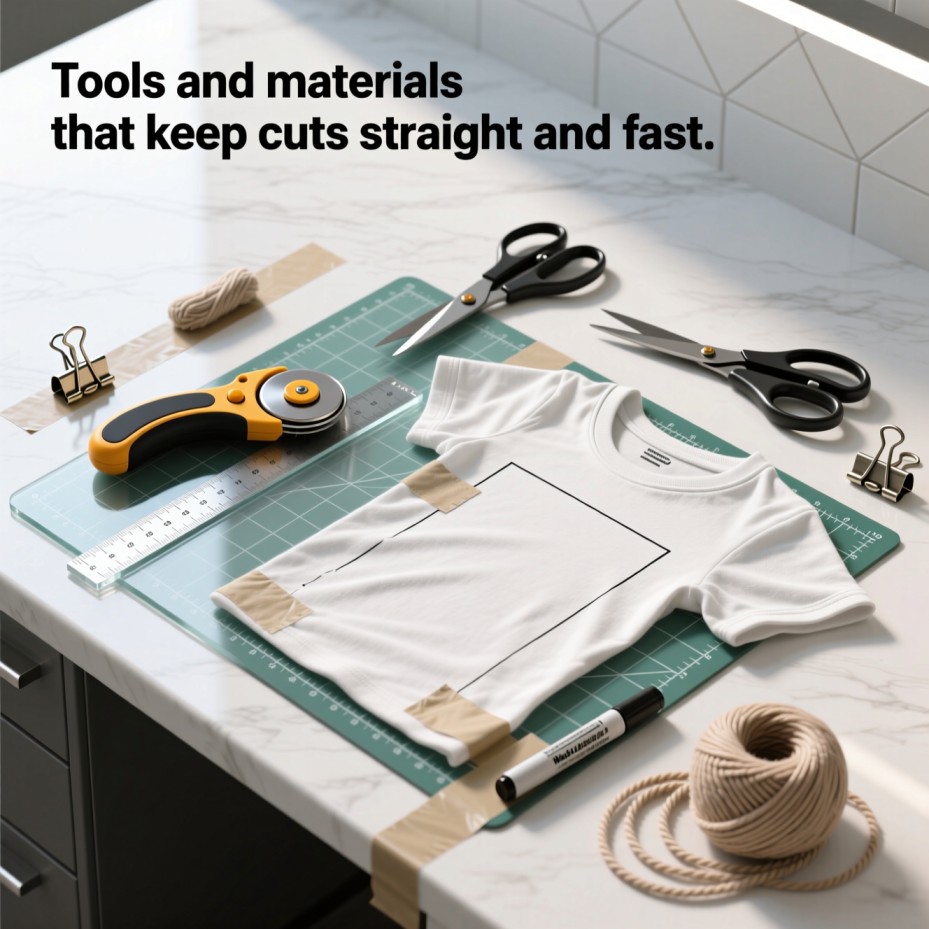
Sharp tools matter because clean cuts reduce fray and improve durability. Use fabric scissors or a rotary setup with rotary cutter and cutting mat plus a clear ruler. Keep a spare set of yarn scissors only for fabric so the blades stay crisp.
Pick tees made of jersey fabric, cotton jersey, or a cotton mix for predictable stretch. These give you stable yarn strips that coil neatly after stretching. Avoid very slinky synthetics unless you want a soft drape and less curl.
Have clips or painter’s tape to hold edges flat while you square the shirt. Mark widths with a washable pen for an accurate yarn cutting technique. The right setup saves time and preserves your hands for more crafting.
If you’re teaching or filming a t-shirt yarn tutorial, lay tools in frame for clarity. Mention substitutions like a craft knife in a pinch. That helps readers with limited gear try this method at home.
Choose the right tee: fabric content, weight, and seams
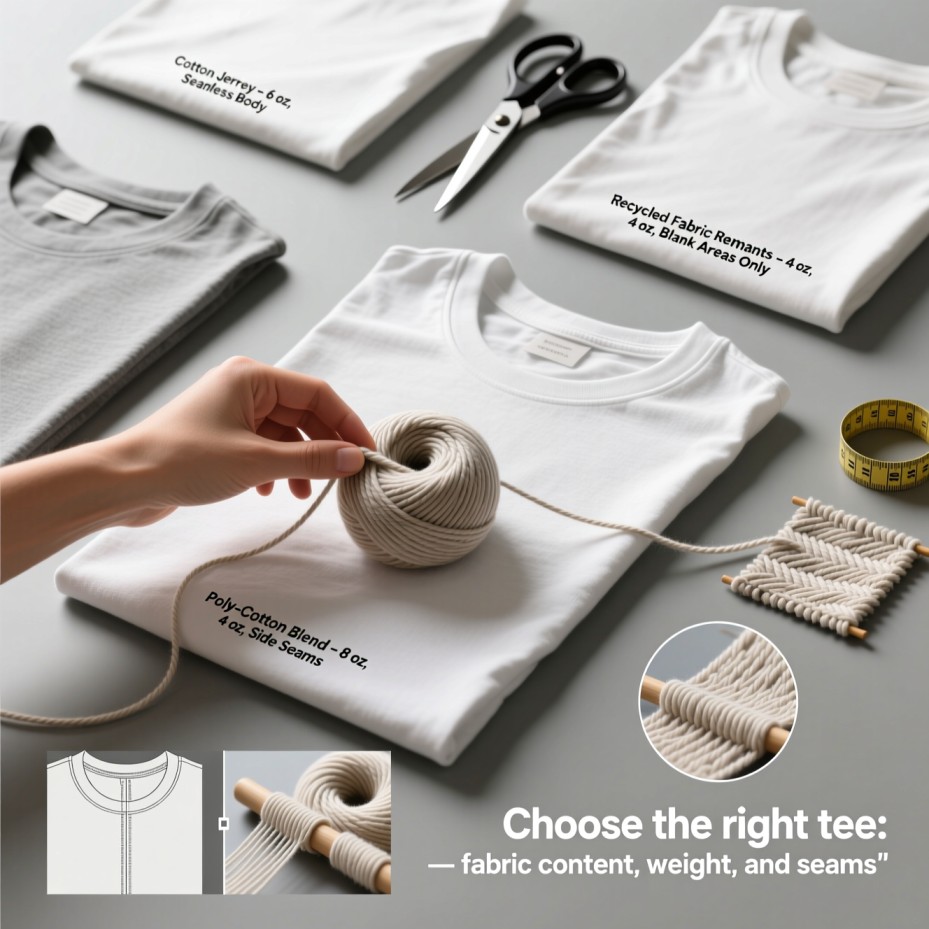
Fiber choice drives curl, strength, and yield. Old tees made of cotton jersey curl beautifully and stay strong through tension and wear. Heavier tees produce sturdier strips for baskets or rugs and offer better yarn durability.
Check the shirt construction before you cut. Seamless bodies work best for the spiral loop, while side seams push you to the strip‑and‑join method. That choice affects your plan for how do you make t shirt yarn with minimal waste.
Prints and logos change how the strip behaves. Thick plastisol prints don’t curl and can crack, so cut around them or salvage them for appliqué. You’ll get more even yarn thickness when you favor blank areas.
Want alternatives beyond tees? Try how to make t shirt yarn from fabric remnants or how to make t shirt yarn from sheets. Household textiles become yarn from clothes that suit weaving projects and fiber art without buying new yardage.
Yardage math: how much yarn one t-shirt really yields
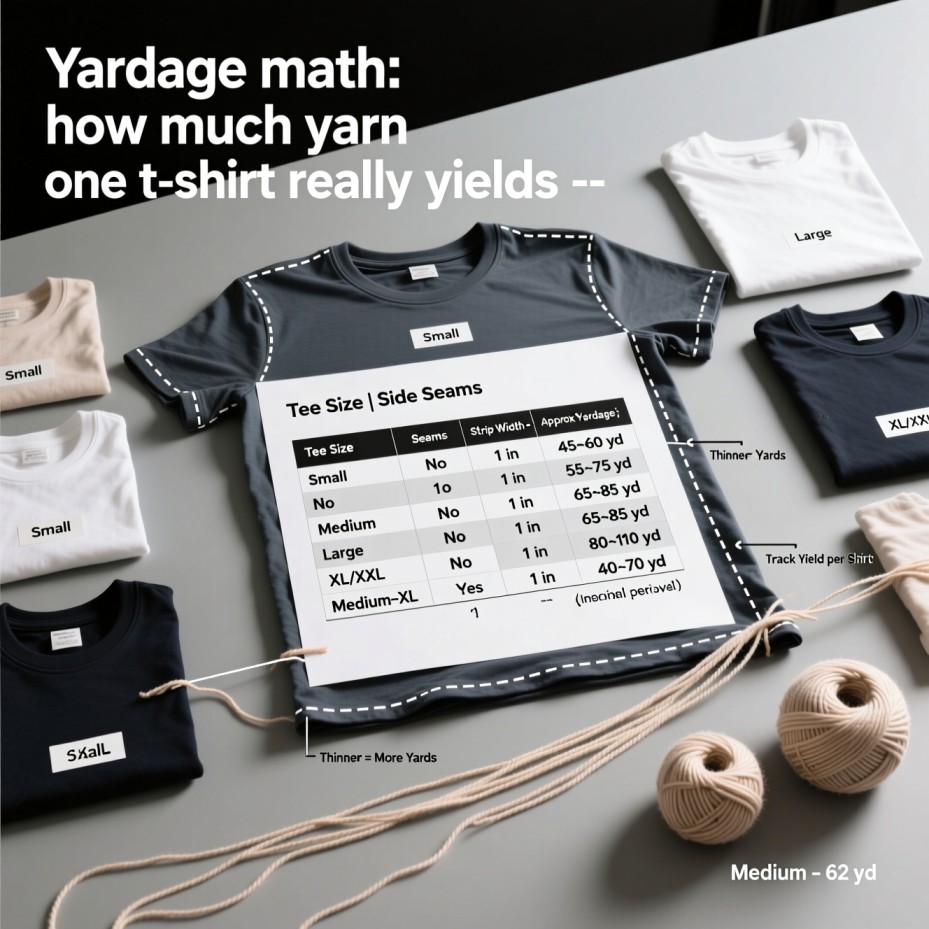
Yardage depends on shirt size, fabric weight, and strip width. Larger tees and thinner strips produce more length. Use the rule of thumb for planning how important yarn from one shirt so your design doesn’t cube halfway.
Then there’s a practical cheat distance you can acclimatize to your store.
| Tee size | Side seams | Strip width | Approx yardage |
| Small | No | 1 in | 45–60 yd |
| Medium | No | 1 in | 55–75 yd |
| Large | No | 1 in | 65–85 yd |
| XL/XXL | No | 1 in | 80–110 yd |
| Medium–XL | Yes | 1 in | 40–70 yd |
If you’re planning a basket or rug, calculate the total yarn length according to the pattern needs. Multiply by the number of shirts after you adjust for width and seams. That keeps your answer to how do you make t shirt yarn aligned with your project size.
Thicker strips make fewer yards, and thinner strips make more. Track your yarn yield for each shirt type, then store a note with the finished yarn balls. You’ll estimate more accurately on the next run.
Color strategy: sorting, combining, and dyeing options
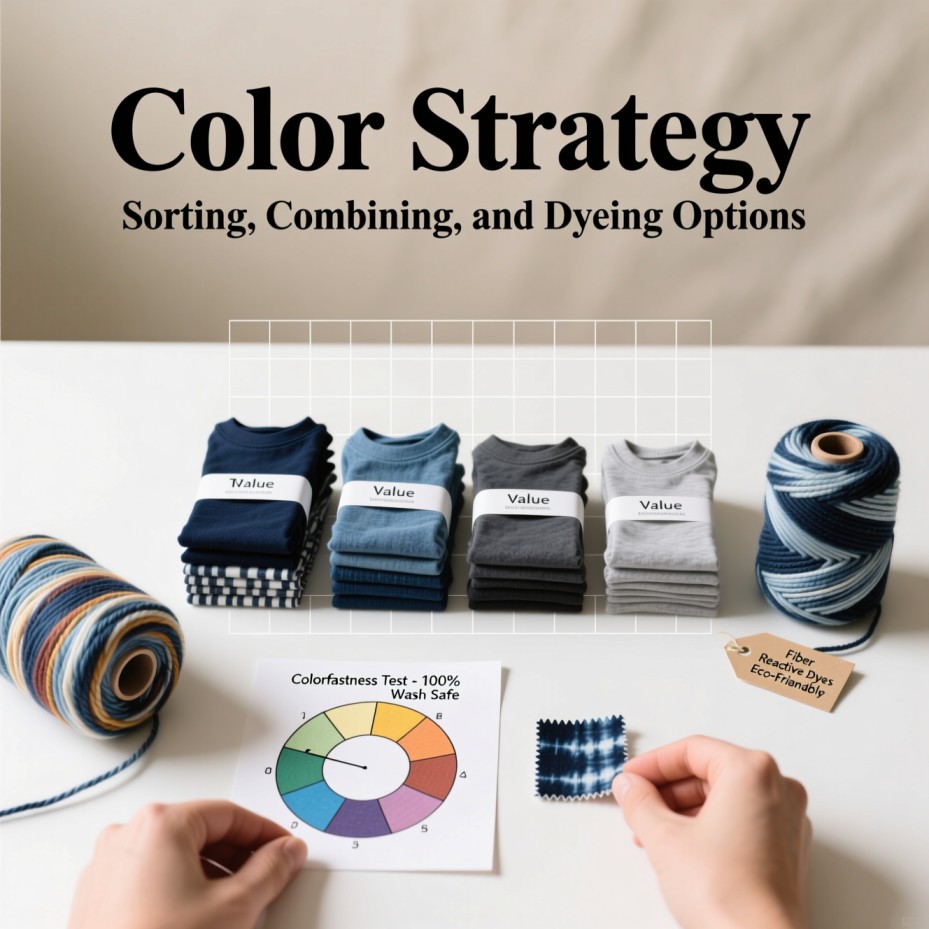
Group shirts by hue, value, and undertone before you cut. Consistent tone makes striped projects look intentional rather than random. It also helps when planning t-shirt yarn patterns for yarn for home decor and gifts.
Blend near‑neighbors like navy and denim for subtle fades. Mix prints with solids to break up patterns without visual noise. For a bolder route, overdye with fiber-reactive colorings for eco-friendly yarn goods.
Dye before cutting for uniformity or after winding for variegation. Test for colorfastness on a small strip first to avoid surprises. This keeps your plan for how do you make t shirt yarn compatible with wash-safe colors.
Save accent colors for borders or handles on yarn for bags and yarn for baskets. You’ll get pop without overpowering the base fabric. It’s a small move that elevates simple DIY yarn crafts.
Prep work: square the shirt, smooth wrinkles, trim hem
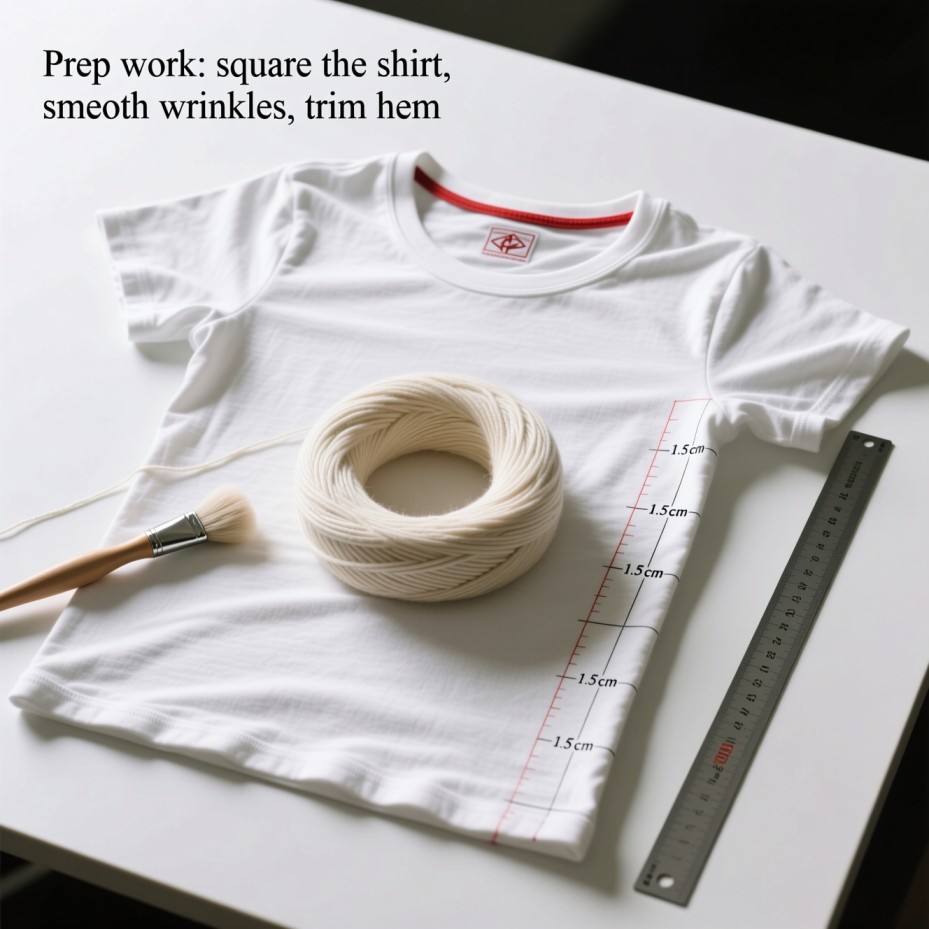
Lay the shirt flat, align the side edges, and smooth out wrinkles. Cut off the bottom verge to remove bulk and set a clean birth. That gives you neat cut edges for accurate widths.
Square the body by trimming to a clean yarn rectangle. Remove the top across the chest just under the sleeves. Now you have a loop tube that’s perfect for the spiral method.
Mark strip widths along one edge with a ruler and washable marker. Light guide marks speed up cutting and keep the yarn thickness consistent. Consistency makes crochet and knitting tension easier.
If the shirt has a big logo, plan a detour. You can trim around it or reserve that area for scraps. This forethought keeps your approach to how do you make t shirt yarn efficient and low‑waste.
Safety and ergonomics: hands, blades, and posture

Sharp tools reduce strain and slipping. Replace blades often, use a stable surface, and cut away from your body. Simple yarn hacks like a non-slip mat make a big difference.
Keep wrists neutral and shoulders relaxed while you cut. Take breaks, especially when processing multiple shirts. Use a chair at the right height to maintain ergonomic alignment.
Store blades with covers and keep fabric scissors out of reach of kids. Clear the table before you start so sleeves and cords don’t snag. A clean space is safer and faster.
This prep supports your long-term crafting, not just one session. It also removes barriers when you decide how do you make t shirt yarn for larger projects. Comfort and safety keep the hobby fun.
Create a loop tube: remove top and sleeves cleanly
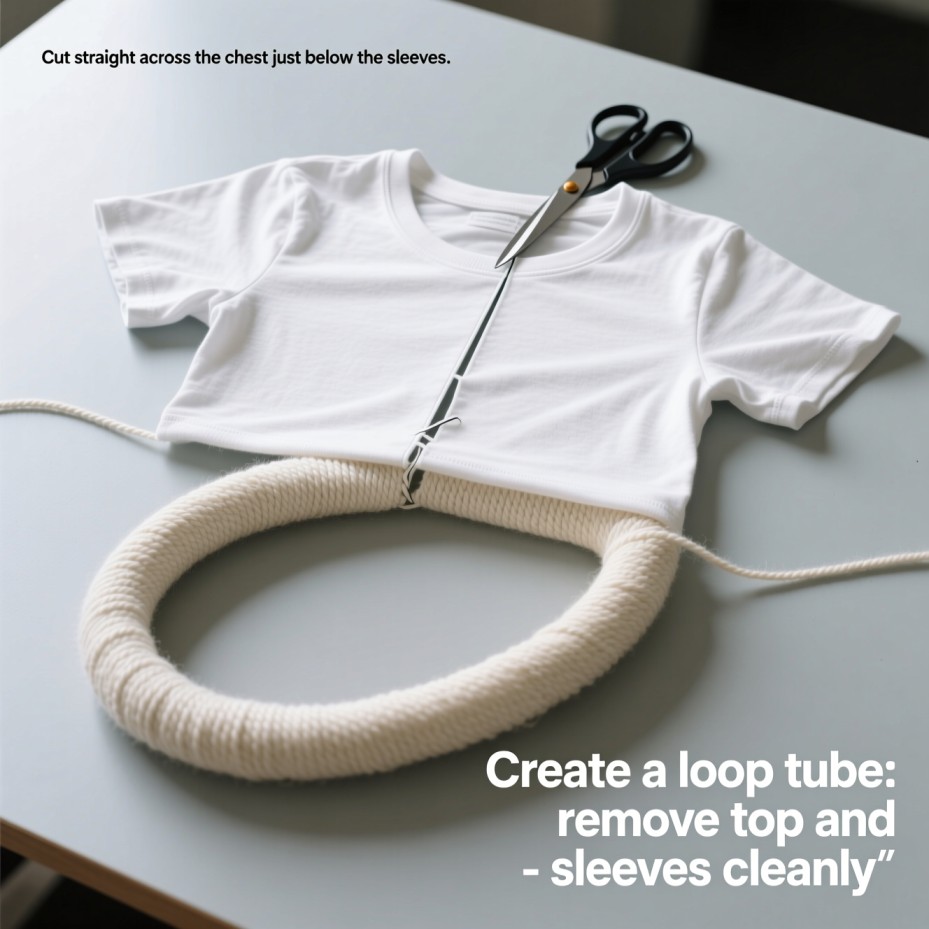
Cut straight across the casket just below the sleeves. Remove the verge if you haven’t formerly so the base lies flat. You’re aiming for a clean loop that sets up the spiral.
If the shirt has no side seams, you’re golden. A seamless tube gives you connected strips without joins and fewer weak points. That matters for yarn durability in heavy-use items.
If your tee has seams, save this piece for the strip‑and‑join method. You can still use the whole garment how to make tshirt yarn using the whole shirt. The key is matching the technique to the shirt.
This is where your plan for how do you make t shirt yarn starts to click. You control the tube, the width, and the path. That control gives consistent results across your stash.
Speed tips: rotary cutter, ruler hacks, and cutting mats
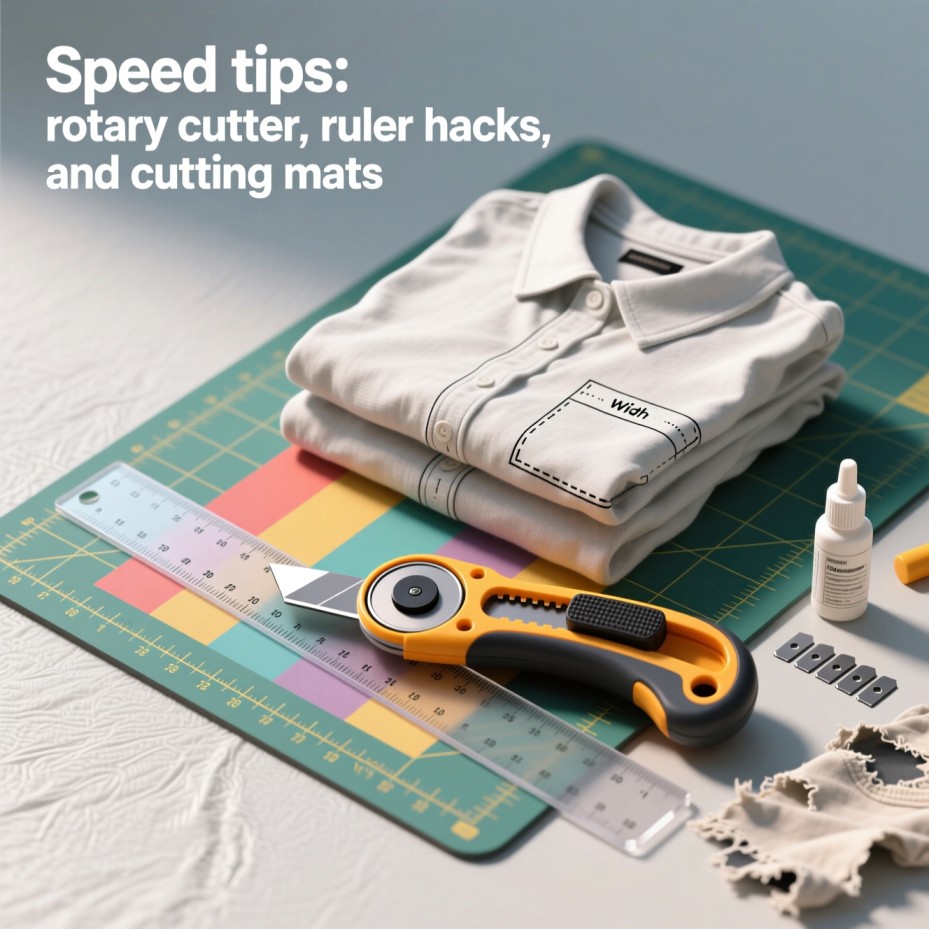
The fastest route is a rotary cutter and cutting mat with a clear acrylic ruler. Line up measurement marks, then zip through layers in controlled passes. You’ll get straight edges with minimal effort.
Pre-mark widths, then stack two shirts of similar weight for batch cutting. Keep blades fresh because dull tools slow you down and crush fibers. You’ll feel the difference on the first pass.
Practice on an old tee before filming a t-shirt yarn tutorial. That way, your hands know the moves and your angles are clear. This builds confidence and shortens learning curves.
When you think about how do you make t shirt yarn quickly, tooling is the lever. Simple setup upgrades shave minutes off each shirt. Those minutes compound across a pile.
Continuous spiral cut for seamless yarn (no knots)
Now comes the magic of a long, flawless beachfront. Cut the circle into unevenly spaced gashes that stop short of the far edge, also connect them transversely. This creates a single continuous strip with smooth feed.
Here’s a simple top-down diagram of the spiral path. The arrows show the diagonal joins across the uncut spine.
text
Top edge removed
┌───────────────────────────┐
│ ║ ║ ║ ║ ║ ║ ║ ║ ║ ║ ║ │ ← slits (stop ~1" before right edge)
│ ║ ║ ║ ║ ║ ║ ║ ║ ║ ║ ↘ │ ← diagonal joins form the spiral
│ ║ ║ ║ ║ ║ ║ ║ ║ ║ ↘ │
│ ║ ║ ║ ║ ║ ║ ║ ║ ↘ │
└───────────────────────────┘
Bottom hem removed
Cut widths that match your project and hook or needle size. The spiral route avoids knots, reduces snagging, and improves consistency. It’s a clean answer to how do you make t shirt yarn that feeds smoothly in tight stitches.
This method is the go-to for how to cut t-shirt for yarn and how to make yarn without sewing. It also maximizes length from a single tee. You’ll love it for rugs and baskets where joins are hard to hide.
Starting the spiral: where to snip and how wide to cut
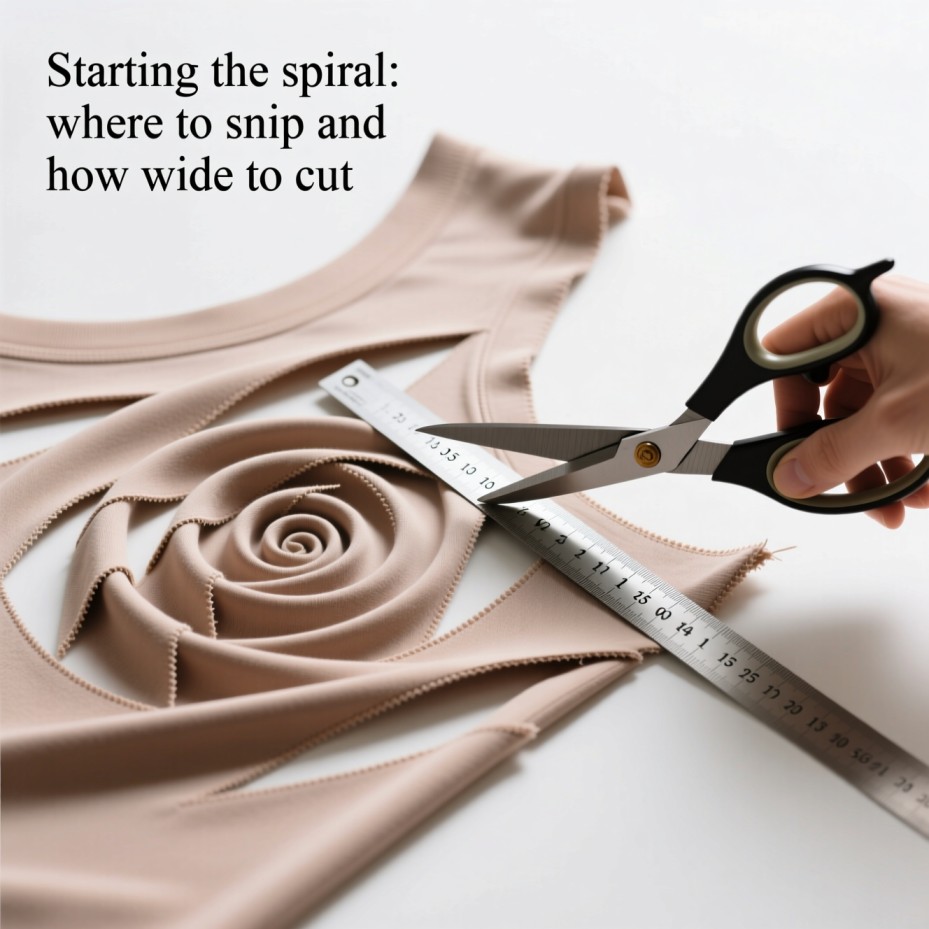
Begin with slits 0.5–1.5 inches apart, depending on your plan. Leave about an inch of uncut fabric along the far edge to form the spine. Connect diagonally from slit to slit to form connected strips.
Use a ruler until your eye learns the spacing in jersey fabric and other stretch fabric. Keep your hands relaxed and cut with steady pressure. It’s simple once you’ve done two shirts.
Width guide: 0.5–1.5 inch strips for different projects
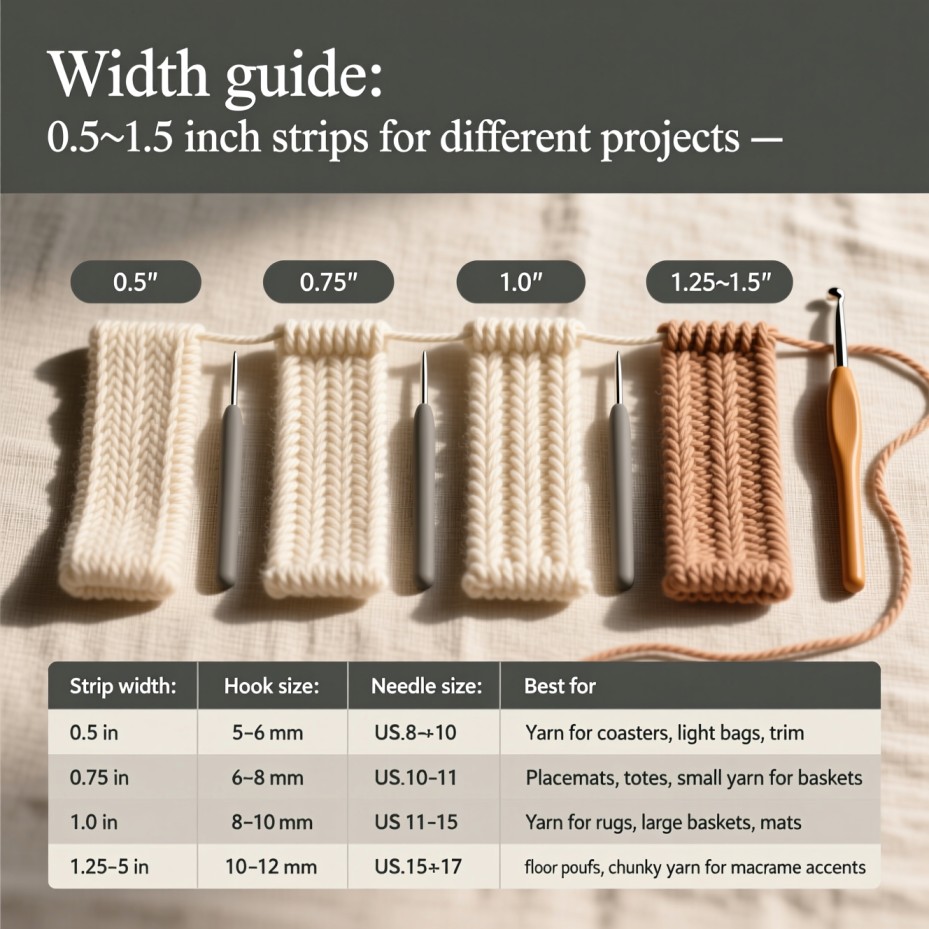
Match strip width to the tool you’ll use. Thin strips suit small hooks and needles, while thick strips excel with big tools and sturdy pieces. This sets up a predictable gauge in crochet projects and knitting projects.
| Strip width | Hook size | Needle size | Best for |
| 0.5 in | 5–6 mm | US 8–10 | yarn for coasters, light bags, trim |
| 0.75 in | 6–8 mm | US 10–11 | placemats, totes, small yarn for baskets |
| 1.0 in | 8–10 mm | US 11–15 | yarn for rugs, large baskets, mats |
| 1.25–1.5 in | 10–12 mm | US 15–17 | floor poufs, chunky yarn for macrame accents |
Working around logos, prints, and holes without waste
Skirt heavy prints that won’t curl. Angle the path to dodge cracked logos and threadbare zones. Keep strips consistent, even as you pivot to preserve yarn durability.
This is creative reuse and circular fashion in action. You’re keeping fabric in play while protecting tool tension. It fits yarn recycling and smart stash management.
Strip‑and‑join method for shirts with side seams
When a tee has side seams, cut straight strips across the body. Join ends with a slit‑join to form a long strand without bulky knots. The result looks clean and works well in tight stitches.
Make your slits near each end, then feed one tail through the other and pull. The join locks under tension and stays flat in the fabric. This is the best choice for many thrifted shirts.
Keep widths uniform and mind grain direction. Seams and grain shifts change stretch, so test a short length first. That keeps your path for how do you make t shirt yarn consistent across varying tees.
You’ll still use how to make tshirt yarn using the whole shirt by cutting sleeves and upper panels into extra strips. Those pieces become ties, handles, or stuffing. Nothing goes to waste in sustainable crafting.
Stretch and curl: turning flat strips into round “yarn”
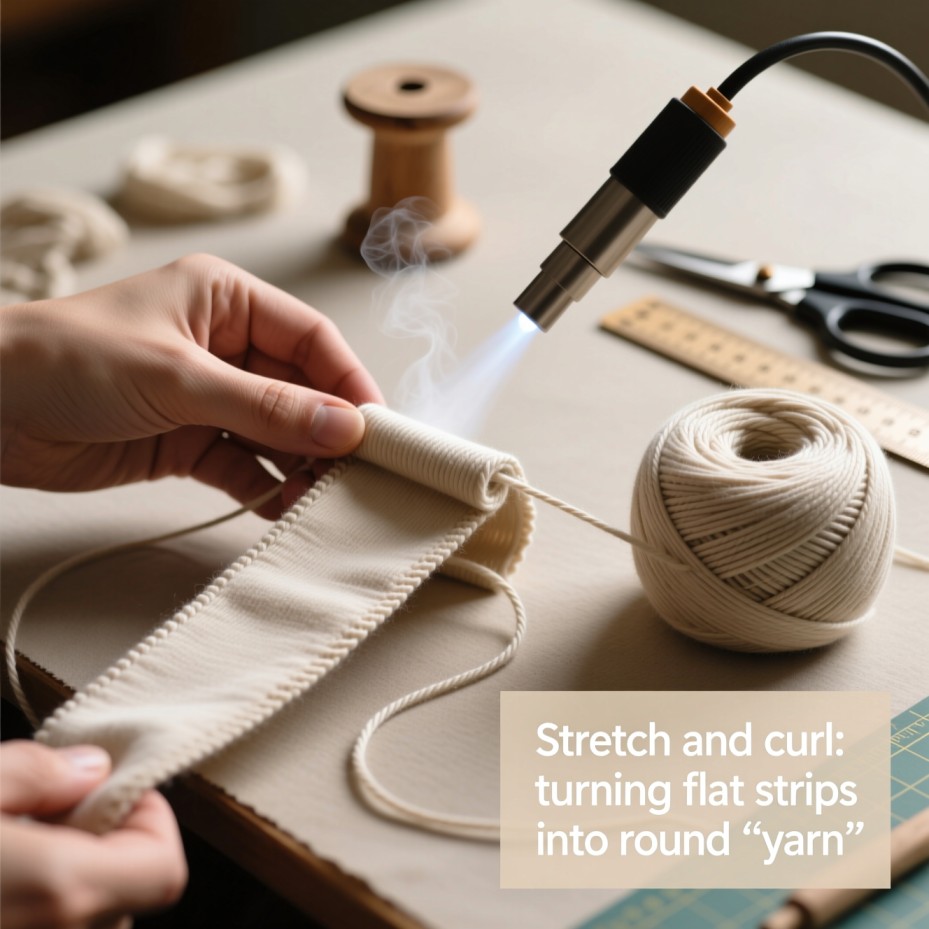
After cutting, gently pull the strip along its length. Edges roll inward on the jersey fabric which forms a round profile. This step stabilizes the strip and reduces fuzz.
Work in sections to avoid uneven stretch. Pull, relax, then wind into a tidy ball. Consistency here keeps the gauge clean in yarn for rugs and yarn for baskets.
Pull until the strip curls but doesn’t thin too much. Overstretching can reduce yarn durability and cause breaks under tension. Stop when the curl holds shape.
You can steam briefly if the edges misbehave. The heat sets the curl so it stays in projects that flex a lot. It’s a simple habit that upgrades finishes.
Joining ends invisibly: slit‑join vs. simple knots
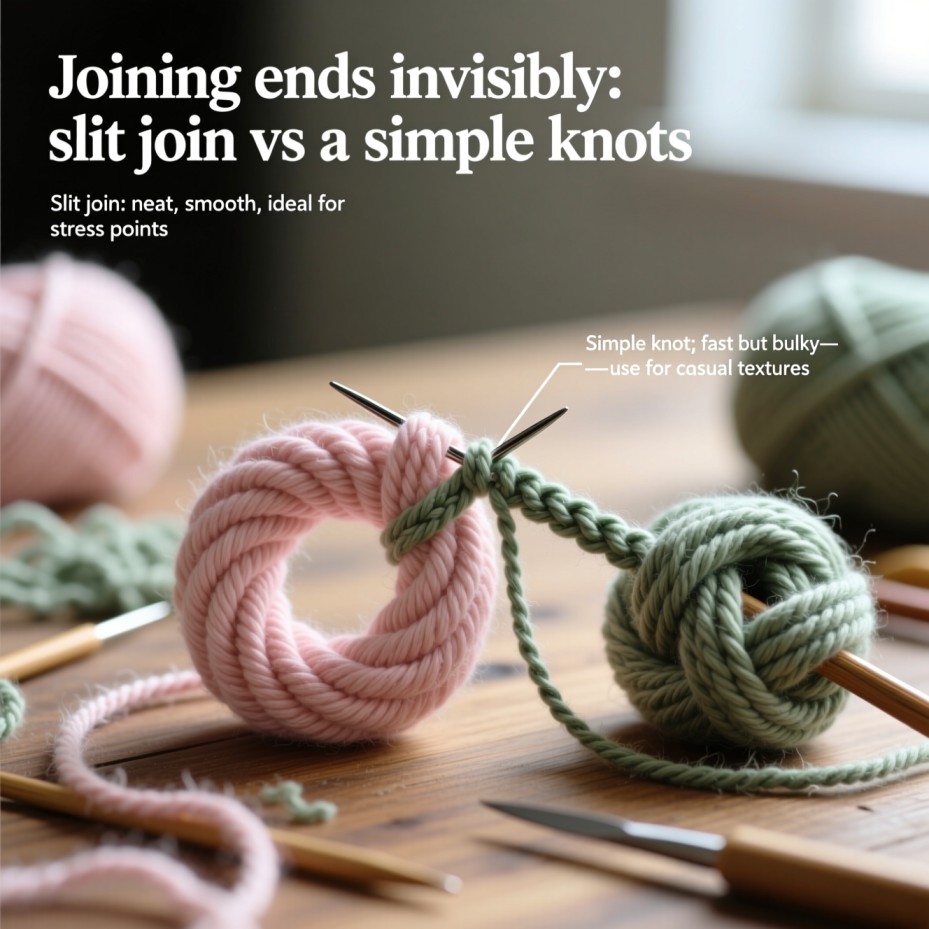
The slit‑join is the neatest way to connect strips. Cut a small slit near each end, feed one through the other, then pull to lock. The join hides inside the curl and glides through hooks or needles.
Knots are faster but bulkier and prone to snagging. Reserve them for casual pieces with chunky texture. Use joins that support yarn durability when the project takes stress.
Test a few joins before committing to a big piece. You’ll feel which method slides best through your tools. That feedback makes your plan for how do you make t shirt yarn more predictable.
If a join fails, trim cleanly and re‑join. You’ll lose a tiny bit of length, not the whole ball. Always wind past the join so the tension evens out.
Wind like a pro: from loose coil to center‑pull ball
Wind the strip around your fingers to start a core. Rotate and wrap so layers crisscross instead of stacking. You’ll form neat yarn balls that don’t collapse.
For a center‑pull option, wrap around two fingers, slide off, then wind around that loop. Tuck the core tail into the center as you go. It feeds smoothly for yarn projects on the go.
Label balls with width, length, and fabric type. Future, you will thank yourself when matching gauge. Good notes reduce guesswork and wasted time.
Store balls in breathable bags away from the sun. Avoid compression so the curl doesn’t flatten. You can reuse zipper pouches for a tidy craft shelf.
Finishing touches: de-pilling, washing, and softening
Check for fuzz and loose threads, then trim with small scissors. Lightly steam if the curl has kinks. These small passes make the yarn look store-bought.
Yes, you can wash it. The answer to can you wash t-shirt yarn is yes when you prep it well. Use a washing machine on gentle with a washing bag if the project allows.
Air dry flat and smooth the fabric with your hands. Avoid high heat, which can harden prints or weaken blends. Smart care extends the life of handmade yarn items.
If a project pills, use a sweater shaver with a light touch. Test on a tail first to protect the surface. Clean finish equals proud gifting and selling.
Troubleshooting: thin spots, breaks, and jagged edges
Edges look jagged when blades are dull. Sharpen or replace, then slow down for cleaner passes. You’ll see smoother curls after stretching.
Thin spots happen when widths wander or fabric is tired. Trim the weak area and re‑join with the slit‑join. A quick fix keeps momentum without ripping back.
Breaks during stretching signal overpulling or weak fiber. Ease up on tension and swap to sturdier tees. This keeps your plan for how do you make t shirt yarn on track for heavy-duty pieces.
If strips won’t curl, the fabric might be low-stretch. Switch to narrower widths or try steam. You’ll get workable edges even on blends.
What to make next: crochet, knit, macramé, and weave
You’ve got yarn, now put it to work. Start with what do you make out of t-shirt yarn like coasters, trivets, and plant hangers. Level up with totes, baskets, and mats.
Explore t- shirt yarn for crochet systems and t- shirt yarn knitting ideas with sturdy aches. Try yarn for macrame for wall pieces and hangers. These shine in yarn for home decor.
Aim for gifts and market goods you’ll actually use. Suppose how to make t shirt yarn bag, how to make t shirt yarn choker, how to make t shirt yarn hairpiece, and how to make tshirt yarn handbasket. These systems utilize upcycled t- shirt yarn for crochet.
Final Words About How Do You Make T Shirt Yarn
By now, you’ve got the fast, no-fuss roadmap: pick the right jersey tee, square it up, create the loop tube, then spiral‑cut, stretch, and wind. Sharp tools, steady widths, and the slit join turn rough strips into smooth, durable cord.
You even know when to switch to the strip‑and‑join method for side seams, and how to tweak the width for gauge, yardage, and project strength.
Most importantly, you’ve answered the question—how do you make t shirt yarn—confidently and repeatably.
Keep your notes on widths and yardage, label your balls, and store them neatly so your next rug, basket, tote, or plant hanger flies off the hook. Wash gently, dry flat, and give stubborn edges a quick steam.
Then dive into your color plan, mix solids and prints, or overdye for a custom palette. Batch‑cut shirts for later. Share your first make with the crafting community—you just turned clutter into creative fuel.
FAQ’s
Can I make my own t-shirt yarn?
Yes—you can make DIY t-shirt yarn at home by upcycling old tees; grab fabric scissors, cut continuous strips, stretch, and wind.
I like cotton jersey or a cotton mix for how to make t- shirt yarn that creates ringlets fairly eco-friendly, zero waste crafts you can finish in twinkles.
What kind of yarn is t-shirt yarn?
T- shirt yarn is a rubbery knit, reclaimed yarn made from cotton jersey or other rubbery fabric — soft, durable, and perfect for crochet systems, knitting systems, and weaving systems.
It’s an eco-friendly yarn alternative from upcycled t-shirts and bedsheets that forms connected strips which curl into a round cord.
Is tshirt yarn good for beginners?
Yes, it’s great for newcomers — thick, easy to grip, and forgiving; I recommend starting with freshman yarn systems like coasters, baskets, and factory hangers.
You’ll learn pressure presto with big tools and visible aches, and the DIY yarn won’t unravel much when you use the tear join.
What size crochet hook to use for t-shirt yarn?
Use an 8–12 mm hook depending on yarn thickness: 6–8 mm for thin strips, 9–10 mm for medium, 10–12 mm for chunky.
Personally, I reach for a 9 – 10 mm for utmost t- shirt yarn for crochet systems, also size up if I want drape or down for establishment baskets.