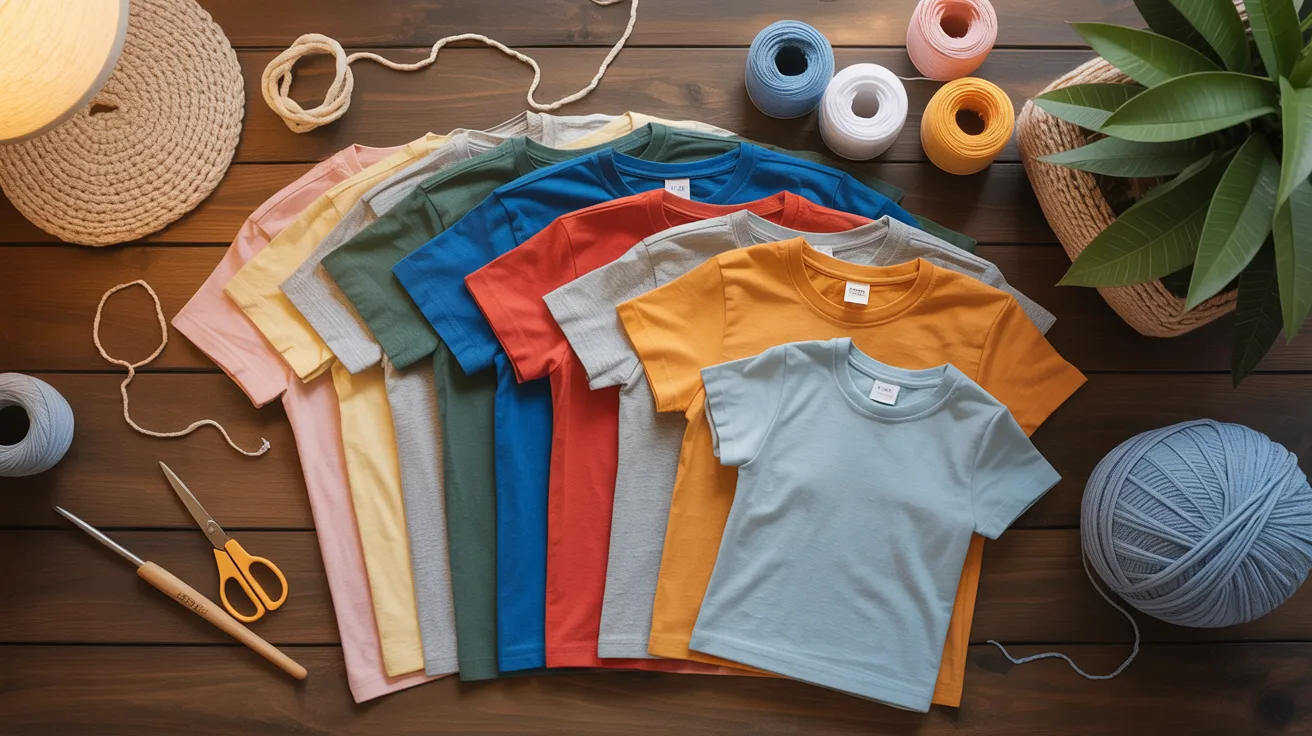
You open your closet, and there they are again: that pile of old t-shirts you haven’t touched in years. The college tee, the concert shirt, the one from a 5K you barely survived. You can’t wear them, but throwing them away feels wrong.
Good news: you don’t have to. In this guide, you’ll find 20+ creative and practical ways to reuse old t-shirts, from quick no-sew projects ready in 10 minutes to sentimental keepsakes you’ll treasure for decades. Whether you’re a complete beginner or a seasoned DIY crafter, there’s something here for you.
Why You Should Stop Throwing Away Old T-Shirts
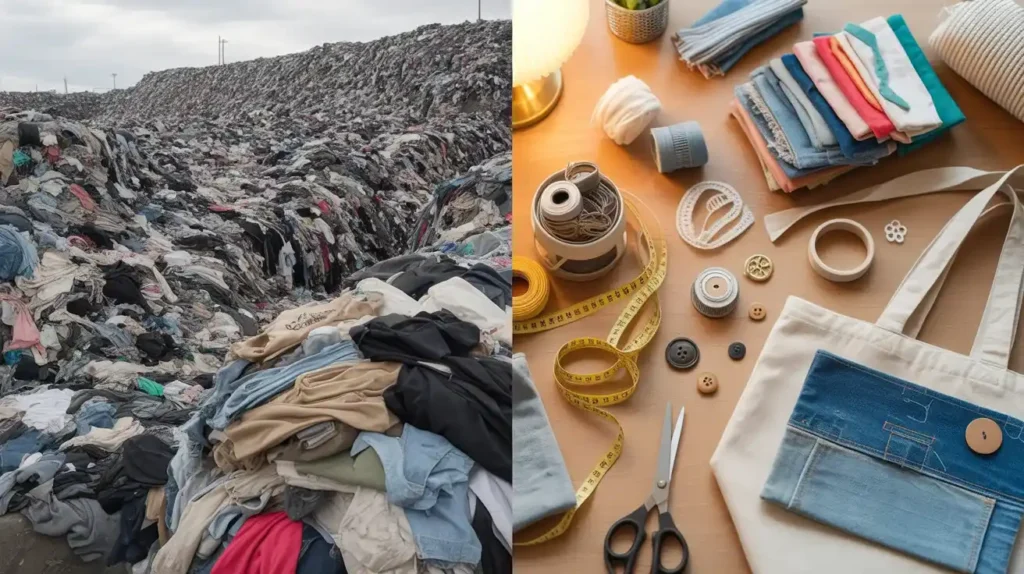
Every year people throw away perfectly usable fabric without realizing the damage it causes. Global textile waste reached 120 million metric tons in 2024 and could exceed 150 million tons annually by 2030.
In the US alone, 66% of all unwanted clothes are landfilled and less than 15% are recycled. The average American throws away about 81 pounds of clothing annually, much of which ends up in landfills. That’s the weight of a grown adult every single year, per person.
Your old t-shirt crafts are a direct response to this crisis. Upcycling, repurposing, and recycling old shirts at home costs nothing and creates something genuinely useful.
The slow fashion and sustainable fashion movement is built on exactly this idea make what you already have last longer before anything new enters your life.
Only 1% of clothes ever get recycled into new garments. Everything else either rots underground or burns. So the next time you reach for that bin, keep reading first. TheRoundup
Reusing vs Recycling vs Donating: Which Is Better?
Reusing always comes first, it costs nothing, needs no shipping, and keeps the item useful in your own home. Donating comes second, especially for gently worn graphic tees that someone else can still enjoy.
Textile recycling programs like For Days and Marine Layer Re-Spun are the final option for shirts too damaged for either. Every single one of these beats a landfill always.
Know Your T-Shirt Fabric Before You Start
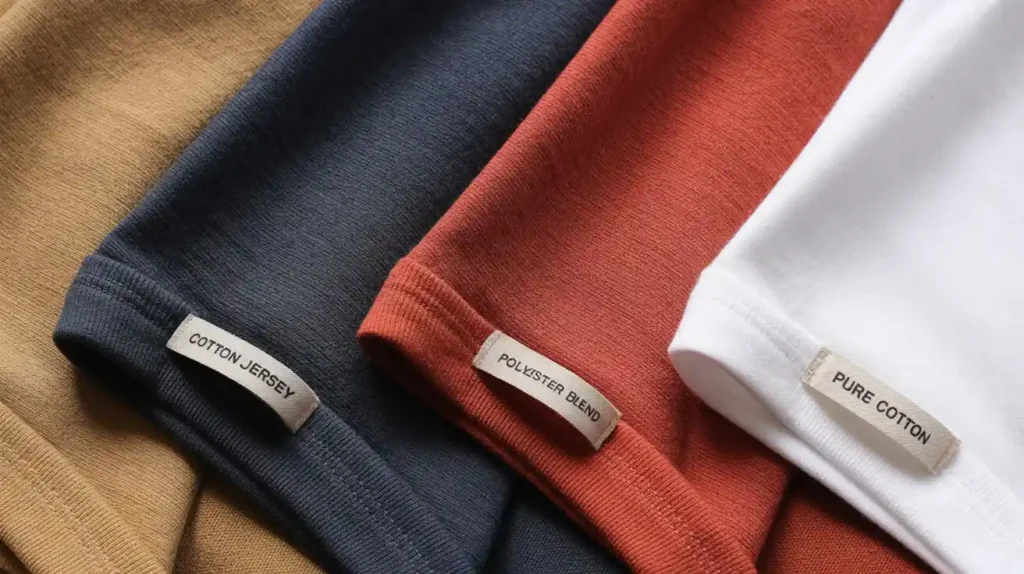
Knowing your fabric before you start saves you a lot of frustration. Cotton jersey is the best material for almost every DIY t-shirt project; it’s soft, stretchy fabric that doesn’t fray at cut edges, which is why so many no-sew t-shirt ideas actually work.
A stiffer cotton fabric tee works better for quilts and structured pillows. Polyester blends are harder to cut cleanly and don’t absorb well, so they’re less ideal for most projects.
Before you pick up your scissors, hold the shirt up to light. If it’s thin and worn through in patches, cut it into cleaning rags. If the design is still sharp and the knit fabric feels solid, it deserves something better: a pillow, a wall display, or a quilt square. I’ve personally ruined two perfectly good projects by skipping this step. Check first.
Why Stretchy Fabric Is Actually Easier for Beginners
Jersey knit doesn’t fray at cut edges, which means you can leave raw edges completely untouched without the fabric unraveling over time.
That one property is what makes t-shirt refashion no-sew projects so beginner-friendly; the fabric handles the finishing itself. You don’t need a serger, a zigzag stitch, or any special tools at all.
No-Sew T-Shirt Ideas: Zero Skills Needed
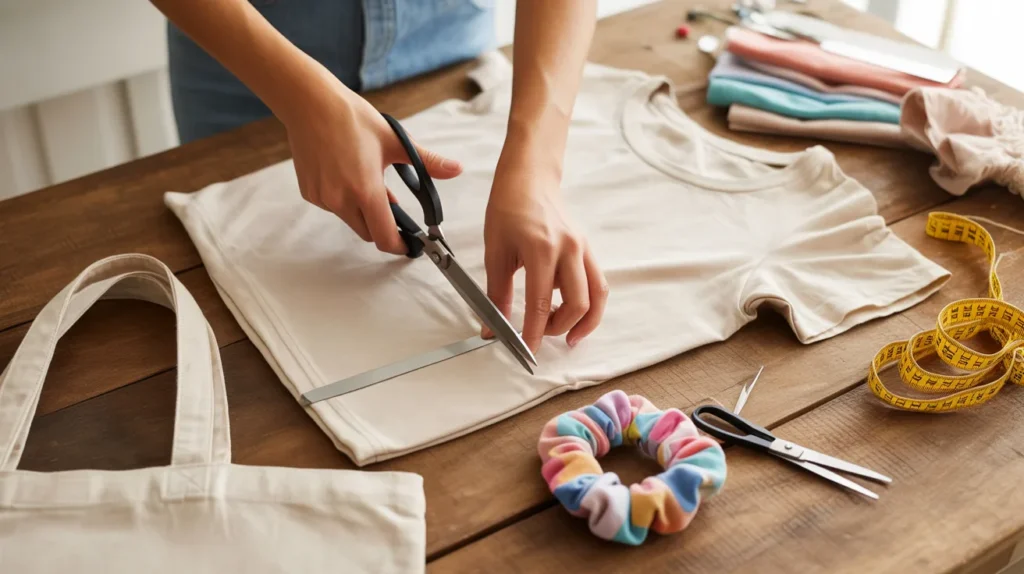
What can you do with old t-shirts without sewing? You can make tote bags, scrunchies, headbands, cleaning rags, pet toys, produce bags, and infinity scarves all with just a pair of scissors and under 15 minutes. Every idea below is labeled clearly so you know exactly what you’re getting into.
Tote Bag [No-Sew] [Beginner] [10 mins]
Cut off the sleeves; those become your handles. Cut a wider neckline to create the bag opening. Then cut 2-inch strips along the bottom hem and tie each pair into a tight knot to close the base.
You now have a washable, sturdy, reusable shopping bag from a t-shirt ready for the farmers’ market. Tanjuria Willis, founder of Atlanta Sustainable Fashion Week, puts it simply: “With just a few snips and knots, an old t-shirt becomes a stylish tote washable and waste-free.”
Scrunchies and Headbands [No-Sew] [Beginner] [5 mins]
Cut your shirt into long strips about 2 inches wide. Braid or twist them and tie off the ends. Cotton jersey is naturally gentle on hair, which makes it ideal for everyday wear or wash-day use.
Willis says: “Stretchy cotton jersey is ideal for DIY hair accessories. Upcycled headbands are gentle on your hair and endlessly customizable.” This is honestly one of the easiest t-shirt upcycling ideas anyone can do in five minutes flat.
H3: Infinity Scarf [No-Sew] [Beginner] [5 mins]
Remove the bottom hem. Cut the remaining fabric in half horizontally. Take the lower section, the one without sleeves, and stretch it out fully.
The stretchy fabric curls naturally at raw edges and softens into a wearable, comfortable t-shirt infinity scarf. Done in under five minutes, and it looks completely intentional.
Cleaning Rags [No-Sew] [Beginner] [2 mins]
Cut your shirt into 10-inch squares. That is the whole tutorial. These diy cleaning rags from shirts are soft enough for glass, TV screens, and stainless steel without scratching.
They’re washable, absorbent, and permanently replace paper towels. Willis calls this her top eco-swap: “Soft, absorbent, washable, the ultimate eco-friendly cleaning cloth.” This is also the perfect use for shirts that are too worn to make anything else from.
Dog Toy or Cat Toy [No-Sew] [Beginner] [10 mins]
Cut three thick strips from your shirt. Braid them tightly and knot each end firmly. For a cat toy, attach a longer loose strip for dangling.
For a dog toy, make the braid thicker so it handles chewing. Cotton fabric is safe, soft on teeth, and machine washable- a proper diy pet toy from fabric that costs absolutely nothing.
Produce Bag [No-Sew] [Beginner] [10 mins]
Follow the same steps as the tote bag but also cut small holes throughout the fabric so your fruits and vegetables can breathe. This simple diy produce bag from a shirt is a practical farmers market essential and a real zero waste clothing replacement for single-use plastic bags.
Sewing Projects with Old T-Shirts Intermediate Level
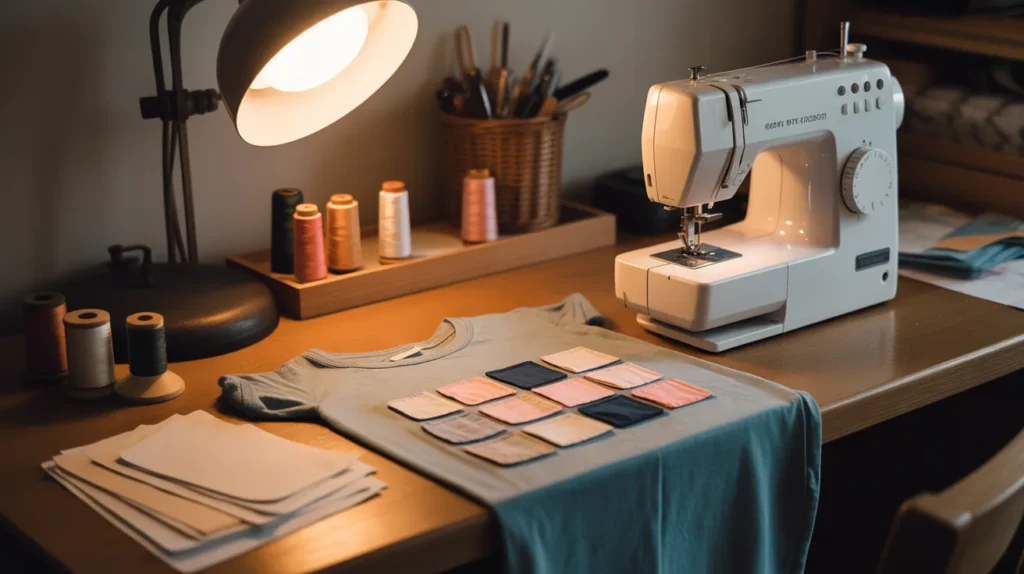
If you own a sewing machine and know a basic straight stitch, sewing projects with old t-shirts unlock a completely different level of results.
These take more time, but the finished products are genuinely impressive and last for years. None of the competitors you’ll find online tell you the difficulty level before you start, so here it is upfront for every idea below.
Throw Pillow [Sewing Required] [Intermediate] [30 mins]
Cut matching squares from the front and back of your shirt. Add interfacing for t-shirt quilt fabric to stabilize the knit fabric so it holds its shape.
Stitch three sides together, stuff with a pillow insert or pillow batting, then close the fourth side. For a removable cover, install a zipper at the back.
Christina Argonish, artisan and owner of Sister Trade City, recommends adding batting between layers: “It maintains the shape over time and adds a touch of luxury to your homemade creation.”
Cloth Napkins [Sewing Required] [Intermediate] [20 mins]
Cut 10-inch squares for cocktail napkins or 20-24 inch squares for dinner napkins. Sew pairs together with a zigzag stitch into two-ply reusable cloth napkins from a shirt.
Mix fabric from different shirts so each side shows a different color or pattern. The result looks completely intentional and eclectic not like a craft project at all.
Racerback Workout Tank [Sewing Required] [Intermediate] [30 mins]
Cut the collar wider and reshape the sleeves into a racerback pattern. Use a stretch stitch so seams flex during movement without popping.
This t-shirt refashion idea costs nothing and produces a gym-ready workout top from a shirt that was otherwise headed for the bin. A small knot at the back finishes the look cleanly.
Patchwork Pillow [Sewing Required] [Intermediate] [1 hour]
Cut squares from five or six different shirts. Sew them together into a patchwork t-shirt blanket-style front panel. Back it with a solid piece from one shirt.
The result looks like deliberate modern art and nobody will guess it came from your old t-shirt pile. This is one of the best diy home decor from old clothes projects you can do on a weekend.
What to Do with Old Sentimental T-Shirts You Can’t Throw Away
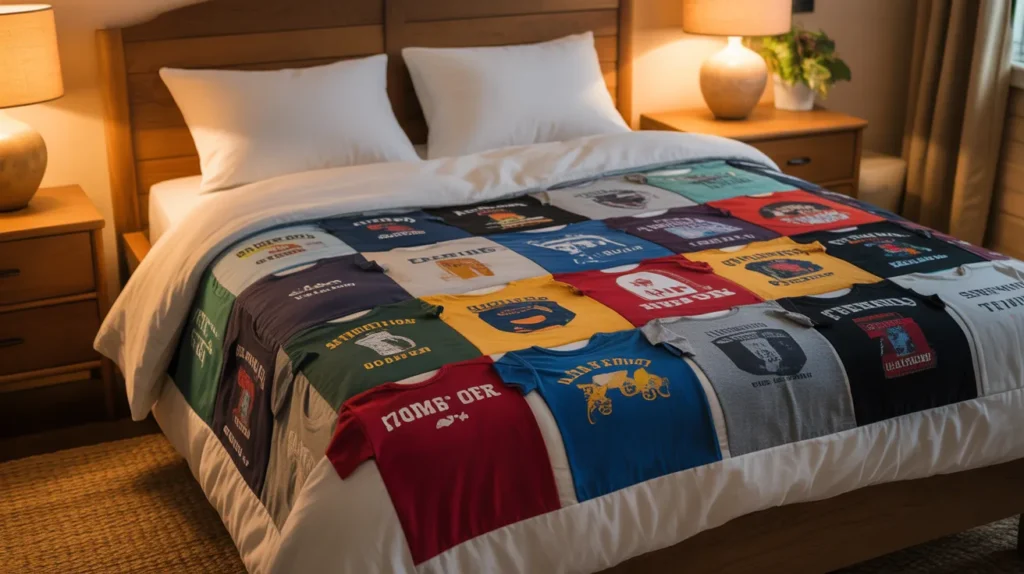
What should you do with old sentimental t-shirts you can’t throw away? Turn them into a memory quilt, a memory pillow, or a framed wall display.
Each one preserves the shirt’s design permanently and puts it somewhere you’ll actually see it every day. These are the three best options, and none of your competitors cover them with real depth.
Some shirts carry memories too specific to ever donate. The concert tee from the night you met your best friend. The shirt from your kid’s first soccer team.
The one from a trip that changed something in you. Throwing those away doesn’t feel like decluttering; it feels like erasing. The sentimental clothing keepsakes approach below solves that completely.
Project Repat, one of the most well-known t-shirt quilt companies in the US, has processed hundreds of thousands of sentimental shirts into quilts since 2012.
Their customers consistently describe the finished product as the most meaningful gift they ever gave themselves. That tells you everything about how powerful it feels to see those shirts assembled into something permanent. For a full guide on handling your sentimental shirts with care, read what to do with old sentimental t-shirts.
Memory Quilt: The Keepsake That Covers You
A t-shirt quilt made from sentimental shirts is one of the most meaningful old clothes reuse ideas you’ll ever try. Each square shows a different chapter of your life stitched into something warm.
Christina Argonish of Sister Trade City says: “Having each square featuring a design from an old shirt is a great way to showcase them and share the memories.”
Memory Pillow: One Shirt Into One Forever Object
Cut the front graphic as your pillow face, back it with fleece backing, stuff it, and stitch it closed. It sits on your couch or bed every single day, visible, touchable, and meaningful in a way a drawer full of folded shirts never could be. This is the fastest memory pillow from clothing you can make in under 30 minutes.
Keepsake Drawstring Bag: A Memory Holding Other Memories
Turn one sentimental shirt into a drawstring bag and use it to store other small keepsakes, such as concert tickets, wristbands, and photographs. It takes 15 minutes, and the result is a memory inside a memory. Simple but genuinely special.
What to Do with Old Band T-Shirts and Concert Tees

What is the best way to repurpose old band t-shirts? Frame them as wall art, turn them into a concert tee quilt, or make a tote bag from them.
All three preserve the design and keep the energy of those shirts alive in your daily space. None of your competitors give this topic its own dedicated section, which is a clear gap you can fill.
Band t-shirts carry a specific energy that regular shirts don’t. They represent the show, the crowd, the version of you that stood in that venue.
Most people leave them in a drawer until they disintegrate. A framed concert tee stretched over a canvas frame or mounted in a wooden frame becomes genuine wall art that starts conversations every time someone visits.
A gallery wall of three or four framed band shirts looks like a curated music collection, intentional and cool. For a step-by-step wall display guide, read how to frame a t-shirt.
Band T-Shirt Quilt: A Patchwork of Music Memories
Five or more band t-shirts can become a patchwork t-shirt blanket that tells your entire music history in one object. Apply interfacing to each square first so the jersey knit stays flat and doesn’t stretch during quilting. The result is something you’d genuinely want on your couch, not hidden in storage.
Band Tee Tote Bag: Wear Your Music Daily
A t-shirt tote bag diy made from your favorite band shirt is a subtle flex that carries your taste into the world every day. Cut the no-sew style sleeves off, bottom-knotted, and carry your groceries or gym gear in a bag that starts conversations. Upcycling a concert tee into a tote takes 10 minutes and costs nothing.
How to Make a T-Shirt Quilt: Complete Beginner Guide
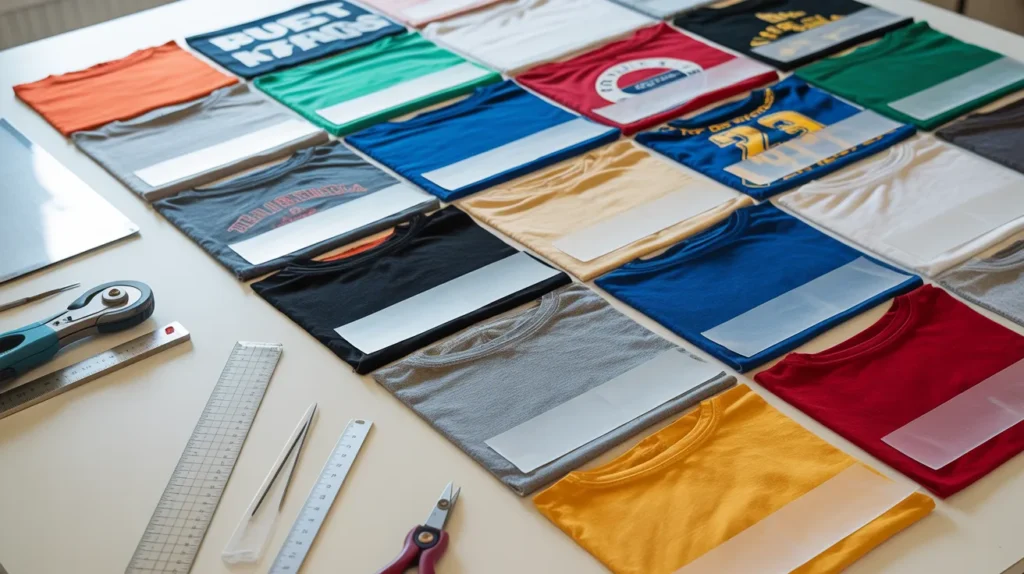
What do you need to make a t-shirt quilt? You need your shirts, iron-on woven interfacing, a sewing machine, fleece backing or flannel backing, scissors, and an iron.
The interfacing is the most important material; it’s what stops jersey knit from stretching and distorting when you sew the squares together. For a full step-by-step guide on stabilizers and materials, read what stabilizer do you use for t-shirt quilts.
One of the most common questions people ask before starting is how many shirts they actually need. According to Project Repat, one of the US’s leading t-shirt quilt making services, the number depends on shirt size, graphic size, and quilt style.
They recommend 15 t-shirts for a full-size quilt and can work with as few as 8 shirts for a lap-size. Here is a practical sizing table to plan before you start:
For more detailed planning by graphic size and layout style, read how many t-shirts for a quilt and how many t-shirts to make a quilt.
Fleece vs Flannel Backing: Which Works Better?
Fleece backing for a quilt is softer, warmer, and doesn’t need hemming, ideal for beginners. Flannel backing is lighter and breathes better, which suits warmer climates.
Most quilting enthusiasts prefer fleece for a cozy, weighted feel. If sewing isn’t your thing, professional quilter services like Project Repat handle the entire process for a flat fee.
How to Make T-Shirt Yarn: And What to Create With It
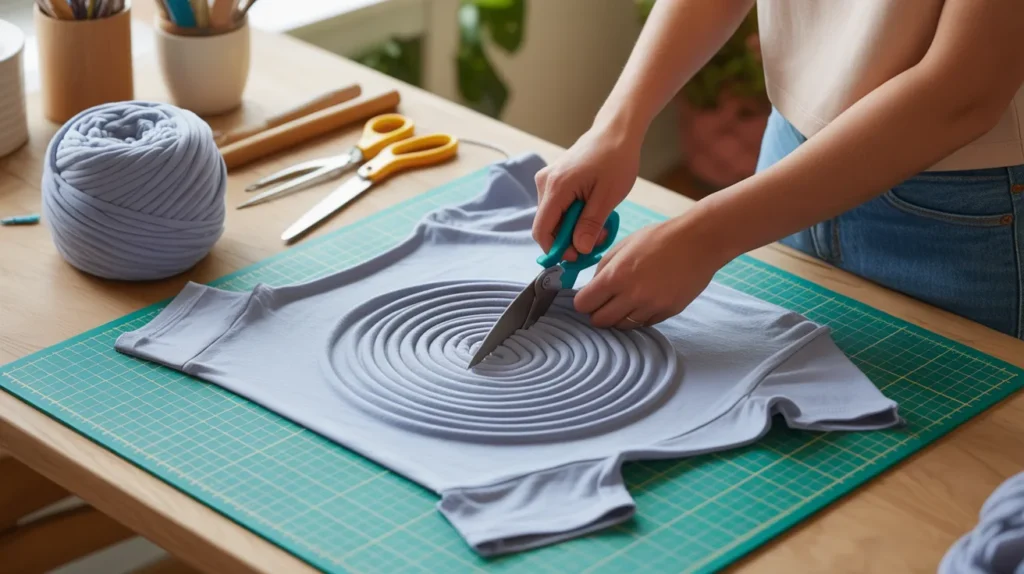
How do you make t-shirt yarn? Lay your shirt flat and cut off the hem and sleeves. Cut the body into horizontal strips 1 to 1.5 inches wide but stop about an inch from one edge so the strips stay connected.
Unfold, then cut diagonally at the uncut edge to join all strips into one long continuous piece. Stretch it and it curls into round, rope-like t-shirt yarn. For a full visual step-by-step, read how to make t-shirt yarn.
Once you have your yarn, pick up a crochet hook or knitting needles and get started on any of the projects below. T-shirt yarn crochet projects are genuinely beginner-friendly because the yarn is thick, easy to handle, and very forgiving of uneven tension.
Best Projects to Make with T-Shirt Yarn
A braided t-shirt rug is the most popular project: braid three long strips together and coil them flat, stitching as you go. A t-shirt plant hanger macrame takes about 30 minutes and looks stunning in any room with plants.
You can also crochet a basket or bowl for everyday storage, or make pot holders and coasters. The stretchy fabric gives everything a relaxed, handmade texture that looks boho and intentional, not accidental.
How to Frame a T-Shirt: Wall Display Guide
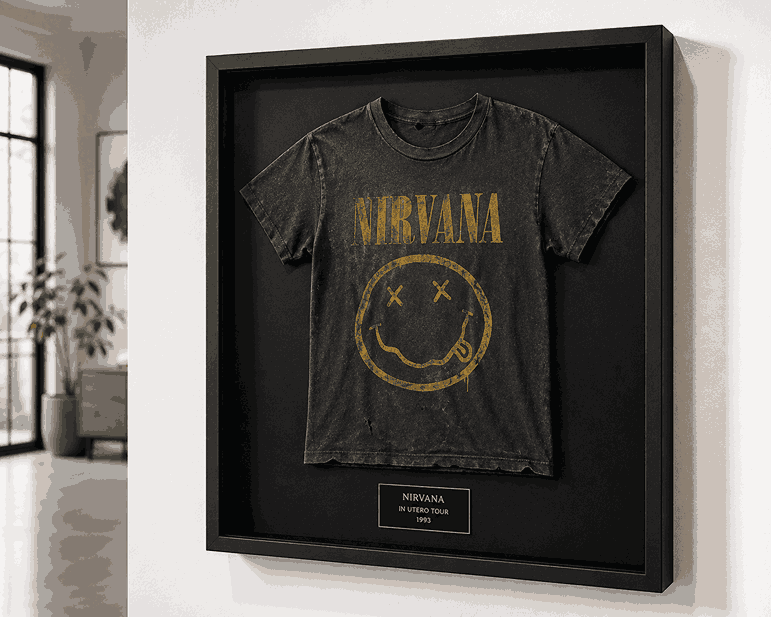
How do you frame a t-shirt for wall display? You have three options: a canvas frame, a wooden frame with glass, or a shadow box. Shadow boxes work best for thicker shirts or ones with texture.
For a flat graphic tee, a canvas frame gives the cleanest, most gallery-style look. For a complete step-by-step framing guide, read how to frame a t-shirt.
Stretch the shirt tight over the frame, starting from the center of each side and work outward so the design stays perfectly centered. Fold excess fabric neatly at the corners and secure with a staple gun or fusible webbing tape at the back.
This is one of the best framed t-shirt display options for sentimental clothing keepsakes that you want visible rather than stored away.
Gallery Wall Idea: Frame Multiple Shirts Together
Three matching black frames with three different shirts look genuinely impressive as a fabric wall decor gallery. Mix band t-shirts, sports jerseys, and travel tees for a personal, museum-style display.
Use matching frame sizes for a clean minimal look or mix sizes for something more editorial and layered. This is one of the strongest t-shirt wall art diy ideas you can execute in a single afternoon.
Where to Recycle Old T-Shirts You Can’t Upcycle
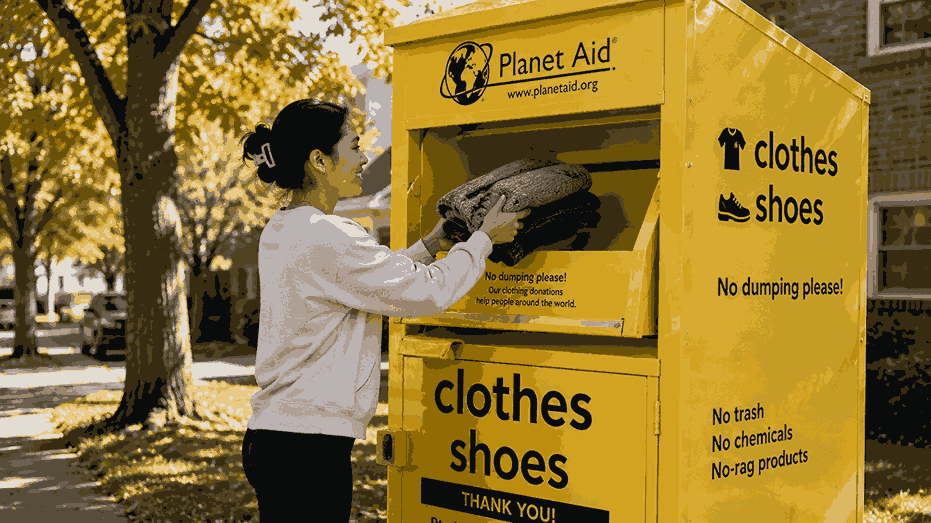
Where can you recycle old t-shirts near you? Start with mail-in programs like For Days and Marine Layer Re-Spun for shirts in any condition.
For gently worn shirts, local Goodwill stores, Planet Aid bins, and community thrift stores are the fastest option. When shirts are too damaged for any of these, textile recycling programs accept them and turn them into insulation, industrial rags, or fiber for new fabric.
Marine Layer’s Re-Spun program has already diverted over 500,000 t-shirts from landfills and provided customers with more than $2 million in store credit to date.
The current program works through a partnership with Trashie. You purchase a Re-Spun Take Back Bag for $20, fill it with unwanted items, mail it back with a prepaid shipping label, and receive $40 in Marine Layer store credit in return.
Each bag holds approximately 15 pounds of textiles, which, when recycled, represents 151 pounds of CO2 savings and 1,596 gallons of water savings.
For Days operates a similar closed-loop fashion model: you order their Take Back Bag, fill it with any brand of clothing in any condition (washed, no undergarments), and receive store credit in return.
Goodwill clothing donation and Planet Aid donation bins are the easiest local options for shirts that are still wearable. Churches, homeless shelters, and community outreach centers also accept clothing. Call ahead to confirm what they’re currently taking.
Are Old T-Shirts Recyclable?
Yes, but the condition requirements vary by program. Mail-in programs like For Days accept shirts in almost any condition as long as they’re washed. Thrift store clothing donation locations need shirts to be clean and still wearable.
Heavily stained or torn shirts that nobody can wear still have real value as textile recycling material; they get broken down into fiber insulation, industrial cloths, or raw material for new fabric production.
Final Thoughts

Learning how to reuse old t-shirts isn’t just a money-saving habit; it’s a meaningful creative practice that pushes back against a global textile waste crisis that gets worse every year.
Every shirt you transform is one less piece of cotton fabric heading to a landfill. Whether you’re making a quick no-sew tote bag, a deeply personal memory quilt, a braided t-shirt rug, or a full batch of t-shirt yarn for a crochet rug from t-shirt yarn project, you’re doing something that actually matters.
Sustainable fashion and zero waste clothing habits start at home in your own closet, with the shirts you already own. So grab those scissors, pick one project from this guide, and give your old tees the second life they deserve. Because every shirt has at least one more story left to tell.
Frequently Asked Questions
How do you reuse old t-shirts without sewing?
Cut them into tote bags, produce bags, cleaning rags, scrunchies, headbands, or infinity scarves. None of these need a single stitch just scissors and a few minutes. These are the best answers for how to upcycle t-shirts without sewing and how to recycle old t-shirts without sewing.
How many t-shirts do you need to make a quilt?
A throw-size quilt needs 12 to 16 shirts. A twin needs 20 to 25. A full needs 28 to 35. A queen needs 35 to 40. Read the full planning guide at how many t-shirts for a quilt.
What can I do with old t-shirts I want to keep?
Turn them into a memory quilt, a memory pillow from clothing, or frame them as framed t-shirt display wall art. All three preserve the shirt’s design permanently.
What stabilizer do you use for t-shirt quilts?
Use a medium-weight, non-stretch iron-on woven interfacing. Apply it to the back of each square before cutting. This stops the jersey knit from stretching during sewing. Full guide at what stabilizer do you use for t-shirt quilts.
How do you make t-shirt yarn step by step?
Cut the shirt body into connected horizontal strips, then cut diagonally at the fold to create one long continuous piece. Stretch it into round yarn. Full tutorial at how to make t-shirt yarn.
How do you frame a t-shirt for display?
Stretch it over a canvas frame or mount it in a shadow box. Start from the center of each side, pull tight, and secure at the back with a staple gun or fusible webbing. Full guide at how to frame a t-shirt.
What to do with old band t-shirts?
Frame them, turn them into a concert tee upcycle quilt, or make a t-shirt tote bag diy. Band shirts deserve something better than the back of a drawer.
Where can I recycle old t-shirts near me?
Check Planet Aid donation bins, Goodwill locations, and local thrift stores. For mail-in options, use Marine Layer Re-Spun or For Days.
Are old t-shirts recyclable?
Yes. Programs like For Days accept shirts in any condition. Thrift stores need them clean and wearable. Torn or stained shirts still have value as raw textile recycling material.
What is the best way to upcycle old t-shirts?
Start with a no-sew project like a tote bag or cleaning rags. Then move to sewing projects like pillows or quilts when you’re ready. The best project is always the one you’ll actually finish and use.

I'm Habib founder of Goku Fashion Outfit Style and a boutique owner with over 10 years in the fashion industry. I've styled thousands of real clients, run a fashion business from the ground up, and now I'm sharing everything I know through this blog. My goal is simple: help you dress better, shop smarter, and understand fashion in a way that actually makes sense for your life.
- Habib

- Habib
- Habib
- Habib