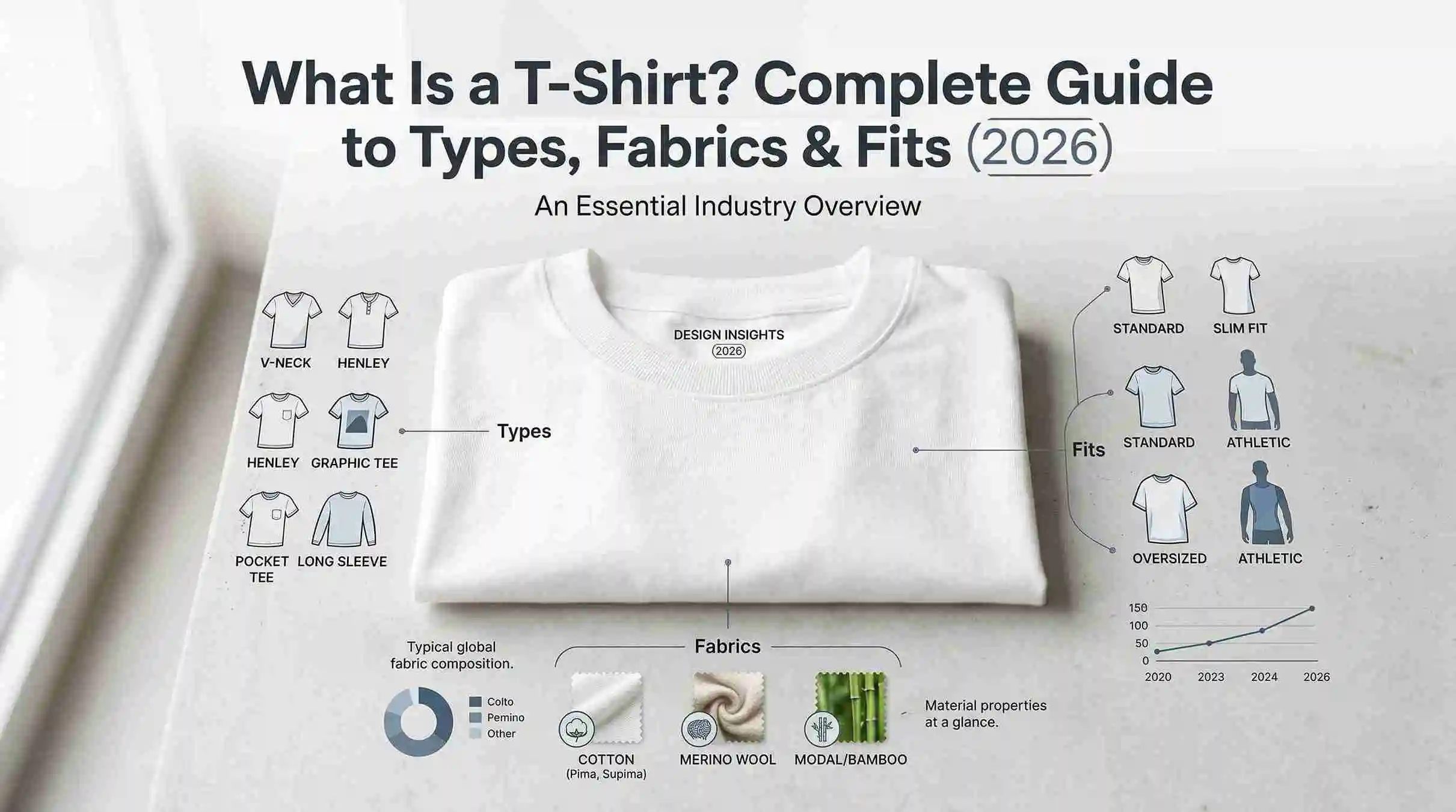
A T-shirt is one of the most versatile and widely worn garments in the world. From military undershirts to high-fashion streetwear staples, the T-shirt has evolved into a global wardrobe essential.
In this complete guide, you’ll learn what a T-shirt is, how it originated, the different types available, fabric options, fits, and how to choose the perfect one for your style and needs.
We’ve all stood in a t shirt store or scrolled endlessly through a t shirt online shop, feeling completely overwhelmed by the sheer number of options.
It’s frustrating when you want a simple staple piece, but you’re bombarded with terms like “ring-spun,” “drop-shoulder,” or “tri-blend” without knowing which one actually fits your vibe.
Instead of finding that perfect everyday tee, you often leave empty-handed or, worse, with a wholesale t shirt pack that shrinks after one wash.
This guide is here to end that confusion once and for all by breaking down the history, fabric science, and types of t shirts available today.
Whether you are hunting for a massive t shirt sale to upgrade your wardrobe or looking into bulk t shirt options for a printing project, we have the answers. By the end, you’ll know exactly how to spot quality and choose the perfect t shirt for your specific style and body type.
1. The Anatomy of a T-Shirt: More Than Just a Basic Staple
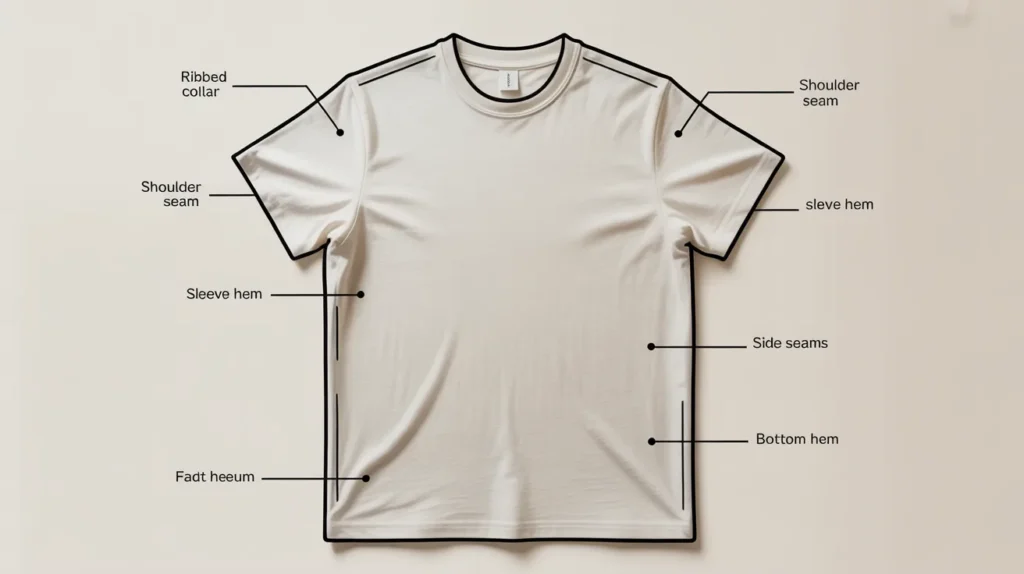
When you examine a t shirt, you might think it’s the simplest garment in your closet, but its construction is surprisingly complex. A high-quality t shirt isn’t just two pieces of fabric sewn together; it involves specific details like the neckline, hem, and sleeve stitching.
For example, the ribbed collar on a crew neck prevents stretching, while the side seams provide structure and shape. Understanding these components helps you distinguish between a cheap, disposable item and a durable wardrobe staple.
The fabric weight, measured in GSM (grams per square meter), plays a massive role in how the t shirt drapes on your body. A lightweight undershirt might feel soft but lacks durability, whereas a heavyweight cotton tee offers a structured, premium feel.
Additionally, the way the fabric is knit whether it’s a standard jersey knit or a softer interlock affects breathability and comfort. Knowing these details ensures you don’t accidentally buy a sheer, flimsy t shirt online when you wanted something substantial.
Finally, the fit is determined by the shoulder seam, which should sit perfectly at the edge of your shoulder bone. If the seam droops, you’re looking at an oversized fit or a drop shoulder style, which is trendy but not always appropriate for every occasion.
A well-constructed t-shirt balances these elements fabric, stitching, and fit to create a versatile piece that works for everything from lounging to layering under a blazer.
Not sure how much a T-shirt should weigh? Here’s a full guide on how much a T-shirt weighs based on fabric type and size.
2. From Union Suits to Hollywood: The Evolution of the Tee
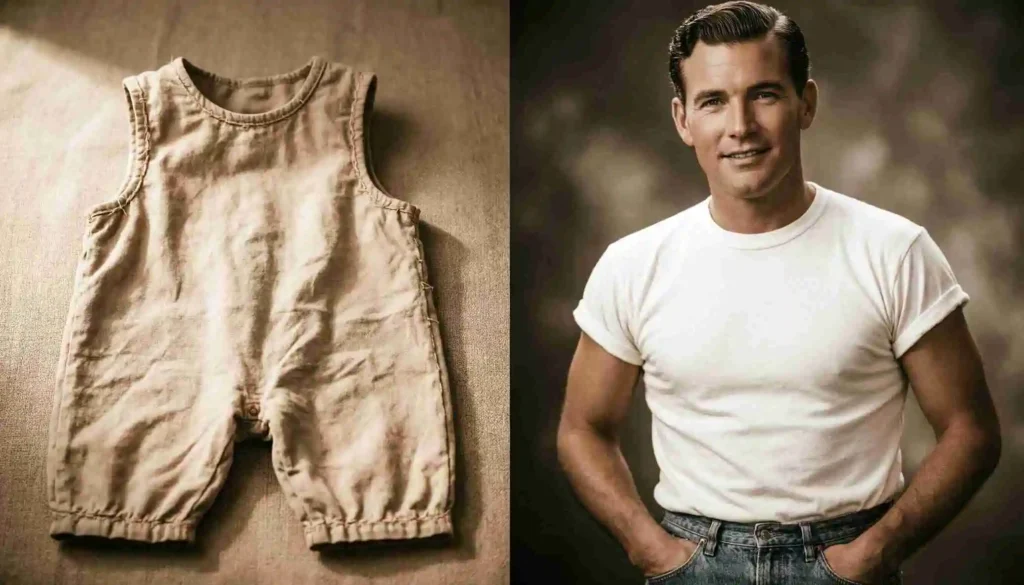
AI Image Prompt: A split-screen vintage style image; on the left, a 19th-century beige union suit illustration; on the right, a 1950s naval officer wearing a crisp white t shirt, sepia tone, historical fashion evolution concept.
The history of the t shirt dates back to the late 19th century, evolving from the one-piece union suit underwear worn by laborers. Workers would cut their union suits in half to stay cool during summer, creating the first iteration of the undershirt.
By 1913, the U.S. Navy officially adopted the white crew neck t shirt as a standard undergarment because it was easy to wash, inexpensive, and comfortable. At this stage, it was strictly hidden beneath uniforms and work clothes, never meant to be seen in public.
It wasn’t until World War II that the t shirt began to gain visibility as soldiers wore them while stationed in hot climates. Returning veterans continued to wear their military issue t shirts casually with trousers, slowly normalizing the look.
However, society still largely viewed it as rebellious or informal, akin to wearing boxers outside. The transition from underwear to acceptable outerwear was slow but inevitable as comfort became a priority in post war America.
The true turning point came when Hollywood embraced the t shirt as a symbol of rugged masculinity and youthful defiance. It moved from the barracks to the silver screen, forever changing its status from a functional necessity to a fashion icon.
This shift laid the groundwork for the massive t shirt printing industry we see today, turning a blank canvas into a powerful tool for self-expression and cultural identity.
3. How Marlon Brando and James Dean Changed Fashion Forever
In the 1950s, Marlon Brando shattered fashion norms by wearing a tight, white fitted t shirt in the film A Streetcar Named Desire. His raw, brooding performance turned the humble undershirt into a symbol of intense masculinity and sex appeal.
Suddenly, men everywhere wanted to emulate that effortless, rebellious look, leading to a surge in t shirt sales across the country. Brando proved that a simple cotton tee could be just as powerful as a tailored suit.
Shortly after, James Dean cemented the t shirt as the uniform of the cool, disaffected youth in Rebel Without a Cause. Pairing a white t shirt with a leather jacket and jeans, Dean created an iconic silhouette that remains a standard in mens fashion today.
This look wasn’t just about clothing; it was an attitude that resonated with a generation tired of stiff, formal dress codes. The t shirt became a flag for the counterculture, representing freedom and non conformity.
Because of these icons, the t shirt transitioned from a hidden layer to the main event of an outfit. Manufacturers responded by improving the quality, offering better fabrics and fits that were designed to be shown off.
Today, whether you’re buying a high-end designer t shirt or a basic pack from a wholesale t shirt supplier, you can trace its popularity back to these two Hollywood legends who dared to wear their underwear on the outside.
4. The Classic Crew Neck: The Universal Standard
The crew neck t shirt is arguably the most ubiquitous piece of clothing on the planet, characterized by its round, collarless neckline. It sits close to the neck, offering a clean and timeless look that works for every body type.
Originally designed to absorb sweat and prevent chafing under military uniforms, the crew neck has become the go-to style for everything from gym sessions to casual Fridays. Its versatility makes it the top seller in almost every t shirt store.
One of the main reasons for the crew neck’s popularity is its ability to layer seamlessly under other garments. You can wear it under a flannel, a denim jacket, or even a sweater without the neckline clashing.
Because it covers the collarbone, it also provides a bit more structure to the upper body, making your shoulders look broader. This makes the crew neck a favorite for men who want a simple, masculine silhouette without fuss.
However, not all crew necks are created equal; the width and ribbing of the collar can drastically change the vibe. A thick, chunky collar gives a retro, vintage t shirt feel, while a thin, raw edge offers a modern, edgy aesthetic.
When shopping for bulk t shirts, pay attention to the neck ribbing high-quality options will have spandex mixed in to prevent the collar from stretching out or “baconing” after multiple washes.
5. V-Neck T-Shirts: Adding Height and Style to Your Look
If the crew neck is the standard, the v neck t shirt is the stylish alternative that adds a bit of flair. As the name suggests, the neckline dips down in a V-shape, exposing part of the chest and collarbone.
This cut is excellent for creating the illusion of height and slimming the face, making it a popular choice for men with rounder faces or shorter necks. It brings a touch of sophistication to a casual outfit that a standard tee sometimes lacks.
The depth of the V varies significantly, ranging from a subtle dip to a deep plunge often seen in high fashion or European styles. For most men, a shallow V is the safest and most versatile bet, looking great on its own or under a blazer.
In fact, the v neck t shirt was originally popularized as an undershirt because the lower neckline remains hidden when the top button of a dress shirt is undone. This practical origin has evolved into a deliberate style choice for the modern man.
When styling a v neck, fit is crucial; it shouldn’t be too loose, or it will look sloppy. A fitted t shirt in a V-neck style highlights the chest and shoulders, making it a flattering option for those who work out.
Whether you choose a solid color or a subtle heather grey, a well-fitting v neck elevates your casual game, proving that you put a little extra thought into your wardrobe essentials.
6. The Buttoned-Up Look: Henleys and Polos Explained
The Henley t shirt is essentially a collarless polo, featuring a buttoned placket that adds visual interest to the neckline. It originated as a uniform for rowers in the English town of Henley on Thames, giving it a sporty yet classic heritage.
Because of the buttons, you can adjust the neckline for ventilation or style, making it a versatile piece for transitional weather. A long sleeve henley is particularly rugged, often associated with a laid-back, outdoorsy aesthetic.
On the other hand, the polo t shirt features a structured collar and buttons, bridging the gap between casual tees and formal dress shirts.
Originally designed for tennis players (and later adopted by polo players), the collar protects the neck from the sun while the breathable fabric keeps you cool.
Today, the polo shirt is a staple of smart-casual dress codes, perfect for golf courses, offices, and dinner dates. It offers a more polished look than a standard crew neck without being as stuffy as a button-down.
Both styles rely heavily on fabric texture to stand out; piqué cotton is standard for polos, while waffle knit or slub cotton is common for Henleys.
These textures add depth to your outfit, making even a solid-colored shirt look interesting. If you want to upgrade your style from basic tees, investing in a few high-quality Henleys and polos from a reputable t shirt online shop is a smart move.
7. Scoop and Boat Necks: Exploring Wider Cuts
AI Image Prompt: A female fashion model wearing a striped boat neck t shirt, breeze blowing her hair, seaside background, emphasizing the wide neckline cut from shoulder to shoulder, natural sunlight.
While less common in menswear, scoop neck and boat neck styles are staples in women’s fashion and avant-garde men’s collections. A scoop neck t shirt features a deeply curved neckline that exposes the collarbones and sometimes part of the chest.
It offers a relaxed, breezy vibe that is perfect for summer festivals or layering under oversized cardigans. This style is often found in softer, draping fabrics like rayon or tri-blends, enhancing the fluid look.
The boat neck, also known as a bateau neck, runs horizontally across the collarbone from shoulder to shoulder, drawing inspiration from traditional French naval uniforms (specifically the Breton stripe shirt).
This cut widens the shoulder line, creating an elegant and balanced silhouette. It’s a favorite in nautical fashion, often paired with horizontal stripes for a classic, chic look. Unlike the scoop neck, the boat neck sits high, offering modesty while still showing off the neck.
These wider cuts provide a break from the standard crew neck and allow for more creativity in styling. They work exceptionally well with statement necklaces or scarves, making them a versatile base for accessorizing.
If you are looking to expand your wardrobe beyond the basics, browsing the types of t shirts section of a fashion retailer will reveal these unique, flattering options.
8. Sleeve Lengths Guide: Short, Long, and Everything in Between
The short sleeve t shirt is the default for warm weather, hitting around the mid-bicep to show off the arms while keeping you cool. However, sleeve length is a subtle detail that can change the entire proportion of your outfit.
A shorter, angled sleeve can make your arms look bigger, while a longer, wider sleeve reaching the elbow gives a relaxed, streetwear vibe. Finding the right length depends on your body type and the style you want to project.
For cooler days, the long sleeve t shirt is an indispensable layering piece. It can be worn under a vest, a denim jacket, or simply on its own with jeans.
Long sleeve tees often come with ribbed cuffs to keep the sleeves in place, adding a sporty touch. They are also available in varying weights, from thin base layers to thick heavyweight cotton options that function almost like a light sweatshirt. This versatility makes them a year-round essential.
Then there is the three-quarter sleeve, often associated with baseball or raglan styles. This length ends just below the elbow, offering coverage without getting in the way of your hands.
It’s a practical choice for active days or transitional seasons like spring and autumn. Whether you prefer short, long, or somewhere in between, having a variety of sleeve lengths ensures you’re ready for any weather or occasion.
9. The Raglan Sleeve: Understanding the Sporty Aesthetic
The raglan t shirt is distinct because the sleeve extends in one piece fully to the collar, leaving a diagonal seam from the underarm to the neckline.
This construction allows for greater freedom of movement in the arms and shoulders, which is why it became the standard for baseball uniforms. The classic design usually features contrasting colored sleeves against a white or grey body, creating a recognizable sporty look.
Beyond athletics, the raglan sleeve has become a popular style choice for its retro, vintage appeal. Because there is no shoulder seam, it fits a wide range of shoulder widths comfortably, making it a forgiving and flattering option.
It eliminates the “pointy shoulder” problem that can happen with ill-fitting standard tees. This makes it a great choice for custom t shirt projects for teams or casual groups.
Designers often use the raglan cut to play with color blocking and fabric textures. You might find a raglan tee with thermal waffle knit sleeves and a smooth cotton body, adding visual interest. It’s a casual, laid-back style that pairs perfectly with jeans and sneakers, embodying the effortless cool of American sportswear.
10. Sleeveless and Muscle Tanks: Perfect for Workouts
When the temperature rises or it’s time to hit the gym, the sleeveless t shirt or tank top becomes essential. By removing the sleeves entirely, you get maximum ventilation and range of motion, which is crucial for intense workouts.
The cut can vary from a standard crew neck with the sleeves chopped off to a deep-cut tank with thin straps. This style is all about functionality and comfort during high activity.
The muscle t shirt is a specific variation designed to highlight the physique, often featuring deeper armholes and a slightly tapered fit. It gained popularity in the bodybuilding community but has crossed over into casual summer wear.
Made from moisture-wicking fabrics or breathable cotton blends, these shirts keep you cool while showing off your hard work. They are a staple at any t shirt sale geared towards fitness enthusiasts.
However, styling a sleeveless tee outside the gym requires some care. It works best in very casual settings like the beach, a park, or a music festival.
Layering an open button-down shirt over a tank top can elevate the look, making it suitable for a summer barbecue. Whether for performance or leisure, the sleeveless t shirt is a key player in a complete summer wardrobe.
11. Slim Fit vs. Regular Fit: Finding Your Perfect Silhouette
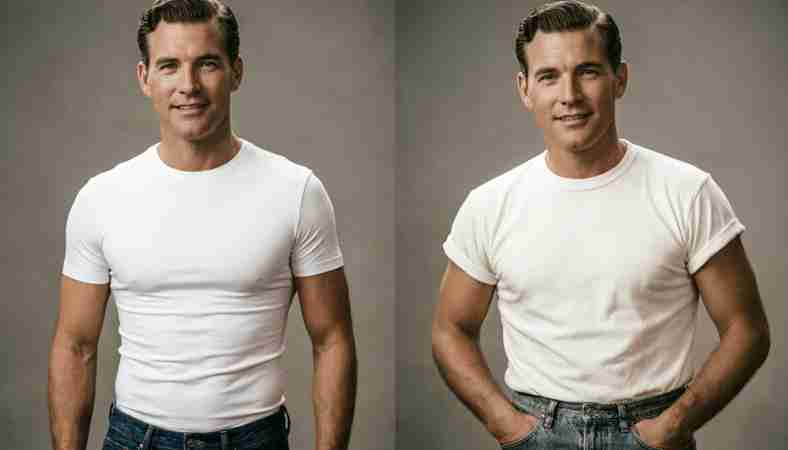
AI Image Prompt: A split image showing the same man; left side in a tight slim fit t shirt hugging the torso, right side in a relaxed regular fit t shirt hanging loosely, highlighting the difference in fabric draping and silhouette.
The fit of a t shirt is just as important as the design; a slim fit t shirt is cut closer to the body, tapering at the waist and hugging the chest and arms. This silhouette is ideal for leaner builds or those who want a sharp, tailored look.
It removes excess fabric that can billow out, creating a clean line that layers beautifully under dress shirts or jackets. A good slim fit shouldn’t be skin-tight; it should just skim the body.
In contrast, the regular fit t shirt, sometimes called a classic fit, offers a boxier, more relaxed shape. It hangs straight down from the chest, providing more room in the waist and sleeves.
This is the traditional cut you’ll find in most bulk t shirt packs and is forgiving for all body types. It’s comfortable, breezy, and timeless, making it a safe bet for everyday wear.
Choosing between the two depends on your personal style and comfort preference. If you prefer a modern, European aesthetic, go for the slim fit.
If you prioritize comfort and a traditional look, the regular fit is the way to go. Many brands now offer a “tailored fit” that sits somewhere in between, giving you the best of both worlds.
12. The Rise of the Oversized T-Shirt in Streetwear Culture
In recent years, the oversized t shirt has dominated the fashion landscape, driven by the popularity of streetwear and hip-hop culture. This isn’t just buying a shirt two sizes too big; a true oversized fit is intentionally cut wider in the shoulders and chest while maintaining a reasonable length.
The dropped shoulders create a relaxed, slouchy silhouette that exudes effortless cool. It’s a rebellion against the tight, fitted styles of the early 2000s.
This trend creates a canvas for bold graphics and branding, as the extra fabric allows for larger prints. Brands like Balenciaga and Fear of God (Essentials) have made the oversized tee a luxury item, proving that comfort can be high fashion.
It pairs perfectly with other loose garments like cargo pants or baggy jeans, creating a cohesive, voluminous look.
Despite its loose nature, styling an oversized t shirt requires balance. Tucking it slightly into the waistband or pairing it with slimmer pants can prevent the outfit from looking sloppy.
Whether you are browsing a high-end boutique or a wholesale t shirt site, you will find that the demand for these roomy, comfortable tees is higher than ever.
If you’re unsure about sizing, here’s how to choose the right oversized T-shirt size for your body type.
13. Boxy and Baggy Fits: The Modern Comfort Trend
Similar to the oversized trend, the boxy t shirt features a specific cut that is wide and square, often shorter in length than a standard tee. This creates a structured, architectural shape that hangs away from the body rather than draping over it.
It’s a favorite in modern minimalist fashion, offering a clean, geometric silhouette. The boxy fit works exceptionally well with high-waisted trousers, balancing proportions.
The baggy t shirt, on the other hand, implies an overall looseness without the structure of a boxy cut. It harkens back to the skater style of the 90s, prioritizing freedom of movement and a carefree attitude.
While “oversized” is a deliberate fashion cut, “baggy” often refers to a generic up-sizing for comfort. Both styles, however, signal a shift away from restrictive clothing.
Fabrics play a huge role here; a heavyweight cotton is needed to hold the shape of a boxy tee, while a softer, thinner fabric suits a baggy look.
Understanding these nuances helps you curate a wardrobe that feels modern and intentional. Whether you choose boxy or baggy, you are embracing a trend that values comfort just as much as style.
14. Why Cotton T-Shirts Remain the King of Fabrics
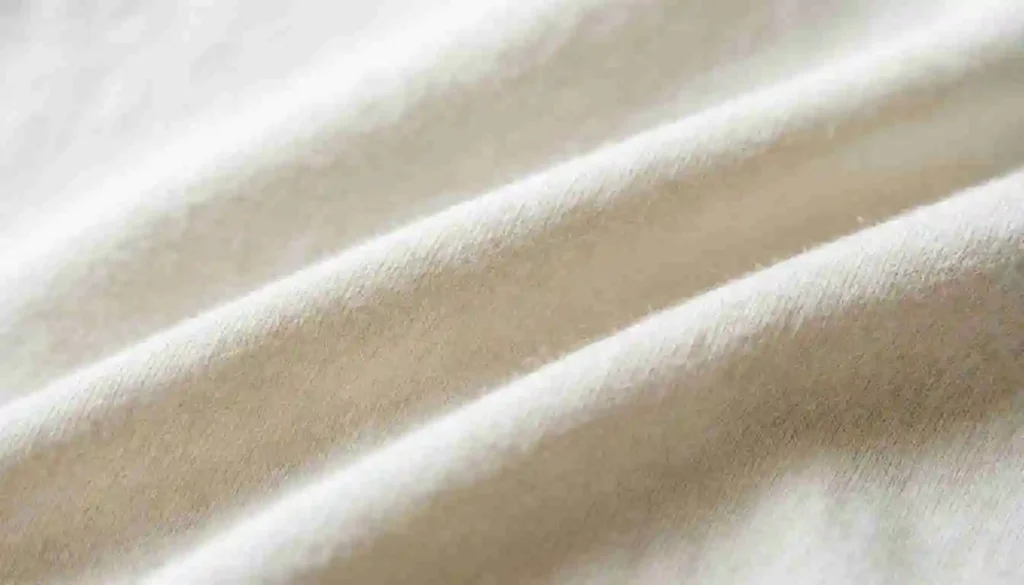
When it comes to fabric, the cotton t shirt is the undisputed king. It is a natural fiber that is soft, breathable, and hypoallergenic, making it comfortable to wear directly against the skin all day.
Cotton absorbs moisture well and allows air to circulate, keeping you cool in the summer. It’s also durable and gets softer with every wash, which is why vintage cotton tees are so coveted.
There are different grades of cotton to consider. Ring-spun cotton is made by twisting and thinning the cotton strands to make a very fine, strong, and soft rope of cotton fibers.
This makes it superior to regular “carded” cotton, which is rougher. Combed cotton goes a step further by combing out short fibers and impurities, resulting in an ultra-smooth fabric perfect for screen printing.
For the ultimate luxury, there is Pima or Supima cotton, known for its extra-long fibers that resist pilling and fading. While these cost more, they last significantly longer than a standard wholesale t shirt. Investing in high-quality cotton ensures your basics look good and feel great for years to come.
If you want a deeper breakdown of cotton blends, check out our detailed comparison of 95% cotton and 5% spandex vs 100% cotton to understand stretch and durability differences.
15. Polyester and Tri-Blends: When to Choose Synthetic Fibers
AI Image Prompt: An athlete running on a track wearing a moisture-wicking synthetic polyester t shirt, water droplets sitting on the surface of the fabric, dynamic motion blur, high contrast, performance wear concept.
While cotton is great for casual wear, polyester t shirts are the champions of athletic performance. Polyester is a synthetic fiber that is extremely durable, wrinkle-resistant, and quick-drying.
It doesn’t absorb water like cotton; instead, it wicks moisture away from the skin to the surface where it can evaporate. This makes it the ideal material for gym shirts and sports jerseys.
Tri-blend t shirts offer the best of three worlds by combining cotton, polyester, and rayon. The result is a fabric that has the softness of cotton, the durability of polyester, and the beautiful drape of rayon.
Tri-blends have a distinctive heathered, vintage look and an incredibly soft, “lived-in” feel right off the rack. They are a favorite for band merch and fashion tees because they are so comfortable.
However, synthetics can hold onto odors more than natural fibers, and they aren’t as breathable for lounging. Choosing between a pure cotton, poly, or tri-blend depends on whether you need the shirt for a marathon, a concert, or a nap. Checking the label before you buy ensures the fabric matches your intended use.
16. Sustainable Choices: Organic Cotton and Recycled Materials
AI Image Prompt: A folded stack of earth-tone organic cotton t shirts placed on a mossy rock in a lush forest, sunlight filtering through leaves, emphasizing nature, sustainability, and eco-friendly fashion.
As consumers become more eco-conscious, the demand for sustainable t shirts has skyrocketed. Organic cotton is grown without harmful pesticides or synthetic fertilizers, making it better for the environment and safer for the farmers.
It uses significantly less water than conventional cotton farming. Many brands are now shifting their entire production lines to organic sources to reduce their carbon footprint.
Another innovation is the use of recycled materials, such as polyester made from recycled plastic bottles (rPET). These eco-friendly t shirts divert waste from landfills and require less energy to produce than virgin polyester.
You might also find blends using hemp or bamboo, which are rapidly renewable resources that produce soft, durable fabrics.
Shopping for sustainable options might come with a slightly higher price tag, but it supports ethical manufacturing practices.
Certifications like GOTS (Global Organic Textile Standard) help you verify that the t shirt store you are buying from is genuinely committed to sustainability. It’s a small choice that makes a big impact on the planet.
17. Graphic T-Shirts: Expressing Personality Through Print
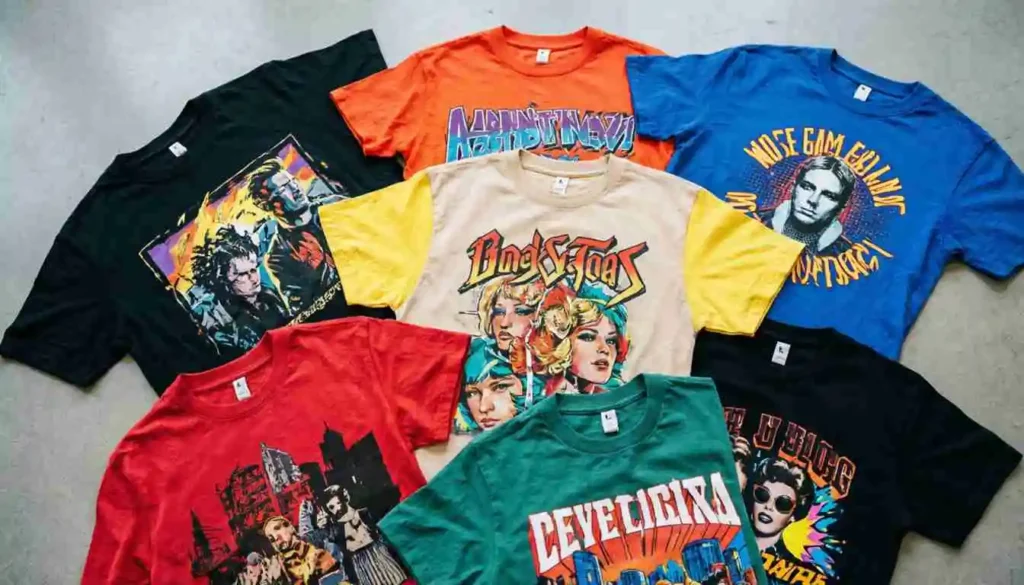
AI Image Prompt: A colorful flat lay of various graphic t shirts with band logos, vintage art, typography, and pop culture references, scattered on a concrete floor, vibrant and artistic composition, overhead shot.
The graphic t shirt is more than just clothing; it’s a billboard for your identity. From band logos and political slogans to abstract art and memes, graphics allow you to wear your interests on your chest.
This style exploded in the 70s and 80s as printing technology improved, making it easier to mass-produce detailed designs. Today, graphic tees are a staple in everyone’s closet, from toddlers to rock stars.
The method of printing affects the look and feel of the graphic. Screen printing creates a thick, durable layer of ink that pops with color, perfect for bold logos.
Direct-to-garment (DTG) printing allows for photorealistic detail and soft gradients, often used for smaller custom batches. Vintage graphics often use a “distressed” print technique to look worn and aged instantly.
Styling a graphic tee is easy; it pairs with everything from jeans and leather jackets to blazers and skirts. It adds a focal point to an outfit and can start conversations.
Whether you are hunting for a rare vintage find or buying a new release from a favorite artist, the graphic t shirt remains a powerful tool for self-expression.
18. The Vintage T-Shirt Revival: Nostalgia Fashion
There is a unique charm to a genuine vintage t shirt that modern reproductions struggle to replicate. The faded fabric, the cracked print, and the single-stitch construction speak to a history and a life lived.
The vintage market has exploded, with rare concert tees from the 90s selling for hundreds, sometimes thousands, of dollars. It’s driven by nostalgia and a desire for unique, one-of-a-kind items that no one else has.
Collectors look for specific details like “single-stitch” sleeves (a hem style used before the mid-90s) and specific tags (like old Hanes or Brockum labels) to verify authenticity.
The fabrics from older eras, often 50/50 blends, have aged into an incredible softness that feels paper-thin and airy. This aesthetic has influenced modern fashion, with brands creating “pre-distressed” vintage style tees to capture the vibe.
This revival is also sustainable, as buying vintage is a form of recycling. It keeps clothes out of landfills and reduces the demand for new production.
Whether you scour thrift stores or buy from curated vintage dealers online, adding a few vintage pieces gives your wardrobe character and depth.
Learn how to identify a single-stitch T-shirt and why collectors value them so highly.
19. The Pocket Tee: Adding Utility to Minimalism
The pocket t shirt adds a small but significant detail to the standard tee: a patch pocket on the left chest. Originally added for utility to hold cigarettes, pens, or glasses the pocket today is mostly a stylistic feature. It breaks up the blank space of a solid shirt, adding visual interest and a touch of rugged workwear aesthetic.
Designers often use the pocket to introduce contrast, using a different color or pattern than the body of the shirt. A floral pocket on a white tee or a denim pocket on a grey tee creates a subtle, stylish accent. It turns a basic wholesale t shirt into a fashion item. The pocket also adds a layer of fabric, which can prevent nipple show-through on lighter colored shirts.
Pocket tees generally have a more relaxed, casual vibe than plain tees. They look great with shorts in the summer or layered under an open flannel shirt. It’s a small detail that upgrades a simple basic into a thoughtful piece of clothing.
20. Men’s vs. Women’s T-Shirts: Key Differences in Cut and Fit
While many t-shirts are sold as unisex, there are distinct structural differences between a mens t shirt and a womens t shirt. Men’s shirts are typically cut straight up and down (tubular) with longer sleeves and broader shoulders. They are designed to accommodate a wider upper body and a narrower hip, providing a boxy or relaxed fit.
Women’s t-shirts, often called “missy fit” or “ladies cut,” are tailored to follow the curves of the female body. They usually feature shorter, capped sleeves, narrower shoulders, and a tapered waist that flares slightly at the hips.
The length is often shorter to hit at the hip bone rather than covering the seat. The necklines are also more varied, with lower scoops and V-necks being common.
However, fashion is fluid, and many women prefer the loose fit of a mens t shirt for a boyfriend style, while some men opt for the slimmer silhouette of unisex sizing. Knowing these differences helps you navigate size charts when shopping for a t shirt online, ensuring you get the fit you actually want.
21. Custom T-Shirts: A Canvas for Art and Branding
The custom t shirt industry is massive, fueling everything from corporate branding to family reunions. Thanks to accessible technology like print-on-demand, anyone can become a t shirt designer.
You can upload a photo, add text, and have a unique shirt delivered to your door in days. This democratization of design has led to an explosion of niche creativity.
Businesses use custom t shirts as walking billboards. A well-designed staff shirt or promotional giveaway builds brand loyalty and visibility.
For artists, selling designs on platforms like Redbubble or Etsy allows them to monetize their art without holding inventory. The quality of custom printing has improved drastically, with vibrant colors and durable inks now standard.
When ordering custom shirts, the choice of the base garment is crucial. A cheap, scratchy shirt will end up in the trash, but a soft, high-quality cotton t shirt will be worn repeatedly.
Whether for a startup, a band, or a bachelorette party, custom tees create a sense of unity and identity.
22. Extending the Lifespan: Care Tips for Your Favorite Tees

AI Image Prompt: A neat stack of perfectly folded colorful t shirts in a woven laundry basket next to a modern white washing machine, clean and organized home laundry room setting, bright lighting.
Once you’ve found the perfect t shirt, you want it to last. Proper care starts with washing; always wash your tees in cold water to prevent shrinking and fading.
Hot water breaks down the fibers and destroys the elasticity in the collar. Turning the shirt inside out protects the graphic print from abrasion against other clothes and the machine drum.
Avoid the dryer whenever possible. High heat is the enemy of cotton and prints, leading to cracking and shrinkage. Air drying or hanging your shirts is the best way to preserve their shape and fit.
If you must use a dryer, use the lowest heat setting. Also, never iron directly over a print; iron the shirt inside out to smooth wrinkles without melting the design.
Folding your tees properly prevents creases and saves drawer space. For knitted fabrics like t-shirts, hanging can sometimes cause shoulder bumps or stretching, so folding is generally preferred.
By following these simple steps, you can keep your favorite wardrobe staples looking fresh and new for years, saving you money and reducing textile waste.
You can also read our step-by-step guide on how to wash graphic T-shirts without cracking the design.
Conclusion
Finding the perfect t shirt isn’t just about picking a color; it’s about understanding the nuances of fabric weight, fit, and style. Whether you prefer the structured look of a heavyweight cotton tee or the breezy feel of a vintage tri-blend, your choice defines your personal fashion statement.
By knowing the difference between a crew neck and a scoop neck, or when to wear an oversized fit versus a slim fit, you elevate a simple wardrobe staple into a deliberate outfit choice.
Don’t settle for low-quality options when you shop at a t shirt store or browse for a t shirt online; look for details like ring-spun cotton and side-seam construction to ensure longevity.
Ultimately, whether you are buying a single graphic tee or investing in a bulk t shirt order for a custom design project, quality always matters. Now that you know the history and the types of t shirts available, you can shop the next t shirt sale with total confidence.
No matter how simple a T-shirt may seem, its history, structure, and variations make it one of the most thoughtfully engineered garments in fashion. Below are answers to some of the most frequently asked questions about T-shirts.
Frequently Asked Questions About T-Shirts
What does the “T” in T-shirt stand for?
The “T” in T-shirt refers to the garment’s shape. When laid flat, the body and sleeves form a capital “T,” which inspired the name. The term became widely used in the early 20th century after the U.S. Navy adopted it as a standard undershirt.
What is the definition of a T-shirt?
A T-shirt is a lightweight, collarless garment typically made from knitted fabric such as cotton or cotton blends. It usually features short sleeves and a round neckline and is designed for comfort and versatility.
What is the difference between a shirt and a T-shirt?
A shirt is generally structured, woven, and formal, often including buttons and a collar. A T-shirt is knitted, more flexible, collarless (except polos), and primarily designed for casual wear.
What is a T-shirt used for?
T-shirts are used for everyday casual wear, workouts, layering, promotional branding, custom printing, sleepwear, and fashion styling. Their adaptability makes them one of the most worn garments worldwide.
What is another name for a T-shirt?
Other names for a T-shirt include tee, graphic tee, crew neck, undershirt, and jersey shirt. The naming often depends on style, fit, or fabric.
Why is it called a T-shirt bra?
A T-shirt bra is designed to remain invisible under fitted clothing. It has smooth, seamless cups that prevent visible lines under thin or slim-fit T-shirts.

I'm Habib founder of Goku Fashion Outfit Style and a boutique owner with over 10 years in the fashion industry. I've styled thousands of real clients, run a fashion business from the ground up, and now I'm sharing everything I know through this blog. My goal is simple: help you dress better, shop smarter, and understand fashion in a way that actually makes sense for your life.
- Habib

- Habib
- Habib
- Habib