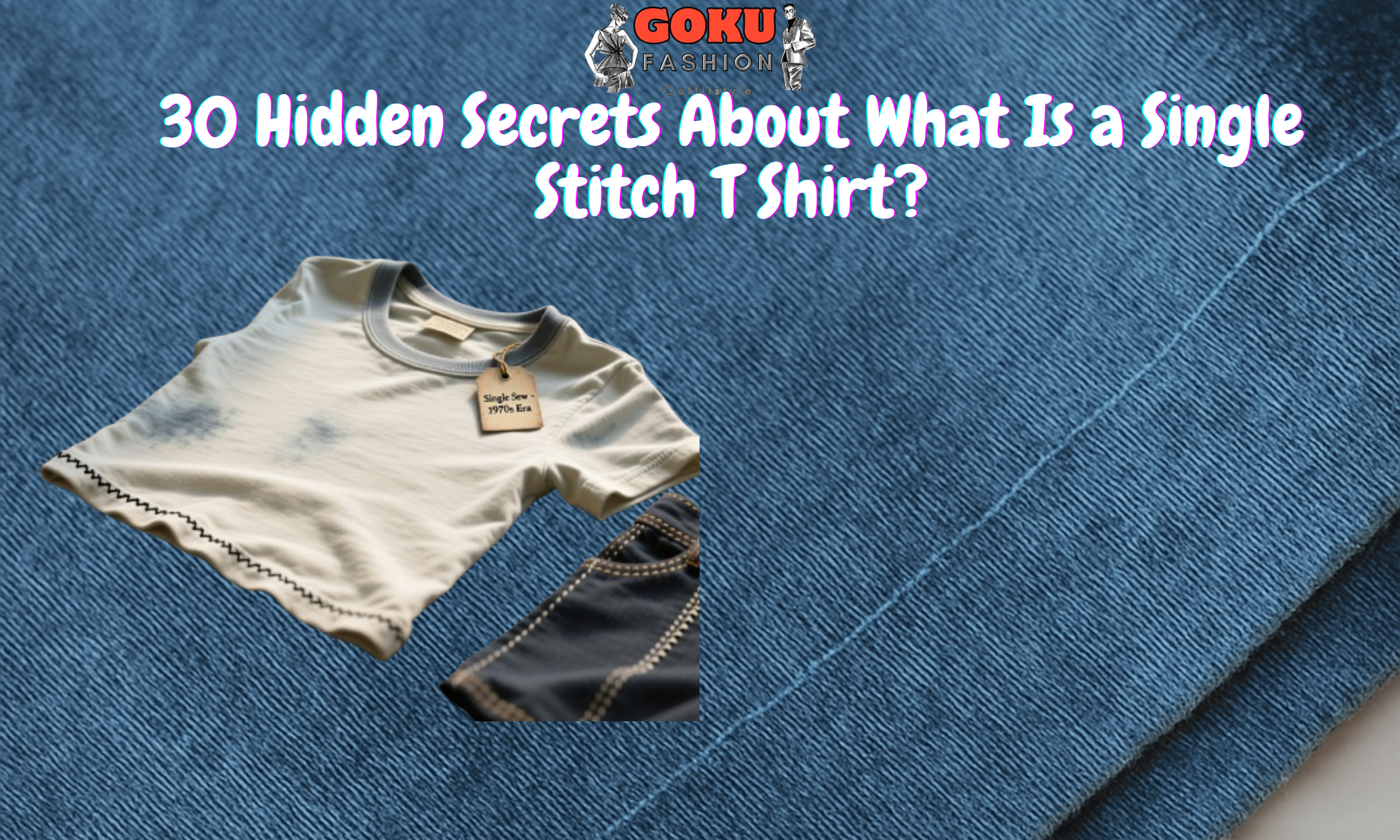
The first time I picked up what looked like a vintage band tee at a thrift store, I had no idea what I was looking at. The tag was faded, the print was cracked, and the hem had a single clean row of stitching. I bought it for $4.
Turned out it was an authentic 1987 tour tee worth over $80. That one find sent me down a rabbit hole, and “single stitch” was the first term I learned.
If you’ve been searching what is a single stitch t-shirt and getting buried in collector jargon, this guide cuts through all of it. You’ll learn the difference between single and double stitch, how to spot a real vintage tee from a fake, and exactly what construction details, tags, and fabric tells to look for so you never overpay or miss a gem again.
What is a single-stitch t-shirt vs double stitch?
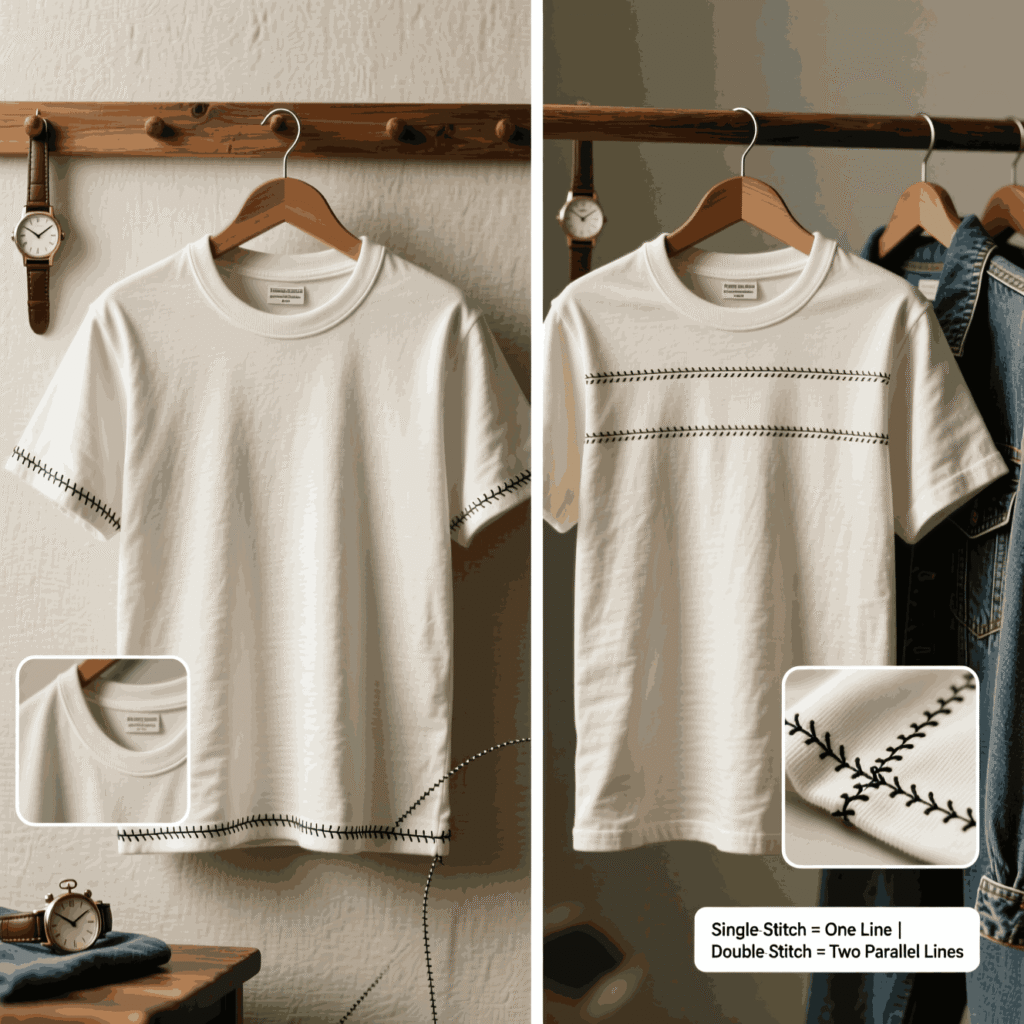
A single-stitch tee uses a single stitch hem with one line of stitching along the sleeve edge or bottom hem. A double-stitched tee uses a double stitch with two rows of stitching made by a twin-needle or double-needle coverstitch machine. In plain English, what does a single-stitch t-shirt means comes down to one neat line versus two parallel lines.
If you came here asking, what does single stitch look like, start at the hem. Flip it over and check both sides. You should see a clean lockstitch on top without visible looper threads on the face like a coverstitch shows.
Collectors often ask, “Are single-stitch shirts better?” The answer depends on context. They signal age and craft for many 70s–90s tees, and that boosts value.
If you still wonder, what is a single stitch t shirt, here’s the quick shorthand: one row at the hem. Double means two. Use that first, then confirm age with tags, graphics, and fabric.
Already found your vintage tee? Once you’ve confirmed it’s authentic, how to soften a t-shirt has the best methods to restore that broken-in feel without damaging the hem or print.
How to spot a single needle hem at a glance
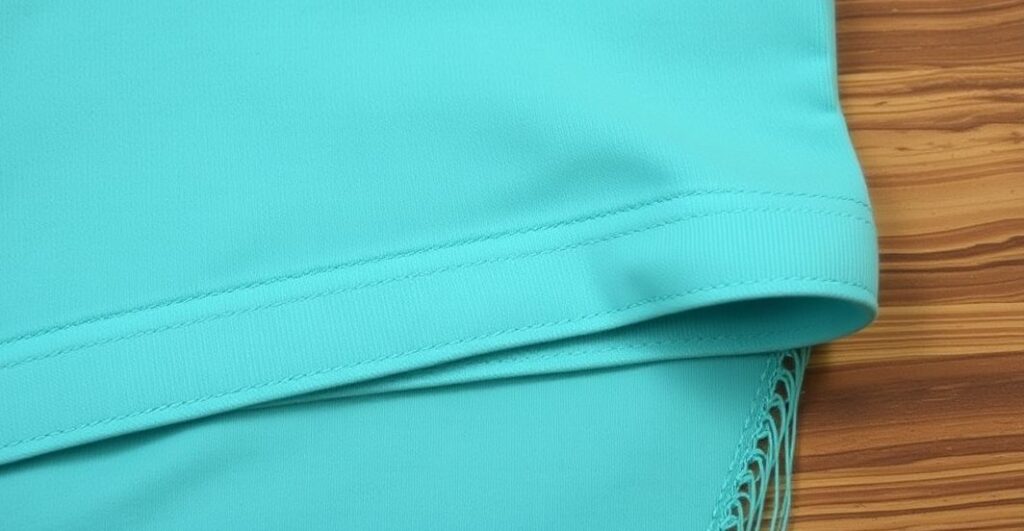
You can train your eye fast. Look for a single tidy row at the edge, no second line a few millimetres away. That’s a single-needle hem, often a lockstitch.
Slide a finger under the hem and feel the fold. A single fold with one top line usually signals a single needle hem explained. Double often looks like two parallel lines on the outside.
To be sure, examine sleeves first. Many vintage tees have single stitch sleeves and a matching single stitch bottom hem. If you came to learn how to identify a single stitch t shirt, start with those two spots.
If the hem looks extra stretchy with looping on the back, that’s more like a coverstitch. A firm, straight top stitch usually means lockstitch single.
Where stitches matter most: sleeves, bottom hem, and collars
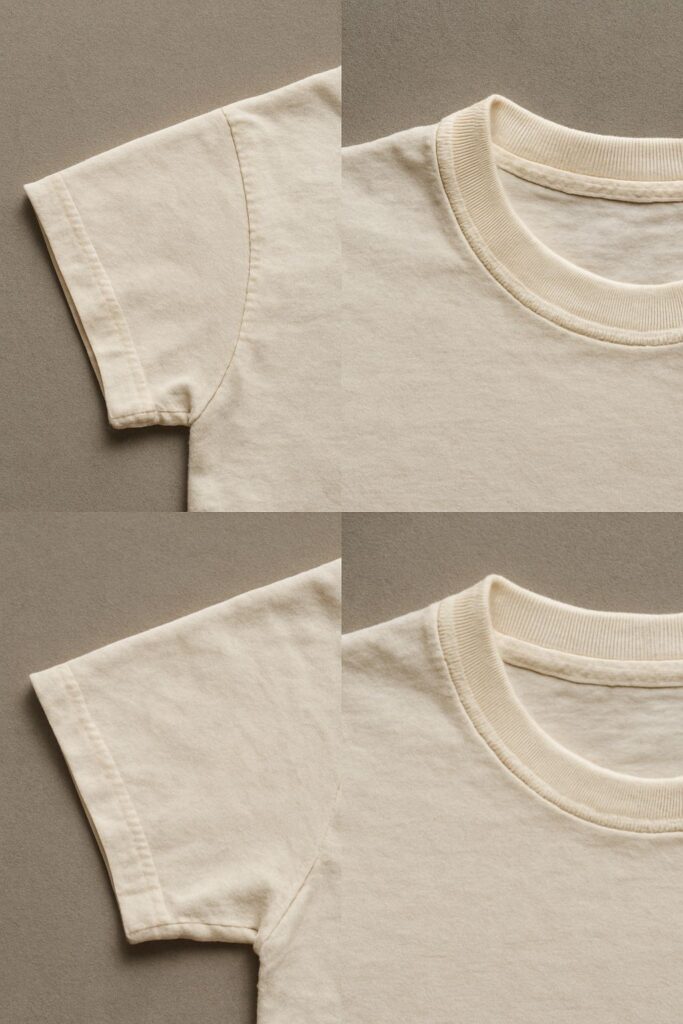
Check the sleeve edge. True vintage often shows a single row around the opening. Some shirts mix it up with double-stitched sleeves vs single-stitched hem, so inspect both.
Scan the bottom hem next. The single row should run evenly. Watch for wavy lines or tension issues, which may indicate a later re-hem.
Look at collars. Older tees often have a slightly thicker rib knit collar, vintage width and minimal shoulder-to-shoulder taping. That combination can support age. Finally, note how all these choices show garment construction details. One clue rarely dates a tee by itself.
Timeline: when brands switched from single to twin-needle
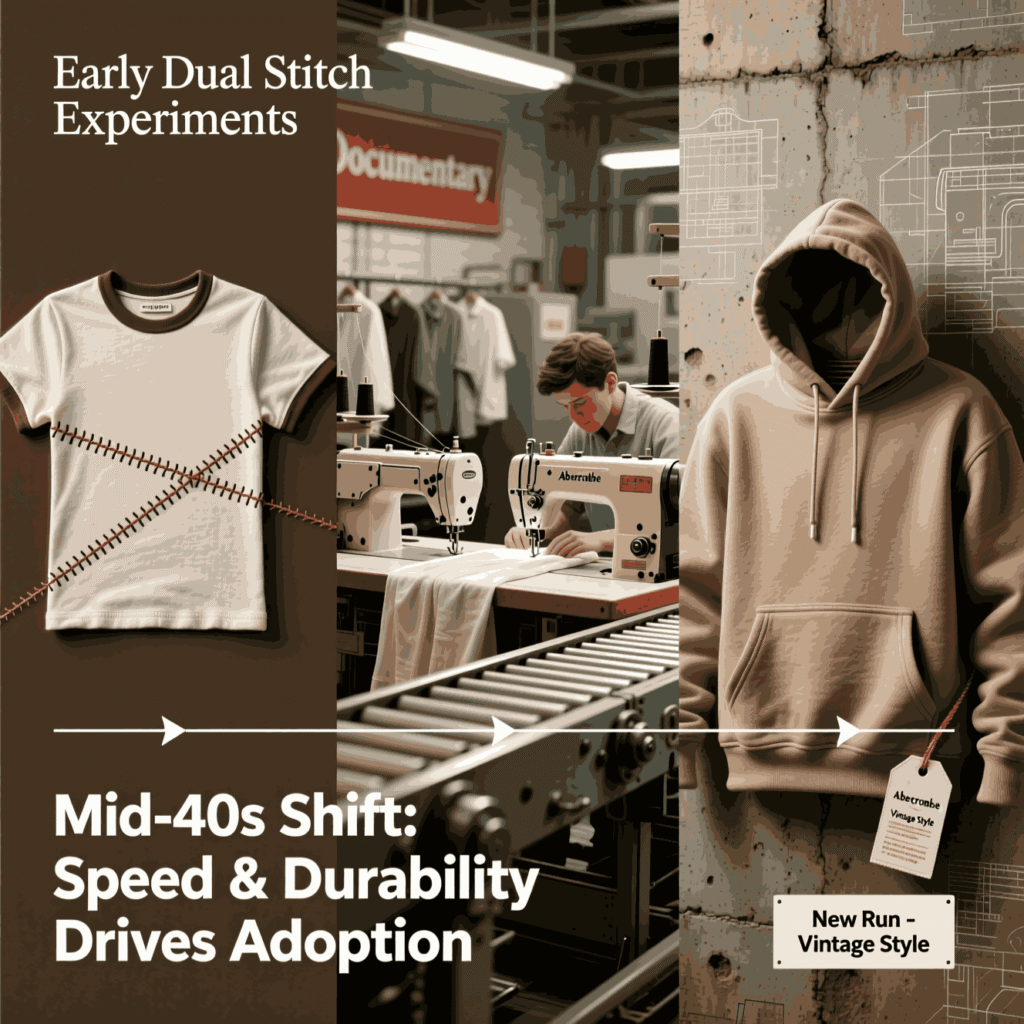
Most makers shifted in the mid-90s to twin-needle for durability and speed. Many authentic tees from the 1990s or earlier still show single hems.
There are 1970s double stitch examples too. Some brands tested twin-needle earlier, which is why stitching alone cannot confirm age.
The shift followed factories and machinery upgrades and more cost-effective processes. Production methods vary by manufacturer, so expect overlap.
Modern brands sometimes revive a single stitch for style. You will even find Abercrombie single-stitch hems on newer runs, which confuses dating.
Coverstitch, overlock, and single stitch how, and each looks
A single stitch hem uses a lockstitch on top. A twin row uses a coverstitch with backside loops and more stretch. Side seams often use an overlock serger that binds edges with looper threads. That’s different from the hem itself.
Some vintage makers used chainstitch in spots, which looks like little chain links on the back. It can unravel if you pull a loose end. Know the machine types, and you read the tee like a map. That’s practical authenticity checks in action.
Modern exceptions: new tees that still use a single stitch
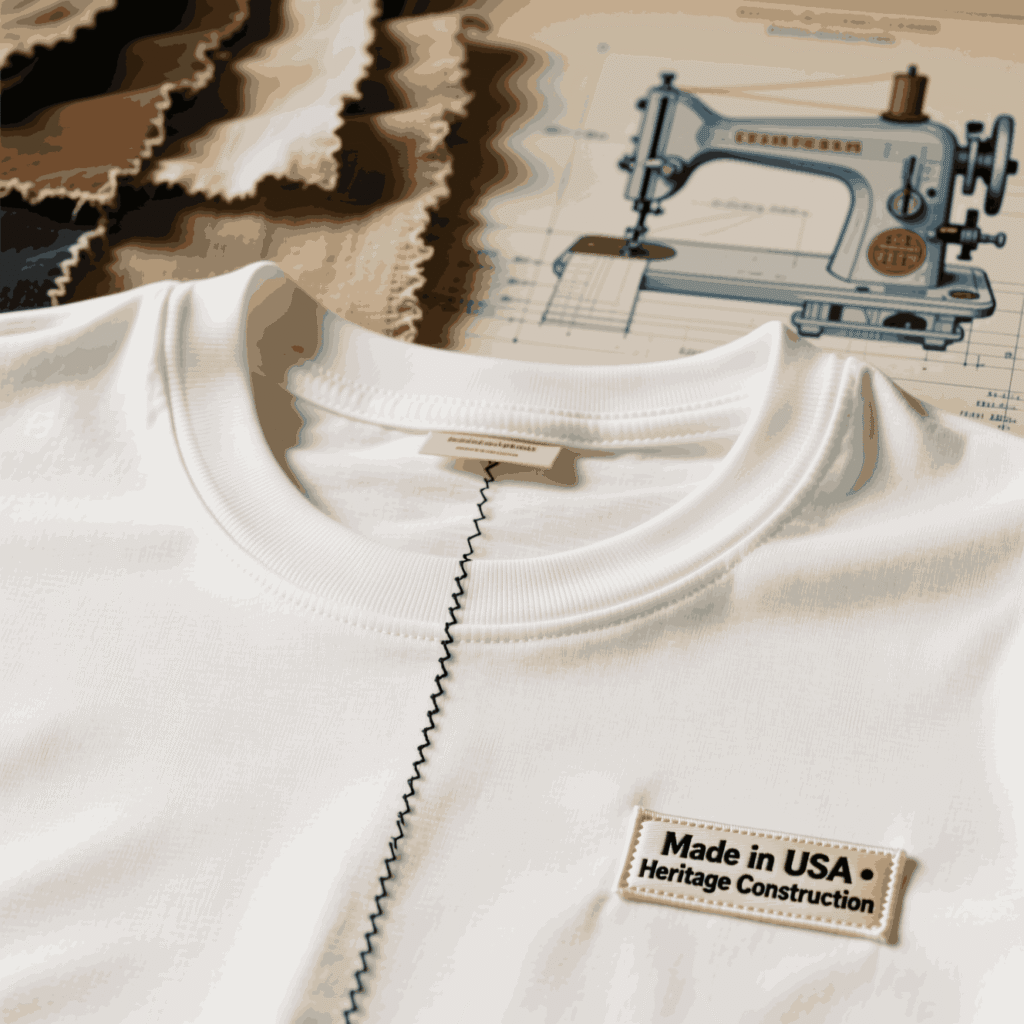
Some small brands still run single-needle hems for a heritage vibe. That doesn’t make the shirt old. You’ll find boutique labels and fashion lines using single rows today. That’s why the question “single stitch t shirt authentic vintage” needs more proof.
If you aim for made in USA heritage lines, note they may use vintage-inspired construction. It looks old, but the tag tells a modern story. Use a full checklist before you decide. Stitching opens the door, tags and fabric close the case.
Can stitching alone date a tee? What else must you check
Stitching is a strong clue, not a verdict. You’ll want tag style, fabric, and print details too. Build a routine vintage t-shirt authentication process. Use how to date clothing by construction, plus brand and era facts.
When in doubt, compare known-good examples. You can also ask in collector groups and check auction comps. A smart way to answer what is a single stitch t shirt in practice is to stack clues until the picture is clear.
Tags that tell the era: makers, RN numbers, and print lines
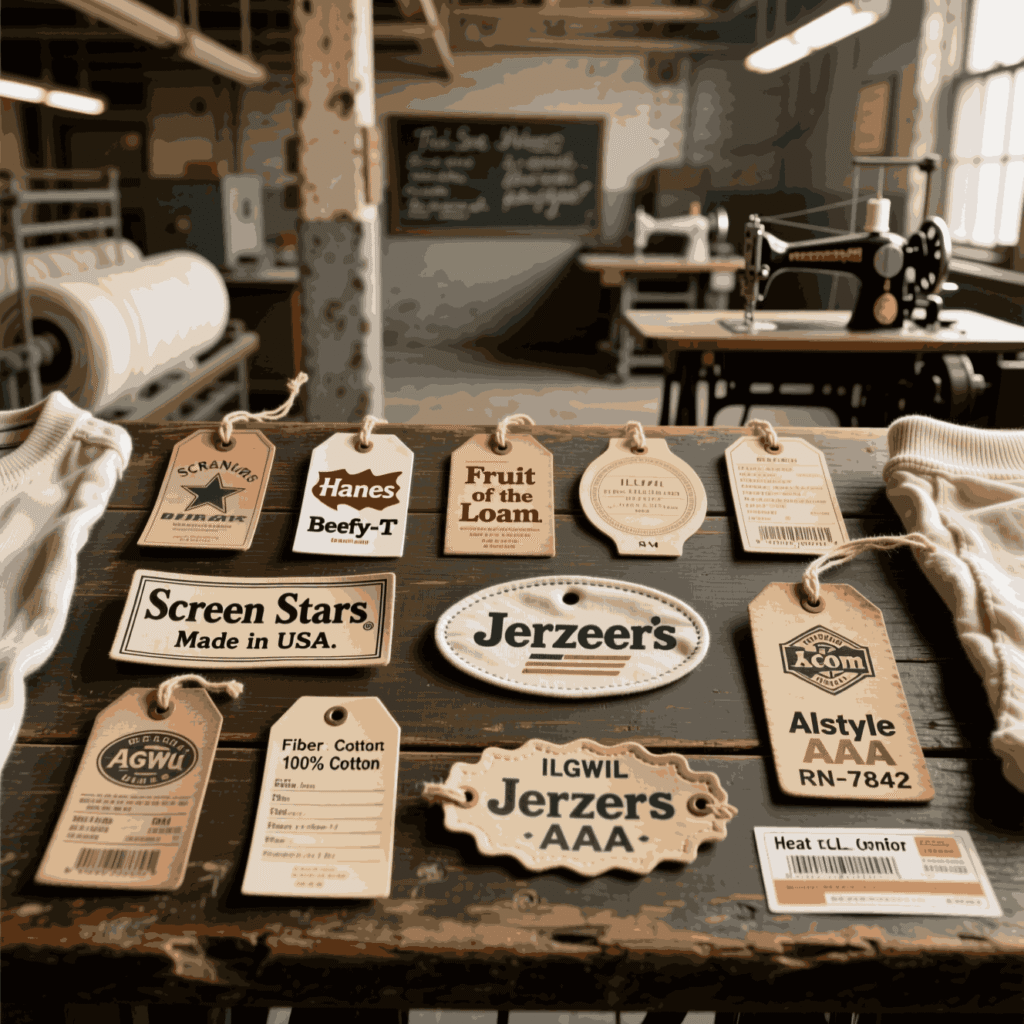
Tag style speaks volumes. Classic labels like Screen Stars, Hanes Beefy-T, Fruit of the Loom, Jerzees, and Alstyle AAA track to certain eras. Check for made in USA and fiber content. Tag shape, font, and care lines help too.
Use RN number tools for an RN number lookup clothing check. A Union tag , such as ILGWU can signal older production. Modern tagless heat transfer labels are another clue. They often indicate recent manufacture.
Graphics, licensing, and copyright dates as age clues

A small line under the print may show a year or licensor. That copyright line can pin the production date quickly. Study screen print texture and cracking ink. Older prints often crack with a soft feel.
Iconic vintage band tee designs follow tour years. Match the art and venue list to history. If you collect vintage band tees, save comparison screenshots of known authentic prints. They help you spot mismatches fast.
Fabric traits that pair with true vintage single stitch
Older tees often use cotton jersey that feels lighter and drapes well. Many 80s pieces used a 50/50 blend. Look for ring-spun cotton softness. Many collectors describe a soft, thin vintage tee feel that modern fabric rarely nails.
Touch and hold up to the light. Weight and drape tell a story. That’s a practical fabric weight reading. Natural wash fade patina cotton jersey looks earned, not sandblasted. Machine distressing rarely fools the hand.
The fabric weight also affects how the shirt wears over time. If you’re buying vintage tees to actually wear, not just collect, understanding how to wash graphic t-shirts properly keeps both the print and the single-stitch hem intact through regular use.
Tubular bodies vs side seams: construction cues to know
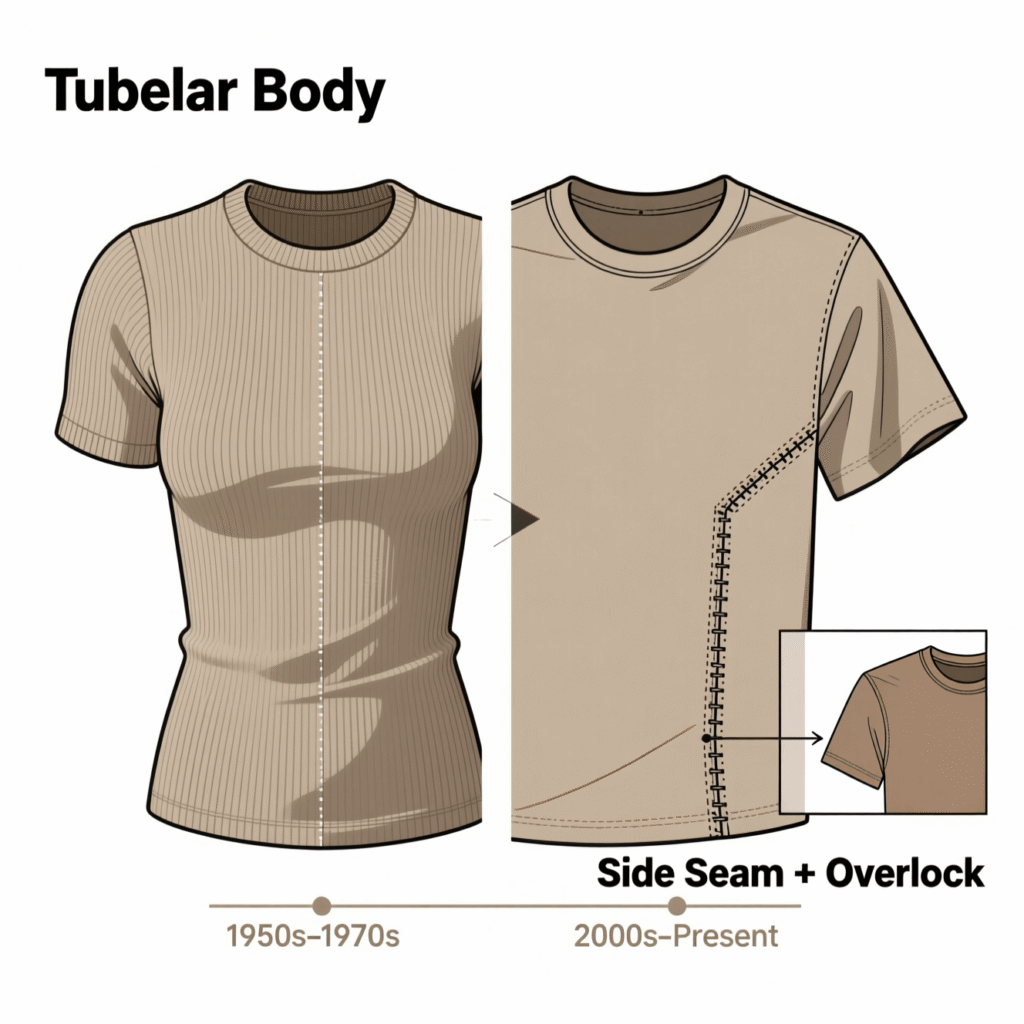
A tubular knit t-shirt body has no side seams. Many older tees used this method. Modern tees often have side seam construction with overlock serged side seams. That can help you place the era.
Shoulders matter too. Set-in sleeve construction varies by time and maker. Stack these construction cues with the hem and tag checks for best results.
Re-hemmed and altered shirts: how to spot a fake single stitch
Some sellers re-hem a modern tee to fake age. A re-hemmed single stitch fake often looks too clean. Measure the hem width and scan stitch density and thread gauge. Inconsistency raises flags.
Inside the hem, mismatched thread or fresh cut edges can reveal an alteration. Trust the inside more than the outside. Buy from sellers with clear photos of hems, tags, and seams. Good documentation beats guesswork.
Single stitch vs chain stitch hems: key differences
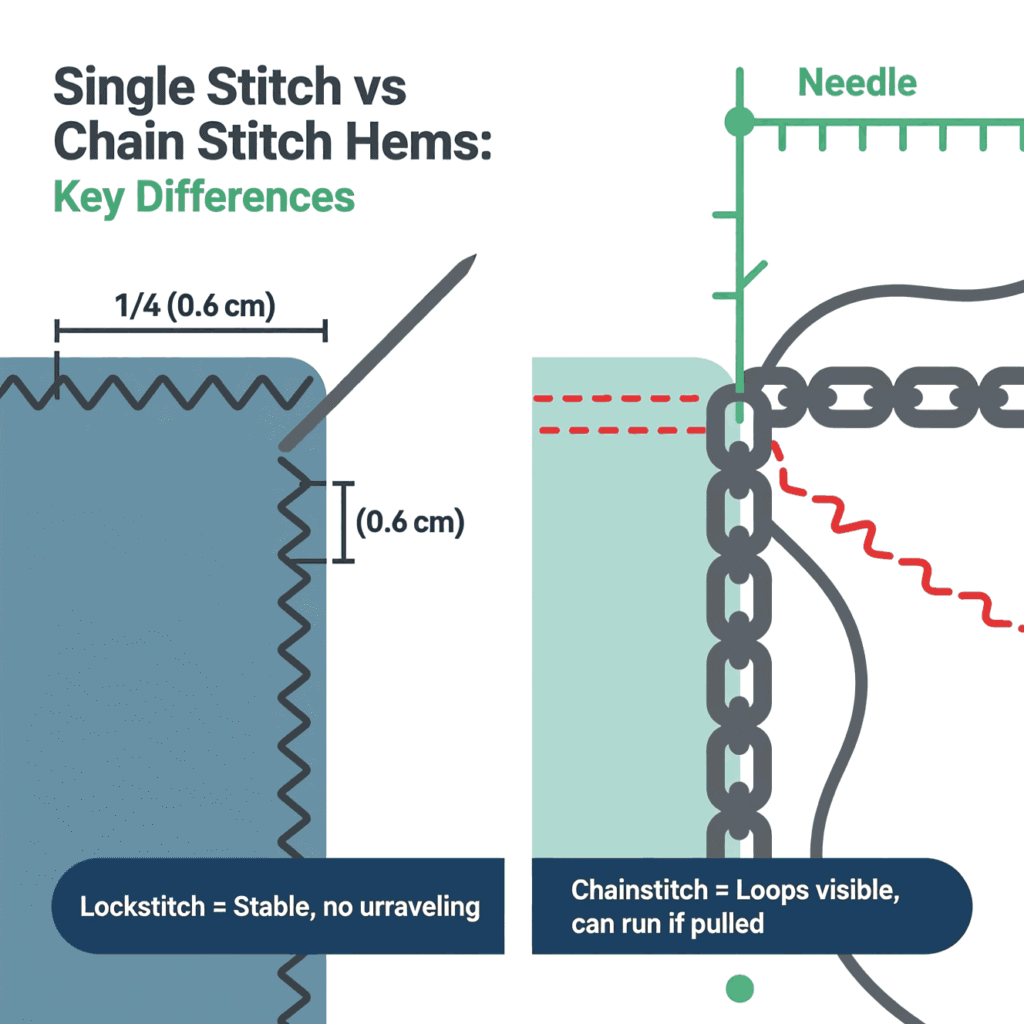
A single hem uses a lockstitch that’s stable. A chainstitch can unravel if you pull the right line. Check seam allowance under the fold. A neat, even allowance reads as original.
Watch thread tension and needle gauge marks. You can see a wobble when the tension is off. Chainstitch shows loops on the back like tiny links. Lockstitch shows a consistent zig on the underside.
Durability check: how a single stitch wears over decades
Single hems can pop at stress points. That’s normal aging, not always a deal-breaker. Look for tiny breaks along the edge. Minor touch-ups keep the line intact.
I’ve worn a few single-stitch tees regularly for years. The hem edge near the sleeve opening is always the first place to show stress. A small break there doesn’t ruin the shirt but it tells you it’s been genuinely worn, not faked.
You’re reading about garment durability and past care. Diffuse wear looks honest. Clean breaks may signal a newer failure. If you see them unraveling, decide if a period-correct repair is worth it.
Care and wash tips to protect single-needle hems
Wash cold, gentle cycle, low spin. Heat and harsh cycles stress hems. Turn the T-shirts inside out. That protects the print and the hem stitch.
Air dry or low heat only. Heat shrinks cotton and tightens stitches. Document care if you plan to resell. Buyers value proper single stitch care and repair habits.
Value factors: why a single stitch can raise resale price
Demand drives price. Single hems are a shorthand for age in many cases. Rarity and art matter more. A clean band graphic can dwarf the stitch factor.
Condition, size, and provenance push value. Deadstock vintage t-shirt examples sit at the top. That’s the logic behind why single stitch t shirts valuable for collectors.
If you’re building a vintage tee collection and wondering how many pieces are actually enough, how many t-shirts should I own gives a practical breakdown by lifestyle and wardrobe goal, useful whether you’re collecting or just curating.
Thrifting field guide: a 10-point inspection checklist
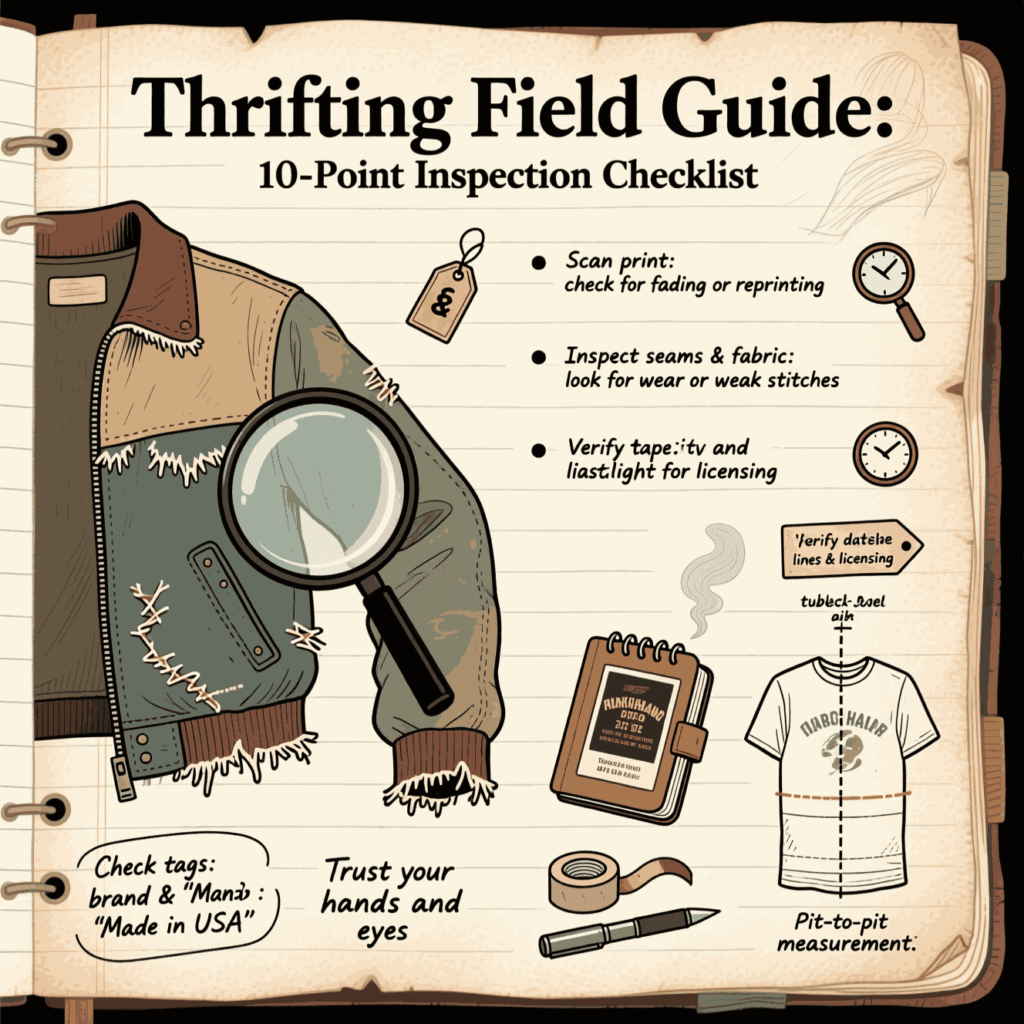
Start with hems and sleeves. Then check tags, seams, and fabric. Scan the print. Confirm date lines and licensing. Trust your hands and eyes. While thrifting or garage sale-ing, bring a small tape and a light. That helps in dim aisles.
Before you pay, run through this checklist:
- Confirm hem type and consistency (single vs double row)
- Check tag brand and “Made in USA” label
- Run an RN number search online
- Inspect for tagless heat transfer labels (usually means modern)
- Verify tour dates for band tees against known history
- Look for tubular body construction (no side seams)
- Note pit-to-pit measurement and shirt length
- Photograph hems, tags, and seams for your records
- Smell test — musty storage smell is normal; chemical smell raises flags
- Ask the seller for provenance or history if possible
Brand snapshots: 70s–90s examples collectors love

Many 80s–90s pieces on Screen Stars and Hanes Beefy-T show single hems. Learn their tag eras. Fruit of the Loom and Jerzees have distinct period tags. Save a cheat sheet on your phone.
Plenty of made in USA blanks show up with tour prints. Match tag and print era. These are classic 90s vintage t-shirts and 80s vintage t-shirt features you’ll often see.
Stitch density, thread type, and fabric weight explained
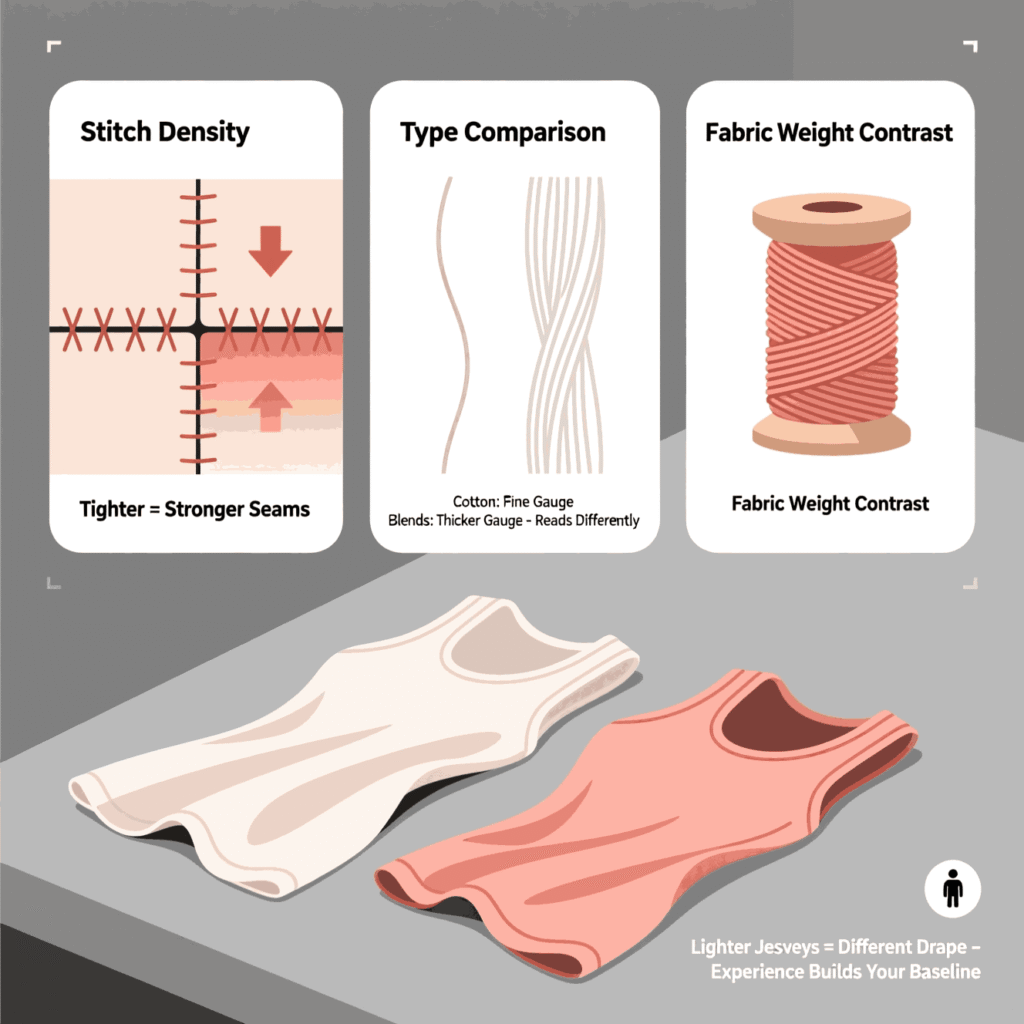
Tighter stitch density can mean stronger seams. It varies by maker. Thicker thread gauge reads differently on cotton than on blends. Learn the look.
Tune your eye to fabric weight. Lighter jerseys drape differently. Experience matters most here. Handle many shirts to build your baseline.
Glossary of stitch types you’ll see on tees
Single stitch: one row at the hem. Often a single-needle lockstitch. Double stitch: two parallel rows. Usually, a twin-needle or coverstitch look.
Overlock serger: binds raw edges on seams. Shows looper threads. Neck and shoulder notes: crewneck ribbing, neck binding, and shoulder-to-shoulder taping vary by era.
Single stitch t-shirt vintage myths that trip up buyers
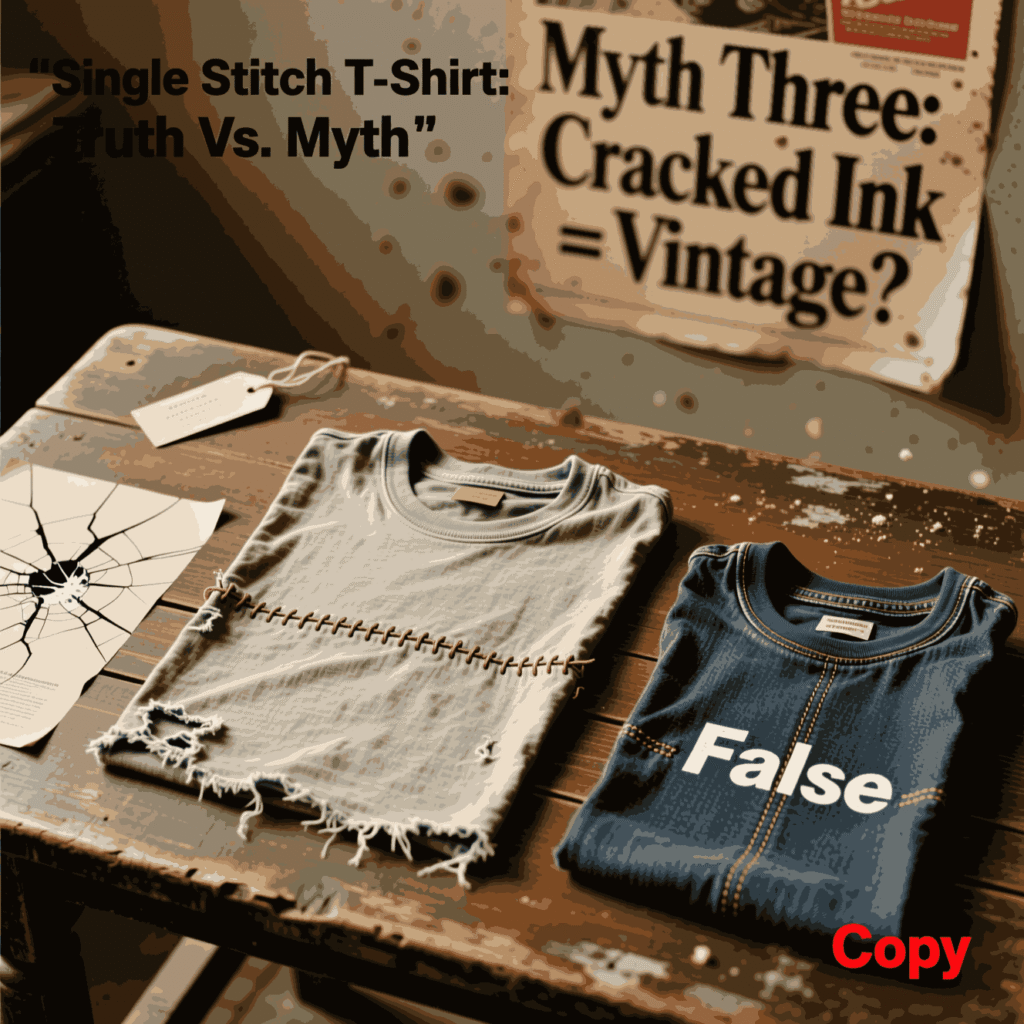
Some think every single hem means old. Modern brands copy the look. Others think every double row means new. Some 70s tees used doubles already.
Myth three says any cracked print means vintage. Cracking ink appears on newer tees, too. Use multiple clues. That’s how you answer what is a single stitch t shirt with confidence.
Collecting single stitch t shirts guide for beginners
Pick a lane: bands, movies, sports, or art. Focus helps. Track sizes you wear. Many old tees run small.
Learn price ranges. Save searches and watch sold listings. Build a network. Trade info and compare finds with peers.
Single stitch t shirt characteristics hem sleeve and fit notes
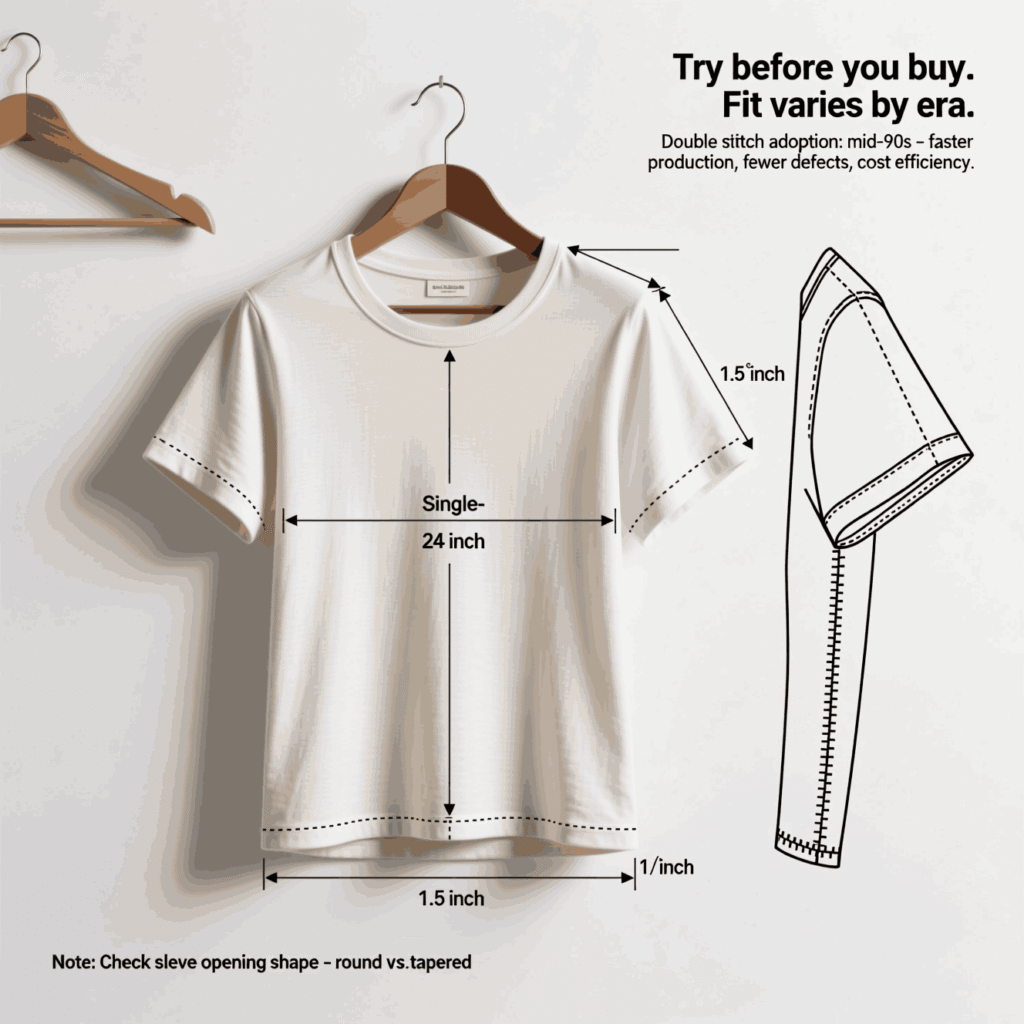
Expect slim shoulders and shorter lengths on many old tees. Try before you buy. Check sleeve opening shape and hem width measurement t-shirt. Fit varies. Note set-in sleeve construction angles. Era affects the silhouette.
Photograph the fit on a hanger and flat. That helps when selling later. When did double stitch shirts start and why the change.
Early trials appeared in the 1970s. Widespread change came later. The mid-90s manufacturing change happened as factories upgraded. Speed and strength won.
It was a cost-effective production decision. Fewer defects, faster lines. Some makers held out or mixed methods. That’s why your date window stays flexible.
Wholesale vs collector market: single stitch t-shirt wholesale realities
You will see single stitch t-shirt wholesale lots online. Many are modern. Wholesale is fine for blanks or practice pieces. Just avoid paying vintage prices.
Ask for close-ups of hems, tags, and inside seams. Verify before you commit. Collectors want provenance. Wholesale rarely offers it.
If you’re flipping vintage tees and need to ship purchases to buyers, understanding how much it costs to ship a t-shirt helps you price listings accurately and avoid cutting into your margins.
What is single stitch t shirt meaning in everyday use
It’s vintage shorthand. One row often equals older production. But it’s not a guarantee of age. It’s a clue.
Use it to narrow your search. Then confirm with tags, prints, and fabric. That’s the practical meaning when someone asks what is a single stitch t shirt on the spot.
Are single stitch shirts better for wear and longevity
They can be comfy and drapey. Many people prefer the feel. Twin-needle hems resist failure at stress points. They are tougher.
Better depends on your goal. Fashion or function. Collectors prize history. Daily wearers may choose durability.
Single stitch t shirt era 70s 80s and early 90s quick cues
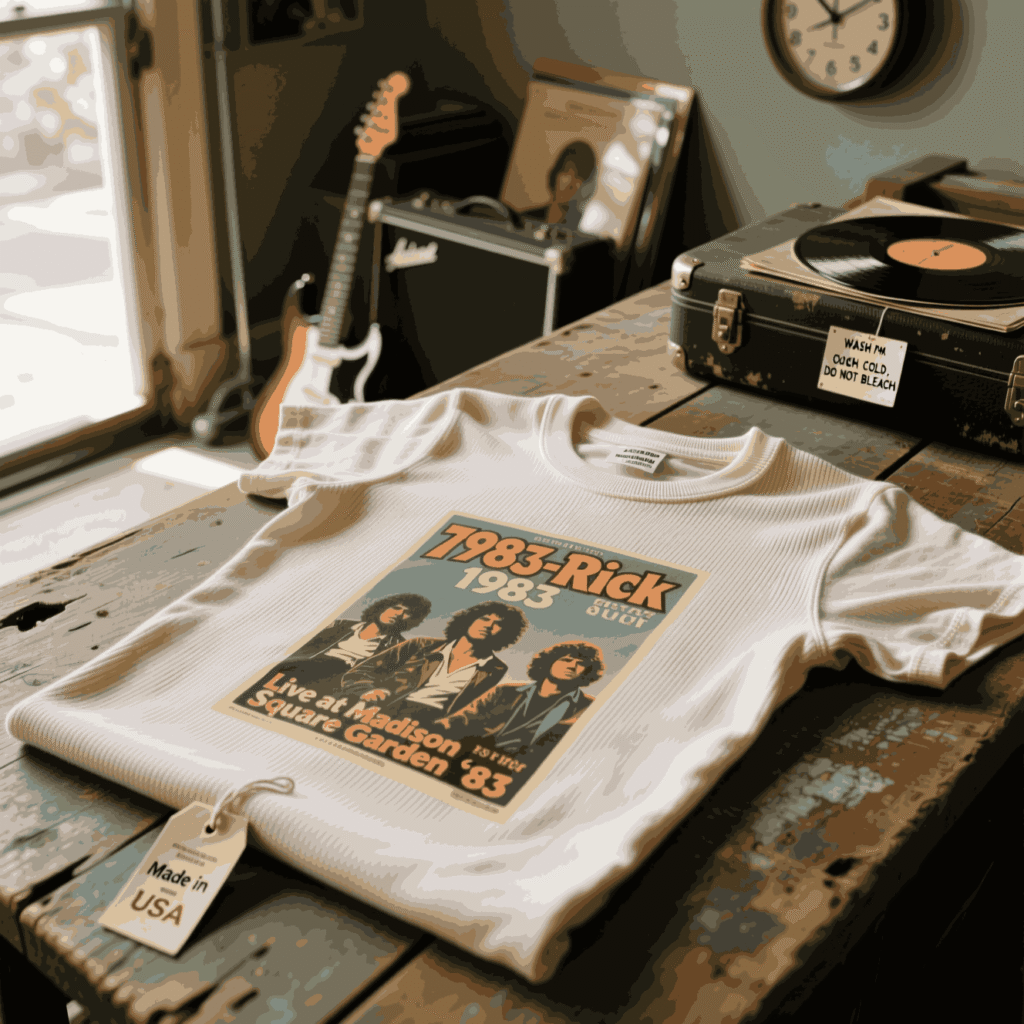
Think softer cotton, tubular body construction, and simpler tags. That’s common. Expect lighter weights and narrower ribs. Look for older care codes.
Graphics match film or tour years. Cross-check dates fast. That’s how you place a tee in the 70s–90s window.
Final checks: single stitch t shirt authentic vintage proof points
Stack five clues: hem type, tag, fabric, print, and construction. That’s solid. Use dating vintage tees by tag combined with prints. Fill gaps with community knowledge.
Keep a folder of references. Brands, tags, and eras change. This is how you turn a quick hunch into proof.
Conclusion
You now understand what is a single stitch t shirt and how to verify one in the wild. Start with a single stitch hem at the sleeve edge and bottom hem, then compare to a double stitch with two rows of stitching.
Confirm age using markers (Screen Stars, Hanes Beefy-T, Fruit of the Loom, Jerzees), do an RN number lookup for apparel, and overlook the visual for a date line.
Back up those checks with fabric that tells ring-spun cotton, a 50/50 blend, and that soft, thin feel you only get from real cotton jersey that’s been washed dozens of times.
Add in construction details like a tubular knit body, lighter shoulder-to-shoulder taping, and a faded neck label to place it confidently in the 1990s or earlier.
With these checks stacked together, you can shop confidently, avoid overpriced fakes, and enjoy the hunt. Share your finds and keep real vintage in circulation.
FAQ’S
What does single stitch mean on a t-shirt?
It’s a single-needle hem with one clean line of stitching around the sleeve edge and bottom hem, typically a lockstitch. You’re looking for one row near the edge, not two parallel rows like a double stitch or coverstitch.
Why do people like single-stitch T-shirts?
They’re a quick vintage tee identifier, often 1990s or earlier with soft cotton jersey or 50/50 blend , and that soft-thin vintage tee feel you love.
You get real wash fade patina, classic fits, and construction cues like tubular knit t-shirt body that scream history.
Why did they stop making single-stitch shirts?
The mid-90s manufacturing change brought faster factories and machinery, so brands chose twin-needle and coverstitch for durability and cost-effective speed.
Production evolved from one row to two rows of stitching to reduce defects and standardize hems.
Are single stitch shirts valuable?
Yes—especially licensed vintage band tee prints, made in USA blanks, and tags like Screen Stars, Hanes Beefy-T, Fruit of the Loom, or Jerzees.
If you can pass authenticity checks, a shirt tag inspection, a Ran N number lookup, and a graphic date on the tee, a single stitch often boosts the price.
What is the 3-3-3 rule for clothing?
It’s a capsule shortcut for you: pick 3 tops, 3 bottoms, and 3 layers/shoes to mix about 27 outfits perfect for thrifting or trips.
Some blend it with Project 3-3-3 (33 items for 3 months) to keep a tight, stretch apparel wardrobe that’s easy to style.

I'm Habib founder of Goku Fashion Outfit Style and a boutique owner with over 10 years in the fashion industry. I've styled thousands of real clients, run a fashion business from the ground up, and now I'm sharing everything I know through this blog. My goal is simple: help you dress better, shop smarter, and understand fashion in a way that actually makes sense for your life.
- Habib

- Habib
- Habib
- Habib