You know that feeling when a shirt looks perfect online but fits completely wrong in real life? Maybe the sleeves feel tight, or the length looks awkward. That frustration is exactly why people search for a T-shirt size guide. They want a shirt that fits right the first time.
In this guide, you’ll learn how sizing actually works behind the scenes. We’ll break down real measurements, explain fit differences, and show you how to measure correctly at home. By the end, this Size Guide will help you shop smarter and avoid costly sizing mistakes.
Why T‑Shirt Sizes Are More Than Just Small, Medium, and Large
Most people think sizing is simple. You pick S, M, or L and hope for the best. But brands follow different apparel sizing standards, use unique garment grading systems, and apply their own size grading rule during production. That’s why a medium doesn’t always mean the same thing everywhere.
For example, a man’s t-shirt size guide from one brand may differ due to garment tolerance and measurement variance.
Even a half‑inch change in chest circumference can affect how the shirt feels. That’s why understanding structure matters more than trusting the tag alone.
Body Measurements vs Garment Measurements (Critical Difference)
Your body size and shirt size are not identical. A proper t‑shirt size chart lists garment circumference, not your direct body measurement. Brands measure the shirt flat using flat lay shirt measurement methods to calculate width and length.
When comparing sizes, always check your body measurement guide numbers against the brand’s garment measurement chart. This helps you understand real shirt width vs length proportions. Ignoring this step is one of the most common shirt-sizing mistakes shoppers make.
How to Measure Your Chest Correctly at Home

Start with a soft tape and wrap it around the fullest part of your chest. Keep it level and relaxed. This gives you an accurate chest measurement for shirt sizing.
Don’t pull the tape too tight. A proper clothing measurement guide suggests breathing naturally while measuring. Compare your number to a men’s t shirt size chart or women’s t shirt sizing chart, depending on the cut.
This simple step improves your chances of choosing the correct medium t shirt size or even an XL t-shirt size.
Shoulder Width and Why It Changes the Entire Fit
Shoulder alignment defines how polished a shirt looks. The shoulder seam placement should sit right at the edge of your shoulder bone. If it drops too far, the shirt appears oversized.
To measure, go from one shoulder point to the other across your back. Brands adjust this dimension using pattern scaling, controlled by their internal garment spec sheet and apparel production tolerance rules. A poor shoulder fit often causes sleeve pulling or awkward draping, even if the chest size feels correct.
Shirt Length and Sleeve Structure Explained
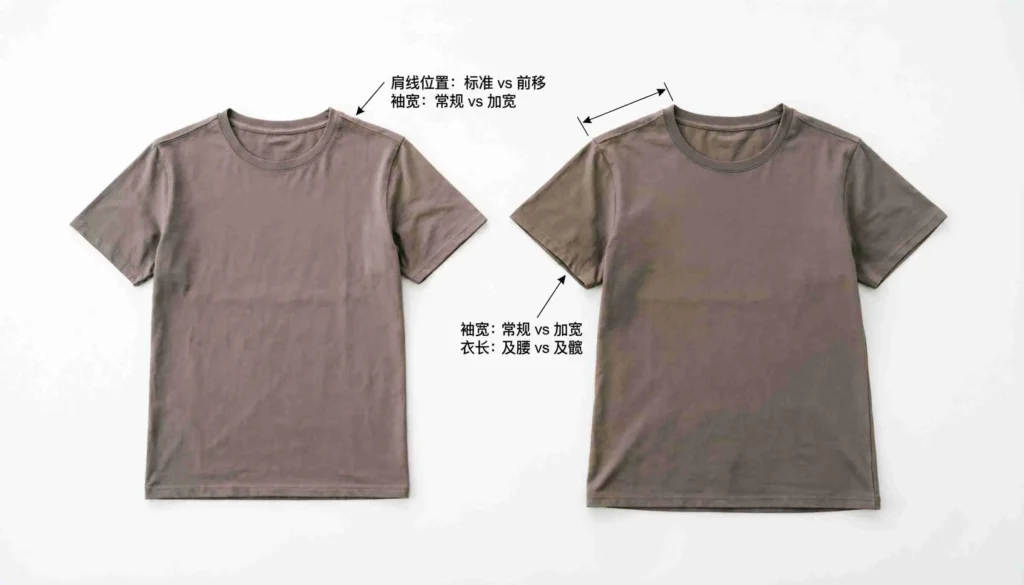
Length determines balance. A shirt that’s too short rides up. One that’s too long looks sloppy. Measure from the top shoulder point down to your desired hemline. Compare that to the brand’s listed shirt length measurement and body length from the shoulder data.
Sleeves also matter. The sleeve opening width affects arm comfort, while armhole depth impacts mobility. Slim cuts follow a tapered, fitted silhouette, while relaxed styles use wider side seams for comfort.
Understanding this structure helps you decide whether a regular fit shirt measurement or a slim fit t-shirt size suits your body type better.
Men’s, Women’s, and Unisex Cuts: What Actually Changes?
Men’s shirts usually follow a men’s straight cut structure. They offer more room in the torso and a broader shoulder slope to match typical male body proportions. That’s why a man’s medium doesn’t feel the same as a woman’s medium.
Women’s styles use a women’s contour fit, shaping the waist and adjusting body mass distribution. Meanwhile, a unisex t shirt size chart follows neutral unisex cut dimensions.
When comparing a t-shirt size chart for female with a standard male chart, always check chest and length differences carefully.
Youth T-Shirt Size Guide: Age vs Measurement
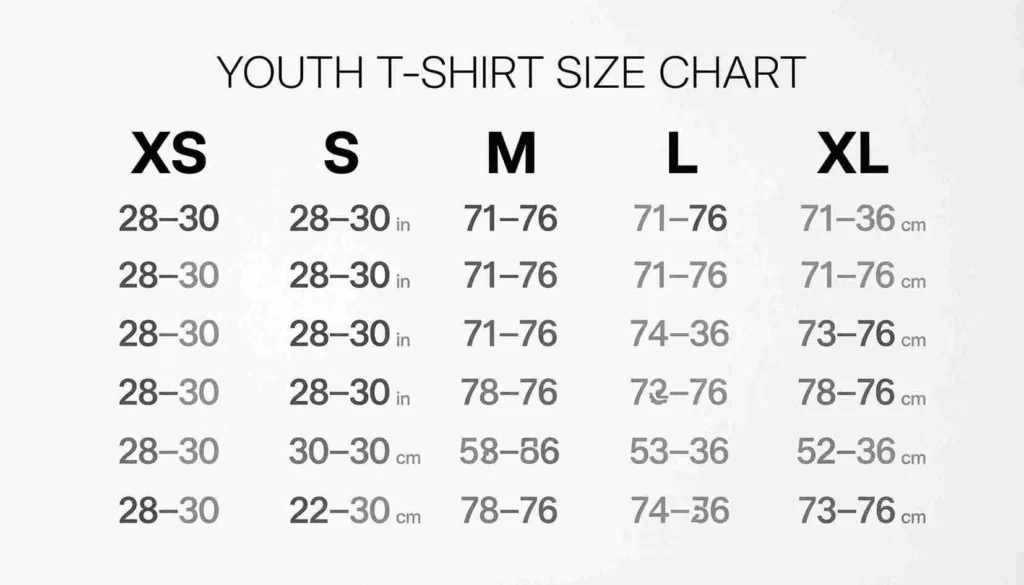
A proper youth t shirt size guide should never rely only on age. Kids grow differently, and youth proportions change rapidly during development. That’s why using a kids’ t-shirt size chart based on chest width gives better accuracy.
Always measure your child’s chest and height first. For detailed measurements by age, see our complete Youth T Shirt Size Chart by Age guide.
Then compare with a reliable youth t shirt size chart or youth medium measurements table. If you’re unsure, check our detailed breakdown of What Size Is Youth Medium T Shirt. Many parents assume sizing by age alone, which leads to frequent return issues.
We’ve also explained exact dimensions in our guide on What Size Is a Youth Large T Shirt.
Oversized Fit: Style Choice or Sizing Mistake?
Oversized doesn’t mean buying two sizes bigger. True oversized t shirt sizing uses a structured boxy silhouette, extended torso length, and lower drop shoulder design placement. If you’re unsure how many sizes to go up, read our detailed guide on What Size Oversized T Shirt Should I Get.
If you simply size up without checking the brand’s oversized t shirt size guide, proportions can look off. The sleeves may hang awkwardly, and the chest may feel too wide.
Understanding the difference between intentional design and accidental upsizing is key to smart styling.
How Fabric Type Affects Final Fit
Fabric changes everything. A 100% cotton shirt may shrink slightly due to the cotton shrink factor and normal garment finishing process. That’s why checking washing instructions matters before selecting your final size.
Blended fabrics behave differently. Shirts made with polyester fiber, spandex blend, or flexible knit fabric provide stretch and better fabric elasticity.
Heavy materials with higher fabric GSM often feel structured, while lighter tees drape differently across the body.
Why the Same Size Differs Across Brands
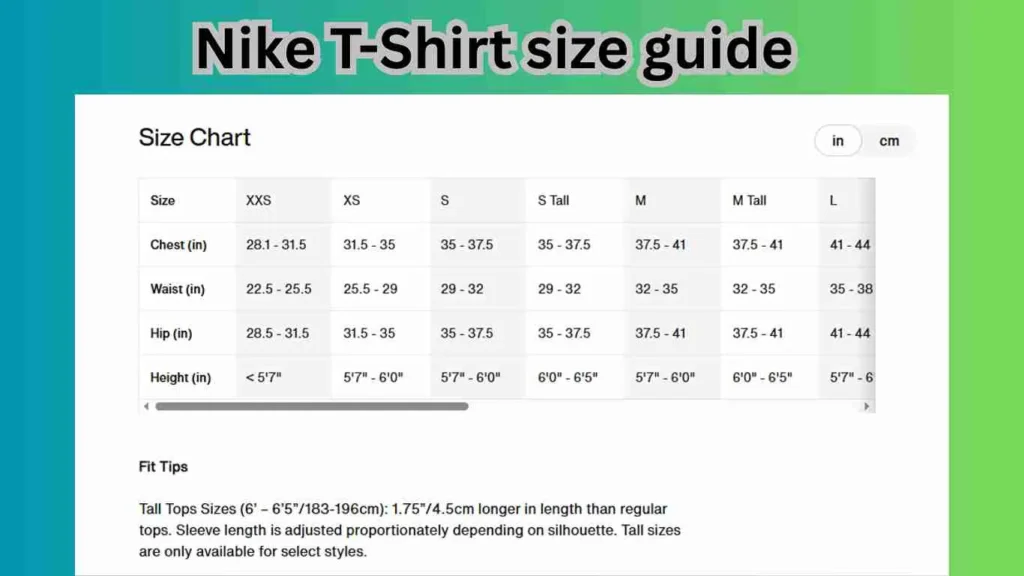
You might wear medium in one brand but large in another. This happens because brands follow unique apparel manufacturing methods and internal sizing specification rules. Even small measurement variance during production changes how a shirt fits.
For example, a nike t shirt size guide may not match an adidas t shirt size guide or a Uniqlo t-shirt size chart. Differences in pattern scaling, chest grading, and fit philosophy create noticeable variation. Always compare the specific brand’s size chart before ordering.
International Size Conversion: US, UK, and EU Differences
Sizing systems are not universal. The US uses a single sizing structure, while Europe uses different international sizing standards based on the metric sizing system. That’s why a US medium doesn’t always equal an EU medium.
Many charts show both shirt measurements in inches and shirt measurements in cm. Always compare chest numbers instead of relying on letters alone.
A proper US-to-EU shirt size comparison helps prevent ordering the wrong size from international stores.
Big & Tall T-Shirt Structure Explained
Big and tall sizing is not just wider. It adjusts both width and length using a modified plus-size pattern and extended tall sizing ratio calculations.
Brands increase the chest grading increment and extend the body rise to maintain balance. This ensures that big and tall t-shirts don’t look boxy or short. If you wear a XXXL t-shirt size, always verify the length as well as the chest measurement.
How to Measure a Shirt You Already Own
One of the easiest ways to find your correct size is by measuring a shirt that already fits well. Lay it flat and use a tape to check the pit-to-pit measurement across the chest.
Then measure the total length from the shoulder to the hem using a flat lay shirt measurement method. Compare these numbers with an online garment measurement chart or brand‑specific shirt sizing guide.
This approach is often more accurate than guessing your body size. For exact measurements, check our full T-shirt size chart guide for reference tables.
Print and Logo Scaling Based on Shirt Size
If you’re buying custom apparel, print size matters. Larger shirts require proportionally larger graphics using proper screen printing placement rules.
For example, youth shirts need adjusted youth design scaling to match smaller proportions. Check a dtf print size chart or logo placement guide before ordering. Proper front print dimensions ensure the design doesn’t look too small or oversized.
T-Shirt Sizing in Agile vs Clothing Context
Interestingly, “t-shirt size in agile” refers to project estimation categories like small or large tasks. That system has nothing to do with clothing.
In apparel, sizing relates to physical dimensions defined by apparel fitting standards, detailed garment fit analysis, and structured clothing pattern drafting. Understanding this difference prevents confusion when researching sizing terms online.
Between Two Sizes? Here’s How to Decide
Being between sizes is common. The smartest move is to check the fabric first. Shirts made with pre-shrunk fabric and stable knit stretch recovery behave differently than pure cotton, with a higher shrinkage percentage.
If you prefer a relaxed look, choose the larger option. If you want a tailored feel, compare the fitted shirt chest size and review the regular fit shirt measurements carefully. This small step reduces return risks significantly.
You can also learn the signs in our guide on How to Know If a T Shirt Is Too Small before making a final choice.
Common T‑Shirt Sizing Mistakes to Avoid
The biggest mistake people make is ignoring the t shirt size chart completely. Many shoppers rely only on tag letters without checking the detailed apparel measurement chart.
Another mistake is forgetting about garment tolerance and normal measurement variance in mass production. Even high‑end brands follow mass production sizing, which allows small differences between pieces. Always double‑check before ordering online.
How Climate and Season Influence T‑Shirt Fit Choices
Climate plays a bigger role in sizing than most people realize. In hot weather, lightweight fabrics with lower fabric GSM feel more breathable and flexible.
These tees often have a softer garment drape, which can make a standard medium t shirt size feel slightly looser compared to heavier cotton.
In colder seasons, people prefer thicker materials with higher textile density. Heavyweight shirts hold structure better and affect the overall silhouette structure.
Because of this, your regular t shirt size chart choice may feel tighter under jackets or layering pieces.
Humidity also impacts fabric behavior. Cotton absorbs moisture, which slightly changes how the shirt sits on your body. That’s why checking shirt measurement tolerance and fabric type matters when choosing sizes across seasons.
How Shrink Tests Are Conducted in Apparel Manufacturing
Before shirts reach stores, brands perform a textile shrink test to calculate expected shrinkage percentage. This process measures how fabric reacts after washing and drying under controlled conditions.
Manufacturers consider the natural cotton shrink factor during the early garment finishing stage. Some companies apply industrial washing or pre-treatment to stabilize fibers and reduce post-purchase shrinkage.
Understanding this process explains why many shirts are labeled as pre-shrunk fabric. Even then, small measurement variance can occur due to differences in heat exposure and fiber tension during production.
Understanding Garment Specification Sheets (Spec Sheets) Used by Brands
Every professional brand relies on a detailed garment spec sheet. This document outlines exact measurements for chest, length, and sleeve dimensions under a strict sizing specification system.
The spec sheet ensures consistency across large batches during mass production sizing. It includes grading increments and defined apparel production tolerance limits, usually allowing small variations of half an inch.
When you review a t-shirt size chart, you’re essentially seeing a simplified version of this internal blueprint. Knowing this helps you understand how brands maintain quality control while producing thousands of units.
How Pattern Drafting and Grading Create Different Size Ranges
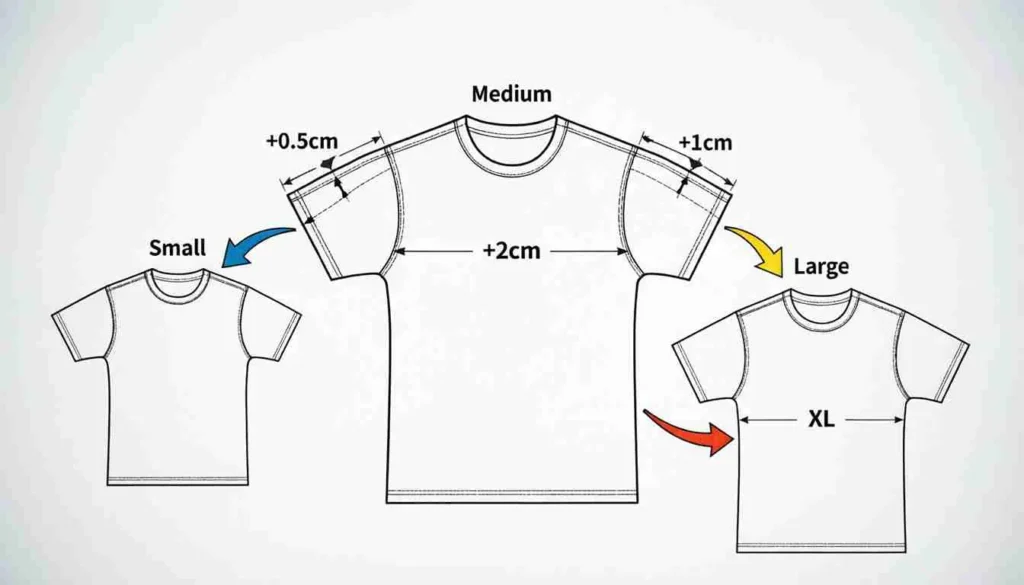
Size expansion begins with clothing pattern drafting. Designers create a base size and then apply structured pattern scaling rules to increase or decrease dimensions proportionally.
Each new size follows a specific chest grading increment and sleeve adjustment formula. This method ensures consistent proportions instead of simply enlarging every measurement equally.
This systematic approach explains why a 3XL shirt measurements chart maintains shape rather than looking distorted. Proper grading keeps alignment balanced across all sizes.
The Role of Fit Models in Finalizing T‑Shirt Dimensions
Brands test their patterns on real fit models before final approval. During an apparel fitting session, designers check shoulder alignment, chest comfort, and overall silhouette.
These sessions evaluate consumer fit preference and movement comfort. Adjustments may be made to the shoulder seam placement or torso length based on feedback.
This testing stage helps refine the final garment fit analysis. Without it, size charts would lack real-world validation.
How Fabric Composition Impacts Long‑Term Fit
Fabric type directly affects durability and shape retention. Shirts made with ring spun cotton sizing techniques feel softer but may shrink slightly over time.
Blended fabrics containing polyester fiber and spandex blend offer improved fabric elasticity and stretch recovery. This helps the shirt maintain form after repeated washing.
Understanding composition helps you interpret a complete t shirt fit guide correctly. Material choice can determine whether you size up or stay true to chart measurements.
Understanding the Chest-to-Length Ratio for Better Proportion
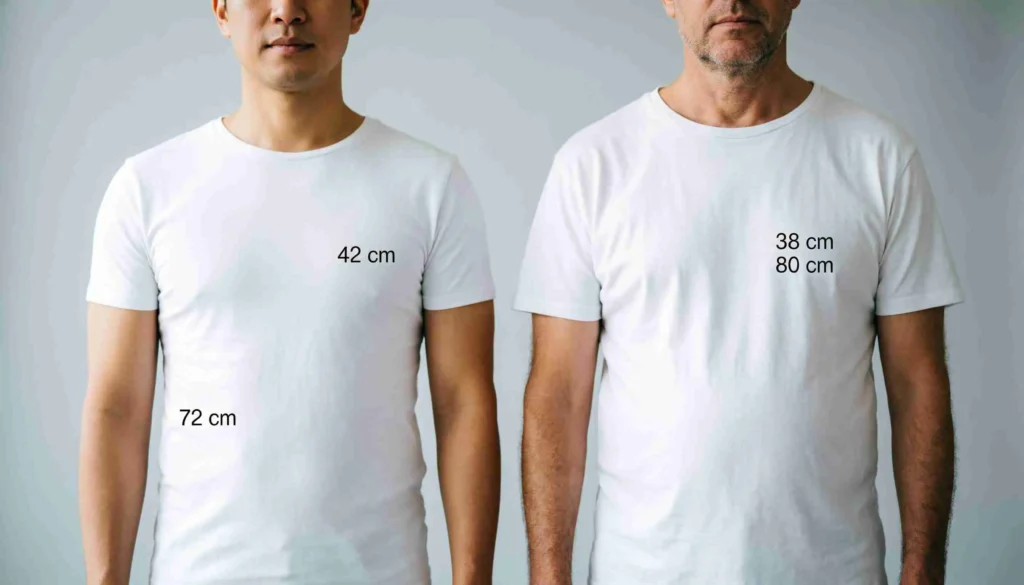
A balanced shirt depends on the relationship between chest width and torso length. This ratio influences how the shirt complements your body proportions.
Designers calculate chest width flat lay and compare it to the total body length from the shoulder for aesthetic harmony. If the ratio is off, the shirt may look boxy or overly long.
Choosing the right proportion improves comfort and posture. That’s why reviewing a detailed t-shirt size breakdown calculator can improve accuracy.
Why Sleeve Cap Construction Affects Mobility and Comfort
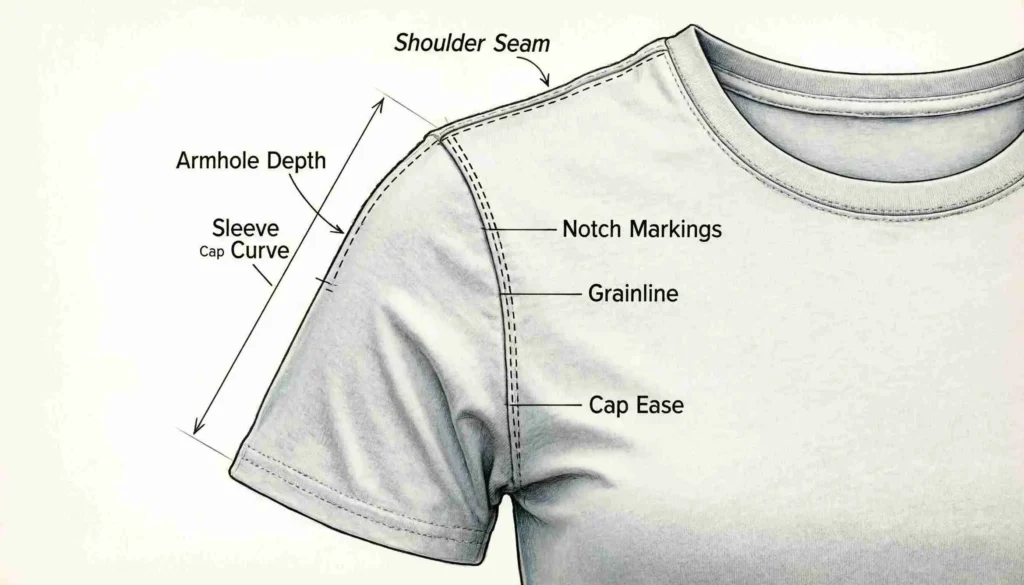
The sleeve cap determines how naturally your arm moves inside the shirt. A shallow cap improves mobility, while deeper construction affects armhole depth and shoulder flexibility.
Proper design ensures a smooth transition from shoulder to sleeve. This prevents pulling at the side seams during movement.
Athletic styles often modify sleeve cap height to enhance performance comfort. This structural detail impacts both appearance and usability.
The Psychology of Fit: Why Proper Sizing Improves Confidence
Clothing fit affects how people perceive themselves. A well‑balanced silhouette structure improves posture and body alignment.
When a shirt matches your natural body mass distribution, it enhances confidence. Poorly fitted garments distort proportions and reduce visual balance.
That’s why selecting the correct size from a reliable shirt sizing guide isn’t just practical—it influences personal presence and comfort.
Future of Apparel Sizing: 3D Body Scanning and AI Prediction
Modern retailers are integrating AI-driven t-shirt size calculator tools. These systems use digital body data and predictive modeling to recommend better fits.
Some brands experiment with 3D scanning to collect detailed anthropometric data. This allows more accurate size mapping than traditional charts.
As technology evolves, digital apparel retail sizing systems may reduce return rates significantly. The future of sizing is becoming more precise and personalized.
Conclusion
Choosing the right fit becomes simple when you understand structure, measurement, and fabric behavior. A reliable T-shirt size guide helps you compare your chest circumference, evaluate brand-specific garment tolerance, and interpret a proper t-shirt size chart confidently.
Industry data show that nearly 30% of apparel returns are due to incorrect sizing, often caused by ignoring measurement charts.
By reviewing your body stats, checking fabric type, and understanding international size conversion, you reduce sizing errors dramatically.
Whether selecting youth, oversized, or big and tall options, following a detailed shirt sizing guide ensures better comfort and a sharper appearance.
When you apply these principles consistently, shopping becomes easier, returns decrease, and your wardrobe fits exactly the way it should.
Frequently Asked Questions About T‑Shirt Fit
How do I know my t-shirt size?
Measure your chest circumference and compare it with a reliable t‑shirt size chart or men’s t-shirt size guide. I always suggest checking a brand’s garment measurement chart instead of guessing based on tag letters alone.
What size Peter Millar shirt should I get?
Start by checking the brand’s specific shirt sizing guide and comparing your chest and body length from shoulder measurements.
Since brands follow different apparel sizing standards, your usual medium t-shirt size may fit differently in Peter Millar.
Is a size 40 shirt M or L?
In most standard t‑shirt size charts, a 40‑inch chest falls under medium t shirt size, but some brands may label it differently due to measurement variance. Always verify using the brand’s international size conversion or chest range table.
What are normal t-shirt sizes?
Normal sizes typically range from Small (S) to XXXL, based on standard t-shirt measurements and apparel grading systems. Most brands follow common t-shirt size breakdown calculator ranges, but exact fit can vary depending on cut and fabric.

I'm Habib founder of Goku Fashion Outfit Style and a boutique owner with over 10 years in the fashion industry. I've styled thousands of real clients, run a fashion business from the ground up, and now I'm sharing everything I know through this blog. My goal is simple: help you dress better, shop smarter, and understand fashion in a way that actually makes sense for your life.
- Habib

- Habib
- Habib
- Habib